

If you’re sitting down with a home seller and your big open house pitch is, “So, do you want an open house?” you’ve already lost.
You know what they hear?
Two hours on a Sunday where strangers walk through their house and some agent sits in the kitchen hoping somebody signs in.
Of course they say no. You made it sound like a box to check, not something that actually drives results.
The agents who have figured this out are getting listings signed because of how they present the open house.
We broke this down inside a live roleplay session in BAMx, and it comes down to how you position it. Stop asking. Start presenting a strategy.
Why Most Open House Pitches Fail
Here’s what happens in most listing appointments.
Agents walk through their marketing plan, hit a few bullet points, and then at the end say,
“So, do you want that open house?”
No context. No explanation. No clear benefit to the seller. Just a question.
It goes downhill from there.
Because now the seller is on the spot, trying to figure out the “right” answer.
Think about what’s going on in their head:
“Am I supposed to want one?”“I’ve heard they’re not good.” “Is it just for the agent?” “What am I even doing with my Sunday?” “I heard open houses don’t even work.”
You’ve created uncertainty instead of confidence.
And when that happens, they default to whatever they already believe, which for most sellers isn’t great.
The average agent relies on a basic three-point plan:
- Put it on the MLS.
- Throw up a sign.
- See who shows up.
There’s no strategy behind it. No intention behind who’s actually going to walk through that door.
When you ask, “Do you want an open house?” you’re placing yourself in the same category as every other agent they’ve talked to. Because that’s what most agents do.
Here’s what you do instead.
Position It as a Bonus, Not a Standard
Do not include the open house as one of your standing listing services.
If a seller already has a negative perception of open houses, and a lot of them do, now you’ve baked that into your marketing plan from the start. You’ve just created a situation where you have to defend something before you’ve even built value around it.
Instead, get agreement on your core marketing plan first.
Walk them through everything you’re doing to market and position the home. Lock that in. Ideally, you have a signature before you ever bring up the open house.
Then you introduce your open house strategy like this:
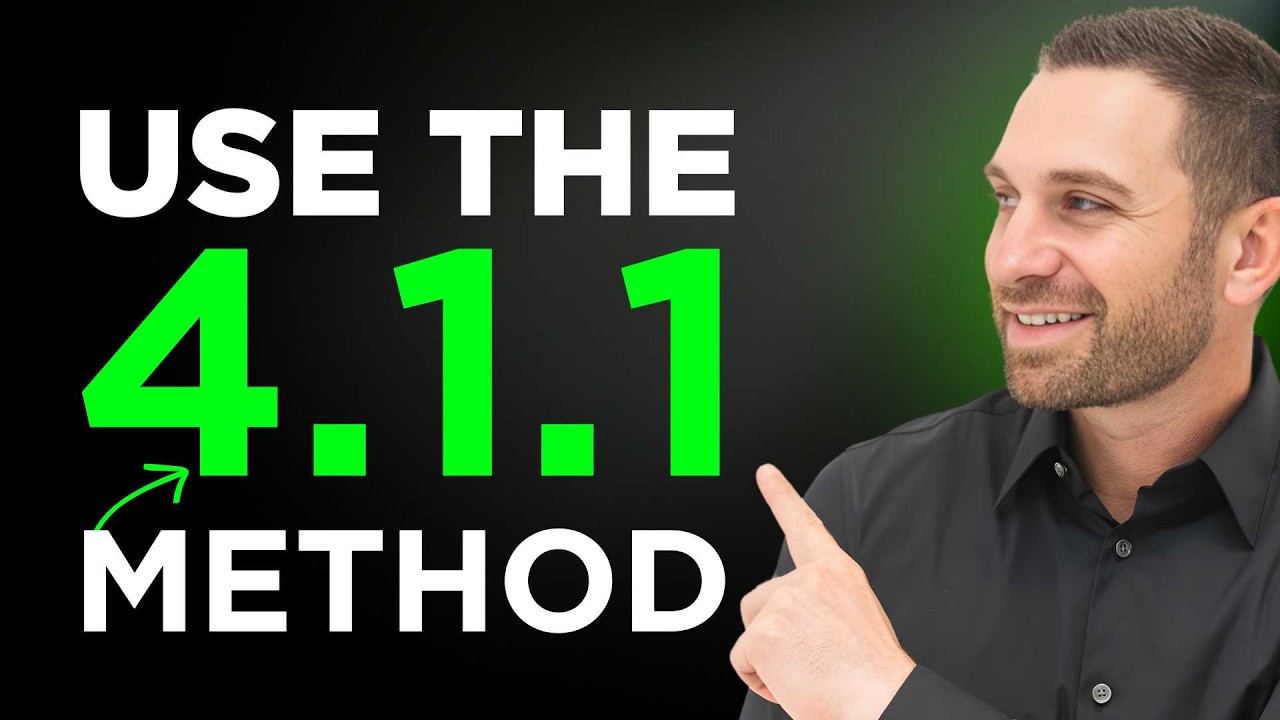
“That’s your marketing plan. Now, for our sellers who even want more push, more eyeballs, more showings, and a better shot driving multiple offers, we can switch on an additional campaign. We call it our 4-1-1 open house formula.”
You’re offering something additional. You’re giving them a way to increase exposure and activity on top of what you’ve already built.
You’re positioning this as a bonus, not a standard service, not an afterthought. It’s an add-on. It’s something they can opt into if they want a stronger push.
And the name plays a role here.
I got the name of the formula from a friend, BAM board member Sharran Srivatsaa. He actually calls his the 4-1-2. I’m using 4-1-1 because my team name is the One Team.
You can call it whatever you want. Whatever it is, make sure sellers know there’s thought and strategy behind your formula that separates you from the average agent.
Present the 4-1-1 Open House Formula
Once you’ve positioned this as a bonus, now you can walk them into the actual strategy.
Start by anchoring it in what they already believe.
“Most agents treat an open house like a checkbox. They toss it on the MLS. They put a sign in the yard and hope people show up.”
That line hits because it matches what sellers have seen before (or heard from others).
Now you layer in your approach:
“We run it as a 6-day marketing campaign.
“Four days before, one big push on the day, one follow-up the day after.”
That’s the 4-1-1.
At this point, you’re not going into every detail yet. You’re giving them the structure. You’re giving them something they can understand and repeat back.
Then you bring it back to what they actually care about:
“The goal here is simple. By adding on the 4-1-1, we’re going to create more conversations about your home…”
More conversations means more showings, which turn into more offers. More opportunities to get to what they want.
“More demand usually means a better price and stronger terms for you.
“Let me walk you through what that actually looks like.”
Now that you have their attention, you can go deeper into the campaign.
Break Down the 6-Day Campaign
At this point, you’ve given them the structure. Now you walk them through what actually happens.
For us, it’s a 6-day marketing campaign for a 2-hour open house.
Four days before, the day of, and what happens after. There’s a before, on, and after strategy tied to those two hours they’re leaving their home.
From there, you go into the deliverables.
We have 12 different deliverables layered on top of being on all of the major portals and advertised online. This is on top of the table-stakes exposure like Zillow, Realtor.com, Redfin, and everything else most agents are already doing.
For us, that includes advertising online, Facebook and Instagram ads targeting people who are already clicking on these platforms. If they’re looking in the next town over or nearby markets, we’re staying in front of them throughout the week.
As you walk through this, the goal is to show the seller there’s a time-bound plan behind every step.
The Follow-Up Is Where Most Agents Fail
Once you’ve walked them through the campaign, you need to close the loop on what happens after the open house.
This is the part where most agents lose credibility.
From the seller’s perspective, they leave their home for two hours, come back, and have no idea what actually happened beyond who walked through the door.
So you address that directly.
On the day after, it’s all about the follow-up strategy so the seller knows there isn’t a single lead or opportunity that came through their home that is being wasted.
You want them to understand that every conversation continues.
Every person who showed interest gets contacted.
Every potential opportunity gets worked.
When you’re walking through this in the presentation, you need to be able to clearly explain each deliverable without hesitating. When the seller leaves their home for that open house, they know exactly what’s happening next.
They need to know there’s a system in place to capture and follow up with every opportunity that comes through.
Frame It the Right Way for Sellers
Once you’ve walked them through the campaign, this is how you bring it all together:
“I’d hate to have you leave your home for two hours on a Sunday and not have a system to follow up with every person who walked through that door.”
Now they’re thinking about what it actually feels like to leave their home and clear out for a couple hours. But you’ve also given them a reason to trust that something productive is happening while they’re gone.
It also reinforces everything you just showed them. You’re tying it back to their experience and showing them that nothing is left to chance once that open house is over.
By that point, they’re no longer guessing what happens next.
They know.
Close with the A/B Question
Once you’ve walked them through everything, this is where most agents lose it again.
They go right back to, “So, do you want an open house?”
Don’t do that. You’ve already built the case. Now, you guide the decision.
Here’s how you set it up:
“So instead of a two-hour open house that depends on luck, you get a structured 6-day 4-1-1 campaign designed to create as much demand as possible for your home on top of all of the marketing we’re already doing.
“For our sellers who want that max push layered on top of everything else we’re already doing, does that feel like the level of exposure you’re looking for, or would you prefer a more basic approach?”
That’s the A/B question. You’re giving them two paths: run the full 4-1-1 campaign and go all in on exposure, or keep it basic and skip it.
And listen to how that second option sounds.
Basic.
That’s what every other agent already pitched them.
Stop Asking. Start Presenting a Campaign
Let’s recap.
Stop asking, “Do you want an open house?”
Walk them through strategy.
The 4-1-1 formula is a 6-day campaign. Four days before, one push on the day, one follow-up after.
You’re showing them:
- How you’re going to create activity around their home
- How you’re going to generate conversations
- How you’re going to turn that into showings and offers
Plug in the pieces that fit your business. Keep the structure. Swap out the parts you can’t execute.
Then close it with the A/B question.
Give them a clear choice: maximum exposure or basic.
Make the decision easy.
The agents who walk into listing appointments with a system like this are going to win.
The agents who are winging it are going to wonder why nothing’s working.
And the ones who are still asking, “Do you want an open house?” are going to keep hearing no.
For the full 4-1-1 open house formula and weekly role play masterminds, join us in BAMx.