
Lance Billingsley has a blunt read on why real estate agents leave brokerages: the brokerage never gave them anything to belong to.
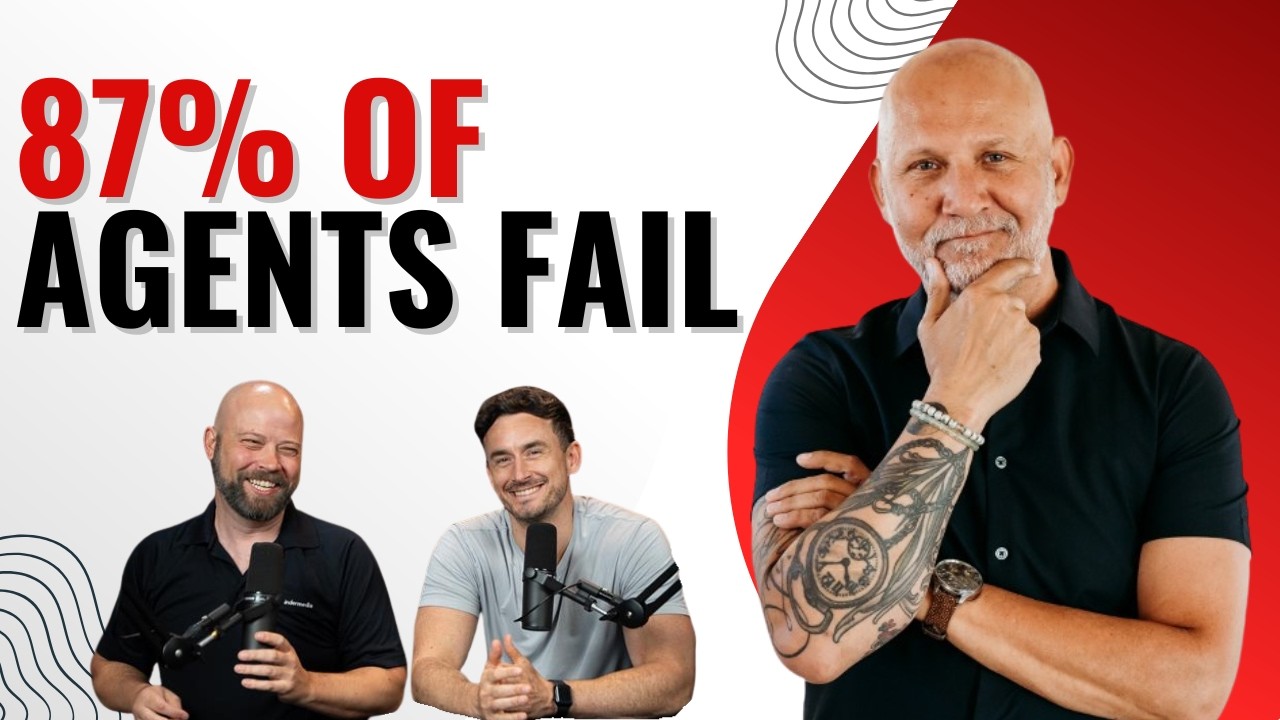
Billingsley is vice president of agent development at Navi Title Agency, host of the 13% Podcast, and a former team owner with over a decade in the business. On a recent episode of the Stay Paid podcast with hosts Luke Acree and Josh Stike, he laid out a theory about why brokerages struggle to keep agents loyal, and it has nothing to do with commission splits.
His theory: a real estate team already functions as the community brokerages never built. He compares it to how megachurches grow, through small groups people want to join.
Here’s the full breakdown of his theory on teams as “neighborhood groups” and why brokerages still haven’t caught on.
The Megachurch Model Applied to Real Estate Teams
Billingsley lives down the street from one of the biggest megachurches in the country, and he uses it to explain what brokerages keep missing.
“How do megachurches build? They don’t. You show up on Saturday and Sunday and there’s culture and there’s community and there’s sports. They want a male between 35 and 55 that has a pretty good job. You bring everybody with you. But it’s not made there. It’s made in neighborhood groups.”
The small groups are what keep people coming back to a megachurch. Real estate teams work the same way. A team gives agents a specific group to belong to inside a much bigger organization, the same way a small group does inside a megachurch.
What a Neighborhood Group Team Actually Looks Like
Billingsley points to real examples already running in his own market.
“When a team becomes a neighborhood group, I can join a team that’s all women. I can join a team that’s all faith-based. I can join a team that’s all soccer parents. I can join Hispanic, African American, Indian, Asian. Those are the neighborhood groups. The brokerages have yet to figure that out. And when they figure it out, they will hold on to those people.”
A team built around faith or a specific cultural community becomes the neighborhood group a brokerage never assembled on its own.
Every one of those groups gives an agent something to join beyond a brand or a logo on a business card. Agents stay because the team feels like theirs before it feels like the company’s.
Billingsley says it’s consistently the biggest teams, the ones running into the hundreds of agents, that have figured out how to break into these smaller groups instead of operating as one flat team.
That’s how they win agents away from brokerages and keep them.
Why Brokerages Still Haven’t Adopted the Model
Luke Acree has seen the same resistance from the brokerage side while researching his own book on real estate teams.
“I’m writing this book on teams… have interviewed some CEOs of pretty big organizations out there that have teams, and the brokerages have not figured out totally how to adopt the teams. Some have, but a lot have not. They see them as a threat, and so they see it as something that’s going to recruit agents. And so they really haven’t adopted that model.”
Brokerage leadership tends to view a strong team as a recruiting pipeline working against the company.
Billingsley’s read is similar: brokerages stay focused on staying afloat operationally, and building a neighborhood-group culture has never made it onto that list.
If you’re leading or building a team, use this as your filter. Stop selling production numbers and start deciding what kind of neighborhood group you’re actually building. A team organized around a shared identity gives agents a reason to stay that a commission split never will.
Brokerages that figure this out first will be the ones holding onto their best agents. Until then, the teams that already function like neighborhood groups keep winning them.
Team leaders building this kind of culture need a place to scale it. BAM Camp is the nation’s number one event for team leaders ready to break through to $100M and beyond, happening September 22 and 23, 2026, in Scottsdale, Arizona.
Check out the event page to learn more and save your spot.