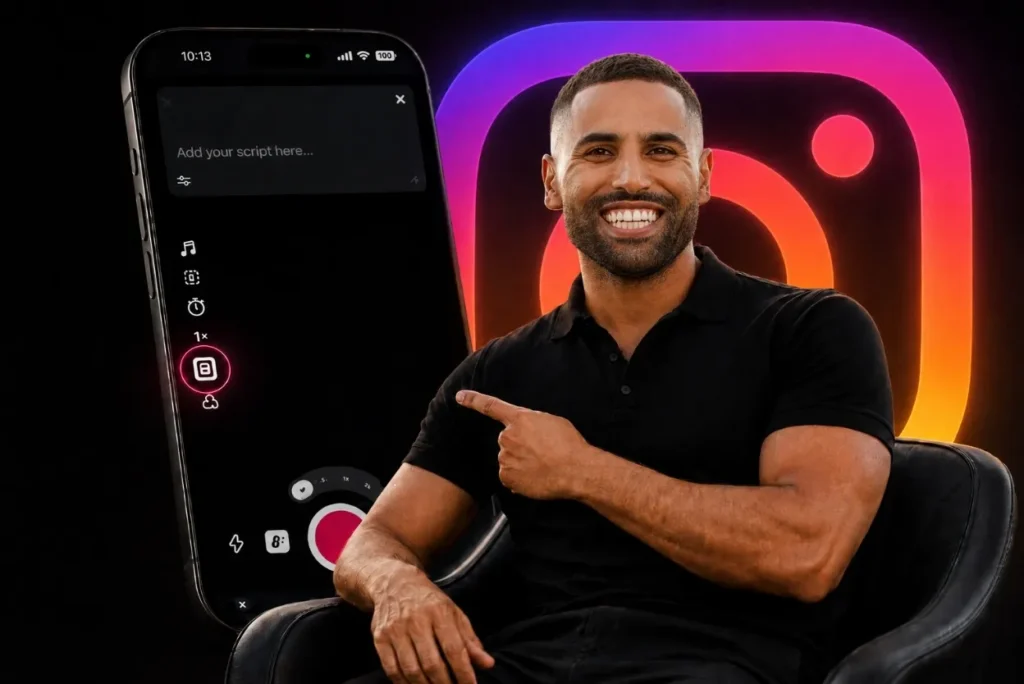
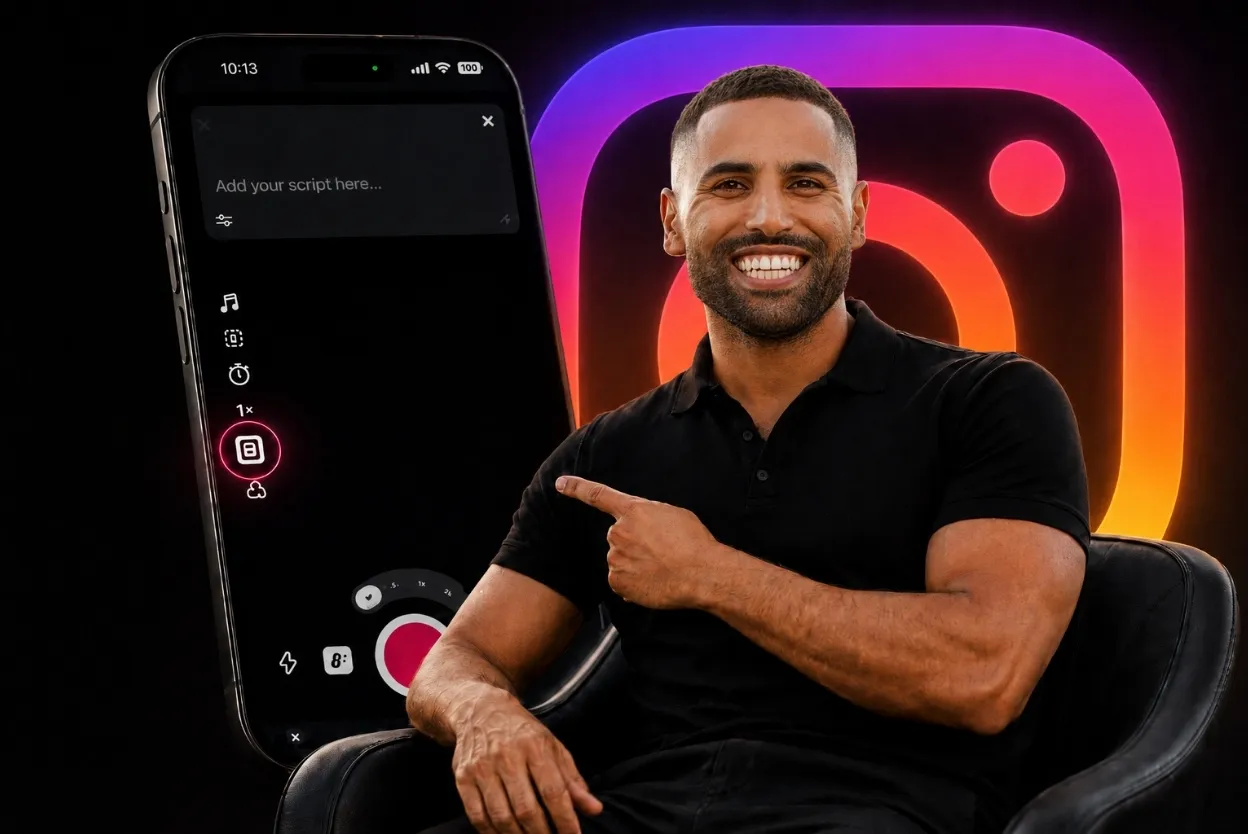

I’ve been using teleprompters for years.
My setup includes a Glide Gear teleprompter, a DSLR camera, an iPad, and a tripod. It works great, and if I’m recording something that needs a polished, professional look, I’ll still use it today.
That’s why I was surprised when I found myself reaching for the teleprompter inside Instagram’s Edits app more often than my traditional setup.
Not because it’s better. Because it’s easier.
As agents, we tend to overestimate the importance of equipment and underestimate the importance of removing friction. Over the last few months, I’ve become convinced that friction is one of the biggest reasons agents create less content than they want to.
Most agents already know video works. They understand it builds trust, creates conversations, and keeps them top of mind with their audience. The challenge is turning an idea into a finished video without making it a thirty-minute production.
That’s where I’ve found the Edits teleprompter to be surprisingly useful.
What I Like About the Edits Teleprompter
The biggest advantage is how little setup is required.
With my traditional teleprompter, I need to pull out the camera, mount everything, connect the iPad, get the tripod positioned correctly, and then break it all down when I’m done. None of those steps are particularly difficult, but every additional step creates another opportunity to put the project off until later.
The Edits teleprompter lives inside the phone that’s already in my pocket.
Once I have a script, I paste it into the app, adjust the speed, hit record, and start talking.
That’s it.
The other thing I really like is that the script sits directly on the screen near the camera lens. Instead of looking off to the side at notes or trying to remember what comes next, your eye line stays focused where it should be. The result feels much more natural than people expect, especially for a tool that’s built directly into a social media app.
Could I achieve a more polished result with my traditional setup? Absolutely.
The question is whether that difference matters enough to justify the additional time.
Most days, for the type of content agents should be creating consistently, my answer is no.
Why This Has Increased My Content Output
What surprised me most was how much more content I started producing.
Most of my content starts with a single piece of information. It might be a housing article, a market update, a news story, or a topic I think agents or consumers should understand.
Once I find something worth talking about, I usually drop it into ChatGPT and start building assets around that idea. At the same time I’m creating a script for a talking-head video, I might also be creating a headline-style social post, an email to my database, story content, or even a longer article.
Everything starts from the same source material.
One of the biggest shifts I’ve made over the last few years is realizing that a single idea should almost never become a single piece of content.
The article becomes the post. The post becomes the video. The video becomes the email. The email becomes the article.
Once the script is finished, recording should be the easiest part of the process.
The Edits teleprompter helps make that possible.
Because the recording process is faster, I spend less time staring at a camera and more time doing the things that actually move the business forward, like having conversations with clients and following up with opportunities already sitting in my pipeline.
Why Most Agents Sound Robotic on a Teleprompter
I think this is the part most people get wrong. The problem is usually the script, not the teleprompter.
A lot of agents will ask AI to generate a script and then try to read it for the first time while they’re recording. That’s usually when things start sounding stiff and unnatural.
What I’ve found is that writing the script is actually part of the rehearsal process.
When I’m creating content, I’m constantly editing. I’m shortening sentences, replacing words, moving sections around, and rewriting things that don’t sound like something I would naturally say.
By the time I hit record, I’ve already gone through the material several times. I’ve already figured out where I want to pause, identified the points that matter most, and have internalized the message.
The delivery feels more natural because the script isn’t new anymore.
In many ways, the writing process becomes the first rehearsal.
“It’s Easier for You Because You Were a Lawyer”
This is probably the comment I hear most often.
Agents will tell me that video comes easier to me because I used to be a lawyer, because I’ve spent years speaking in front of people, or because I’ve recorded hundreds of videos.
Maybe there’s some truth to that. But I think people overlook something much simpler: Reading lines is easier than memorizing them.
It doesn’t matter whether you’ve been on camera for ten years or ten days. If I gave you the choice between memorizing a script and reading one, you’re probably going to deliver a better result reading it.
The skill is learning how to communicate naturally while using the tools available to you. Nobody starts out great at that. You get better through repetition.
The goal isn’t to create the perfect video. It’s to create enough videos that eventually speaking to a camera feels as natural as speaking to a client across the table.
Final Thoughts
I’ve spent years experimenting with cameras, microphones, lighting, teleprompters, editing software, and every other content creation tool you can imagine.
What I’ve learned is the best system isn’t always the one that produces the highest-quality result.
It’s the one you’ll use consistently.
That’s what I like about the Edits teleprompter.
It’s simple, fast and it removes friction.
And if removing a few extra steps helps you create more content, that’s usually worth far more than squeezing out a little extra production quality.
At the end of the day, the agents getting results from their content are usually the ones who make it easiest to press record.