There’s no shortage of AI tools promising to save agents time, generate leads, and build their business faster than ever. From ChatGPT listing descriptions to Zillow Flex leads dropped straight into your inbox, the pitch is clear: tech can do it better, faster, and with less friction.
But when it comes to what your clients really want from you, speed will only get you so far.
Don’t get us wrong; speed is great! Speed will get you in the door. But… it might not get you to the finish line. It can 100% help you stand out and begin building trust with potential clients.
But earn the kind of loyalty that lasts a lifetime? Not alone.
So, what does it take to build a real estate brand your clients will actually trust and recommend to everyone they know?
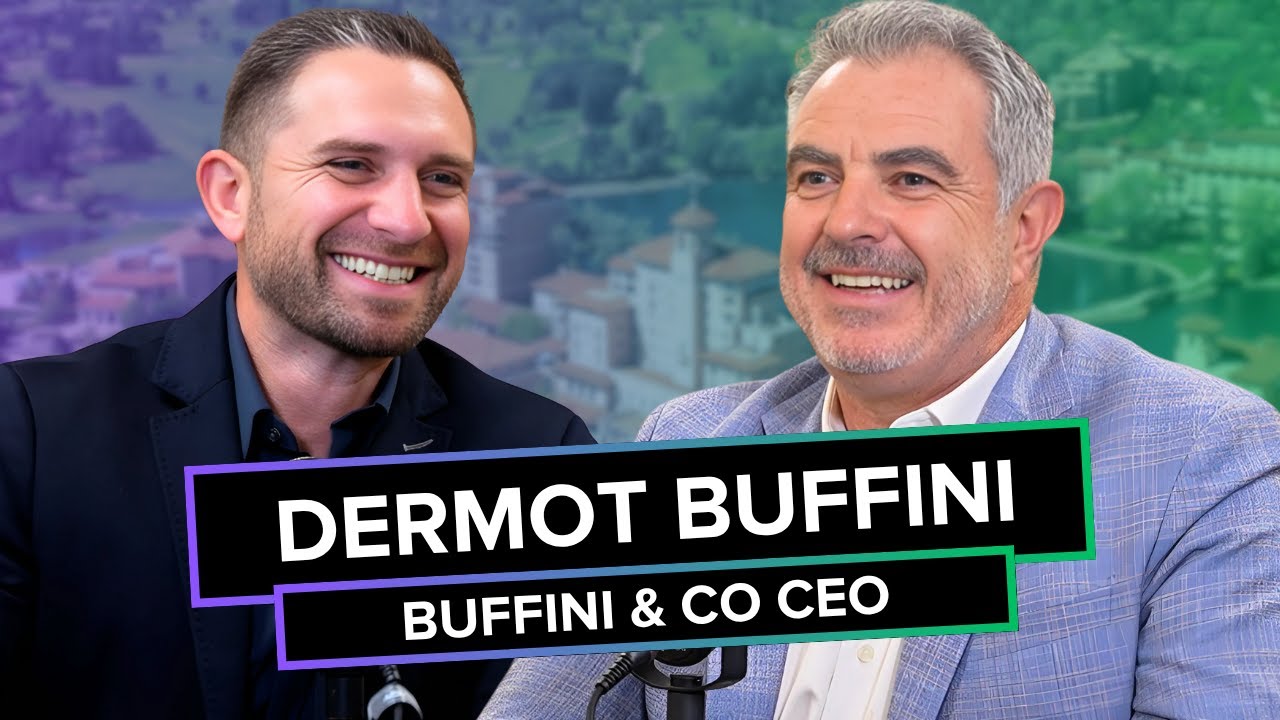
That’s the question Byron Lazine and Dermot Buffini unpacked in a recent BAM interview. And for real estate professionals trying to stand out in a crowded, content-saturated market, the answer matters more than ever.
Because at the end of the day, your client isn’t looking for a robot. They’re looking for a real human they can trust with one of the biggest financial decisions of their life.
Trust Isn’t Optional. It’s the Job.
When Byron asked how agents can stay competitive as platforms like Zillow and RocketMortgage dominate the digital space, Dermot Buffini didn’t sugarcoat the reality. These companies will continue pouring billions into staying in front of your clients. They’re fast, they’re everywhere, and they’re not slowing down.
But that doesn’t automatically lead to trust.
“In our business, who’s in the center of the relationship? … People in the center of the relationship have to be people who can be trustworthy. They have to be informed of what’s happening in the industry and the different models.”
That means you don’t just show up for the transaction. You show up to guide. You bring perspective when the headlines stir fear. You give context when the market shifts. And when your clients are overwhelmed by options, you become the filter they actually trust.
This is where the real divide happens, not between agents and AI, but between agents who step up and those who default to convenience.
The Danger of Defaulting to “Done for You”
Let’s be honest. AI is useful. ChatGPT can knock out a listing description in seconds. The tools aren’t the problem.
The problem is when agents start outsourcing everything to tech and forget the part of the business that actually builds trust.
It’s like they forget that automation is a tool to free up time for the activities and conversations that build lifetime relationships with clients. And in those conversations, you need to be the one who can empathize with your client’s situation while calmly presenting solutions that are in their best interests. Tech can spit out solutions, but they won’t necessarily be the right ones.
That doesn’t mean you can’t use tools to help you work smarter. It means you can’t skip the thinking. You can’t let automation replace insight.
Dermot provided an example of how this relates to a real estate agent’s use of technology:
“I had this guy write down every principle that he knows and believes in in real estate and knows to be true for 40 years. And then look at the technology and see if that technology enhances and brings that principle alive. And if it doesn’t, don’t bother with it because you don’t believe in it. It’s not going to work.”
Clients don’t care if your newsletter was AI-generated. They care whether it helps them make better decisions. And they care about whether the real person behind it can be reached when they have a question.
The more technology floods the space, the more valuable real and personalized advice becomes.
Emotional Sobriety: The Real Differentiator
One of the most powerful parts of the conversation came when Dermot introduced a phrase more agents need to understand: emotional sobriety.
It’s not just about staying calm in a tough deal or being professional on camera. It’s about having clarity. The kind that lets you stay rooted in your values, no matter what the market, and your clients, throw at you.
In Dermot’s words:
“That requires a certain level of emotional sobriety, to take the time in the morning to go ‘What do I believe in? Who am I? And what do I absolutely positively know is going to work?’”
In a noisy industry, emotional sobriety means showing up with perspective. It means thinking long-term when everyone else is reacting. It means understanding who you are, what you stand for, and why you’re in this business in the first place.
You can’t automate that with AI. But when your clients feel it, they trust you. And that’s the difference between a one-time deal and a decade of referrals.
You’re Not Just a Marketer. You’re a Fiduciary.
It’s tempting to focus all your energy on visibility. More content. More clicks. More traffic. But your brand isn’t built on impressions. It’s built on how well you serve.
Dermot shared a simple filter Buffini & Company uses in their own business:
“We do well because we help other people do well. And it’s as simple as that. And if they don’t do well, they shouldn’t be with us. They shouldn’t pay us every month for coaching.”
That mindset applies just as much to agents. If your marketing is great but your advice is vague, you’re not building a business. You’re playing dress-up.
Trust isn’t something you can bolt onto your brand. It’s the foundation. Everything else is decoration.
The Real Opportunity Right Now
AI isn’t going anywhere. Neither is automation. And yes, some agents will use those tools to scale smartly and stay top of mind. But the ones who win long-term will be the ones who stay present, thoughtful, and trustworthy.
Those agents will be the voice their clients actually listen to when the market feels uncertain. They’ll be the reason someone decides not to sell this year, and the first call when it is time next year. They’ll be the ones who didn’t panic, didn’t pretend, and didn’t try to automate what should have been a conversation.
So use the tools. Leverage the tech. But remember what your clients are really hiring you for.
They don’t need more content. They need more clarity.
They don’t want a faster response. They want a real one.
If you haven’t watched the full conversation between Byron Lazine and Dermot Buffini, make some time to dive in. You’ll walk away with fewer shortcuts, but far more clarity on what it takes to succeed in today’s market.