Let’s clear something up right away: open houses still work.
More specifically, they work when they’re executed with intention.
Stephen Acree’s team closed 18 transactions last year directly from their open house strategy. That’s because they treat open houses as structured lead generation systems, not casual Sunday events.
If your open houses aren’t producing, the issue is likely in the execution.
So let’s talk about how to fix that.
What’s the real purpose of hosting an open house?
Most agents treat an open house like a showing with a sign-in sheet. They sit at the kitchen island, put out a few flyers, and wait. If someone walks in ready to write an offer, great. If not, it becomes “good exposure.”
That mindset is the problem.
An open house is not primarily about selling that specific property. It’s about identifying and building relationships with people who are actively thinking about moving. That’s a completely different objective. When you shift from “hosting” to “leading,” the entire dynamic changes. You’re no longer hoping something happens. You’re intentionally creating opportunities.
When you walk into an open house without a clear intention to capture data, build rapport, and set up follow-up, you default to being a tour guide. And tour guides don’t build pipelines.
Why are scripts so important in real estate?
There’s a misconception that great agents “wing it.” In reality, great agents prepare.
The agents who win at open houses don’t talk more; they ask better questions. They understand that every conversation is about gathering information that will determine how they follow up. Questions like “What brought you out today?” or “If the right home showed up, what would your timeline look like?” aren’t small talk. They’re diagnostic.
You’re not interrogating someone. You’re identifying where they are in the funnel. Someone who says they’re six to twelve months out may actually move in three if the right property appears. Someone who says they’re “just browsing” might be guarded because they don’t want to feel sold. Buyers compress timelines all the time. The only way to uncover the truth is to ask with confidence.
Scripts matter because they remove hesitation and give you clarity in moments where most agents retreat. Without structure, agents avoid pushing for sign-ins, skip timeline questions, and fail to set expectations. Then they wonder why nothing converts.
Confidence in open houses doesn’t come from personality. It comes from preparation.
How do you get from open houses to closings?
The money is rarely made during the two hours of the event. It’s made in the follow-up. That’s where most agents lose.
Here are three steps to get you from open houses to closings:
#1: Collect real contact information.
Not optional information. Not “if they feel like it.” The seller deserves to know who walked through their home. That’s a legitimate, professional reason to require sign-in. Framing matters. When you confidently explain that sign-in protects the seller and allows visitors full access to the home, most resistance disappears.
#2: Provide a compelling reason to follow up.
Right now, more than half of buyers say they want their agent to find them properties. That is your opening. When you explain that many homes sell off-market and that you have access to opportunities they won’t see online, you immediately position yourself differently. Now your follow-up isn’t random. It’s valuable.
#3: Move quickly.
Speed-to-lead still matters. Reaching out the same day reinforces professionalism and shows you operate at a high level. Even sending a property that isn’t a perfect fit can be powerful, as long as you explain why you sent it. When you say, “I know this one is slightly smaller than what you described, but I remembered you wanted an open layout,” you demonstrate that you were listening. That builds trust.
And here’s something that surprises a lot of agents: the people who are most likely to buy often won’t answer your calls right away. They’re thinking. They’re guarded.
If you stop after two attempts because you assume they’re ghosting you, you’ll miss deals. Consistent follow-up is not annoying when it’s tied to value.
How should you structure the open house itself?
Preparation is everything. Before the first guest walks in, you should know the property as if it were your own listing. Run a CMA. Understand the updates. Be prepared to speak intelligently about the home and the area. Not to overwhelm people with data, but to build authority.
During the event, don’t follow visitors around the house. That feels uncomfortable and sales-heavy. Instead, position yourself intentionally so you can greet them, guide them toward sign-in, and reconnect as they exit to gather feedback. The goal is not to pressure them inside the home but to collect insight and build rapport.
When you share information, share selectively. Mention something meaningful about the property that builds credibility; infrastructure updates, neighborhood nuances, insights they wouldn’t know on their own. But remember, the value isn’t the house. The value is your expertise and access.
Finally, go in with the right mindset. Open houses require emotional courage. Every agent feels that internal resistance before pushing for information or stating their intention. Top producers move forward anyway. They don’t hope for opportunity. They create it.
How do I run an Open House system that works?
Most agents don’t struggle because they lack effort. They struggle because they lack structure.
That’s why ReminderMedia’s Open House Kit exists. It provides the operational framework that turns an open house into a repeatable system.
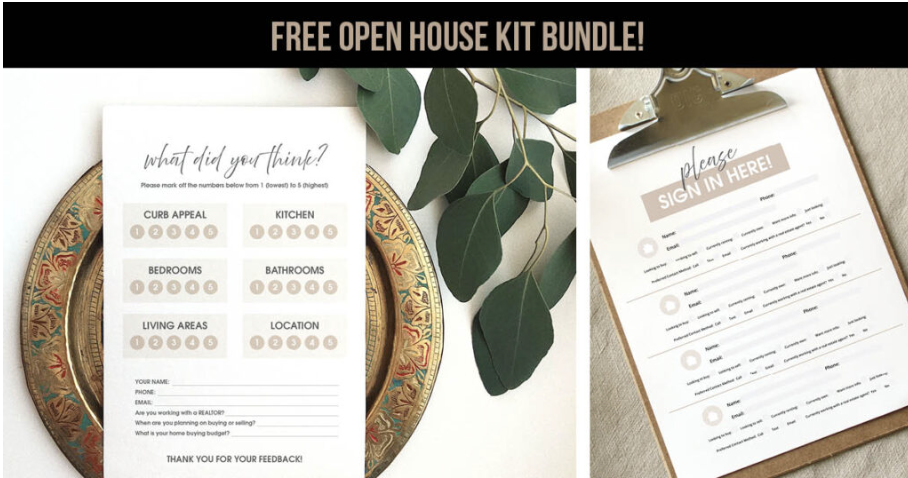
The kit includes branded sign-in sheets designed to capture information, conversation frameworks that guide you from greeting to follow-up, and structured messaging templates to ensure you reach out professionally and quickly. It also includes planning tools and marketing materials that elevate your positioning and remove the guesswork.
When you eliminate improvisation, you increase consistency. And consistency is what builds a predictable pipeline.
My challenge to you
Stop treating open houses like optional exposure.
Decide before your next one that you are there to generate business. Set a goal for the number of meaningful conversations you will have. Prepare your follow-up before the first guest arrives. Get in the right mindset.
Because the difference between top producers and mediocre producers isn’t the market. It isn’t personality. It isn’t luck.
Top producers take action. They state their intention. They follow up longer than everyone else.
Open houses still work.
The only question is whether you’re willing to run one with purpose.