
Agents love debating the “best time” to make calls. Morning or afternoon. Early week or late week. Weekends or never.
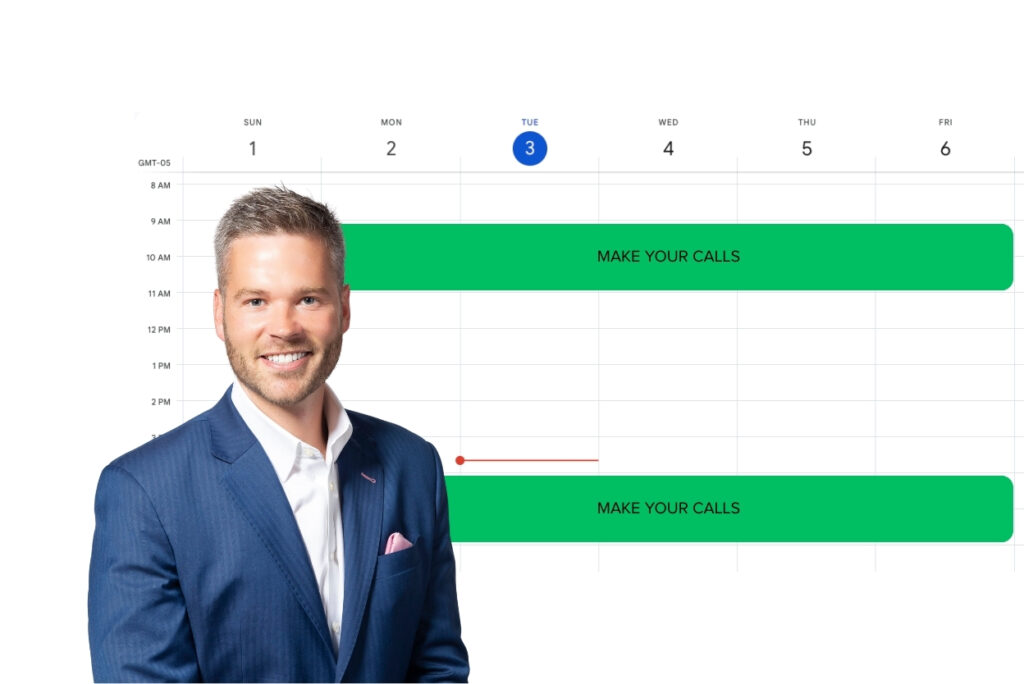
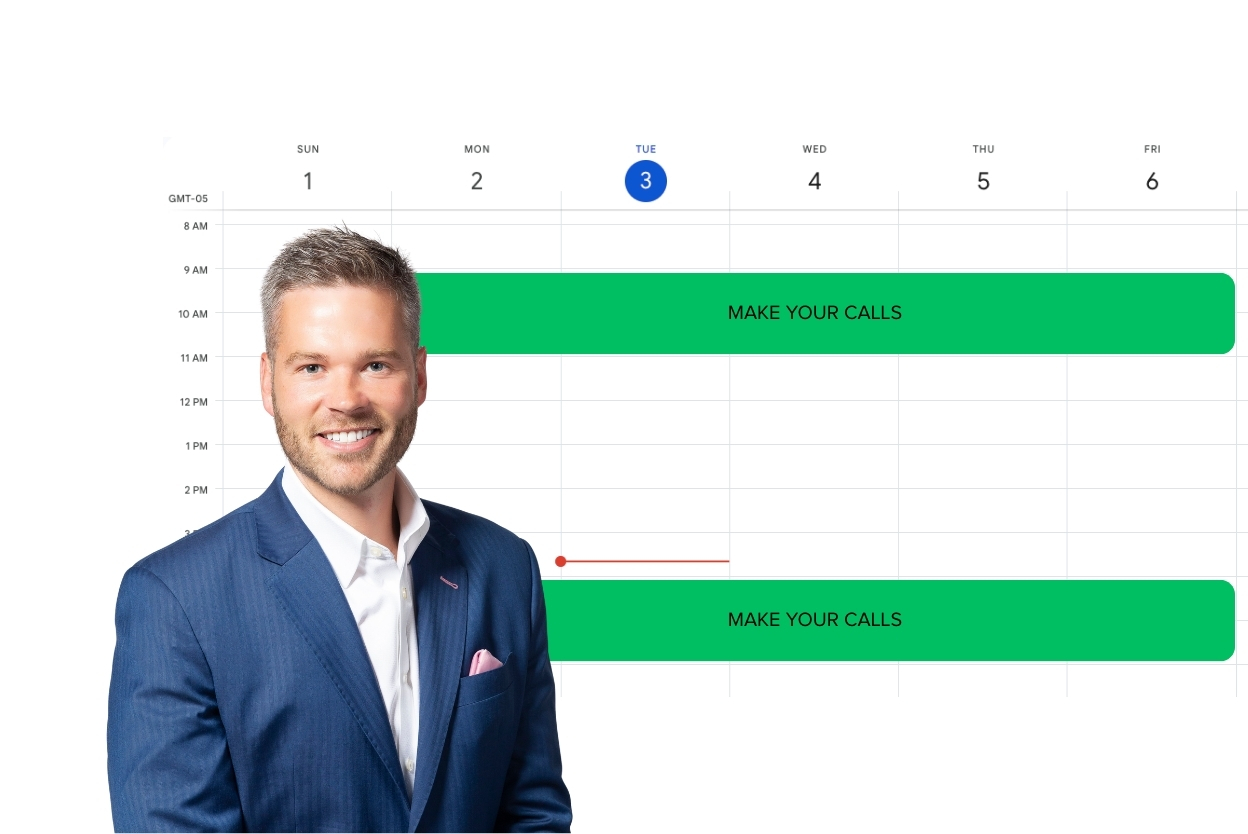
Andrew Undem doesn’t hedge. If you’re making sales calls, block 9–11 a.m. or 4–6 p.m. That’s it. If you’re going to be a professional salesperson, “those are your blocks.”
View this post on Instagram
But is that opinion, or is it backed by research?
A Harvard Business Review study analyzing 3 years of data, 15,000 leads, and 100,000 call attempts gives us measurable patterns. And the timing Andrew recommends lands inside the highest-performing windows.
Here’s what the data says, and how top-producing agents operationalize it.
Midweek Outperforms Early Week
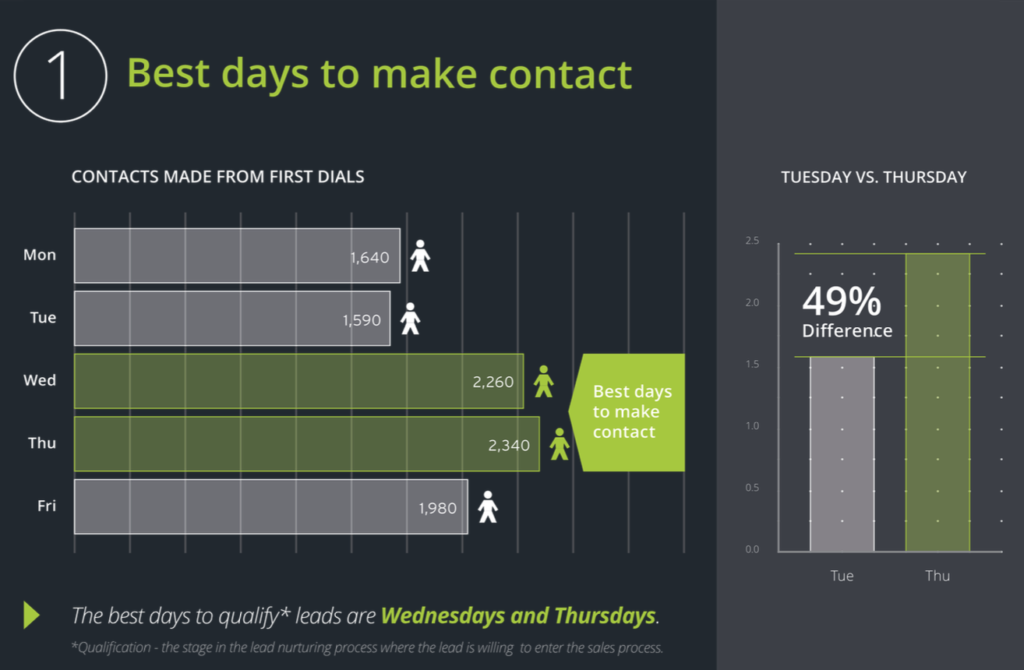
Not every day performs the same. The Harvard Business Review data shows Wednesday leading the pack, with Thursday close behind. In fact, the study found a 49% difference in qualification rates when comparing Tuesday to Thursday. That’s a meaningful jump in performance.
If you’re going to protect a few serious prospecting blocks each week, midweek is where you want them.
Source: Harvard Business Review
Andrew Undem tells agents to focus on Monday through Wednesday. The data supports that instinct, especially when it comes to Wednesday. It’s one of the strongest days to actually reach someone and move the conversation forward.
By the middle of the week, people are into their routine. They’re past the Monday scramble. They’re thinking about what needs to get done before the weekend.
In other words, they’re more likely to answer the phone and stay on it.
This doesn’t mean you skip prospecting on Monday or Friday. It means you’re intentional about where you put your heaviest dialing. If your schedule only allows two aggressive call days, make one of them Wednesday.
Stack your volume when your odds are better.
Best Times to Call: Morning and Late Afternoon Win
The time of day matters just as much as the day of the week.
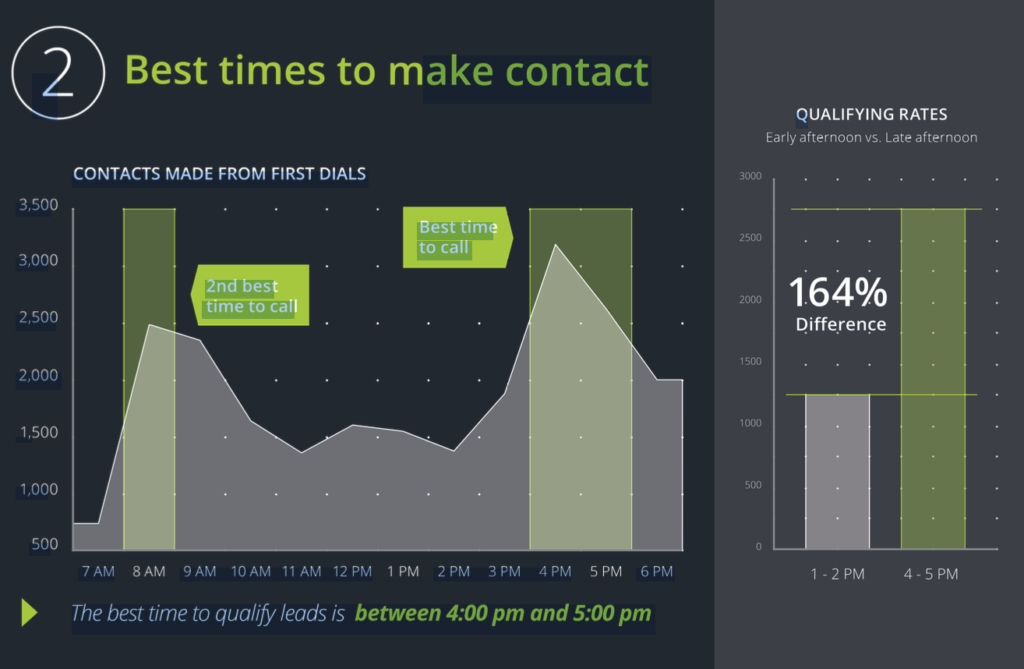
The Harvard Business Review data shows a clear spike in performance between 4:00 and 5:00 p.m. Qualification rates during that window significantly outperform early afternoon. The study highlights a 164% difference when comparing 1:00–2:00 p.m. to 4:00–5:00 p.m.
Source: Harvard Business Review
Tom Toole referenced the same windows during a recent BAM webinar with Byron Lazine:
“So you see these green zones here. It’s really eight to nine o’clock. And then you got a range that goes until about 11. And then you see a big trough in the middle of the day. And then you see that number again. And then the best times the contact rise in the four to six window.”
Morning performs well. Late afternoon performs even better. Midday tends to dip.
For real estate agents, the real challenge is protecting those windows.
Afternoons fill quickly with showings, listing appointments, inspections, and “quick” meetings. If prospecting is flexible, it gets pushed.
That’s why calendar discipline matters. As Byron put it:
“It’s got to live in your calendar.”
Your calendar should reflect your top prospecting times. Block it. Protect it. Treat it like an appointment with your future pipeline.
Speed to Lead: 5 Minutes Is the Line in the Sand
Timing includes how fast you respond.
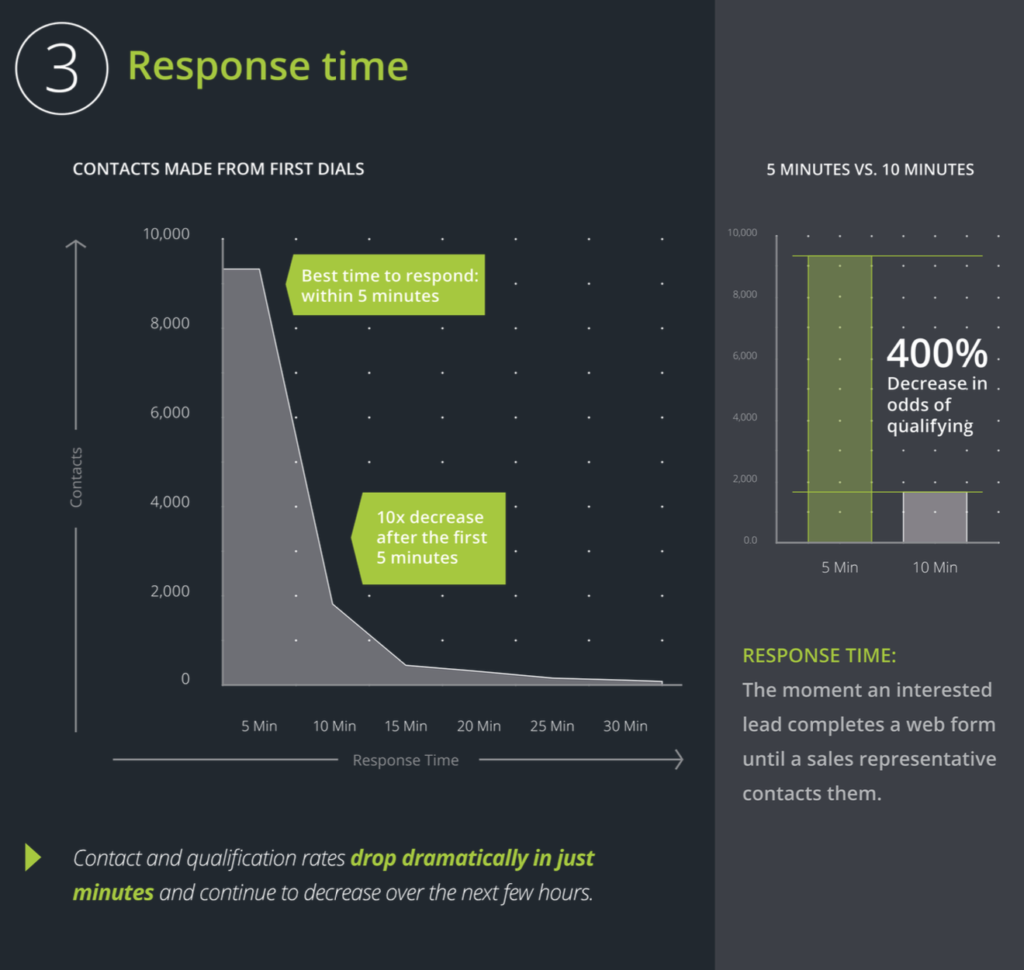
The Harvard Business Review data shows that responding within five minutes dramatically increases your odds of qualifying a lead. Waiting 10 minutes results in a 400% decrease in qualification rates.
Source: Harvard Business Review
Translation: your response window does not stay open for long.
Why? Because the caller is already calling other agents to see who will actually pick up or who will get back to them first. If you’re not one of those, you lose.
In real estate, this shows up in everyday situations.
- An online lead comes in while you’re with a client.
- Someone signs into your open house.
- A sign call hits your phone while you’re driving between appointments.
When someone submits their information, they’re actively thinking about a move. They’re focused on real estate in that moment.
Five minutes later, their attention moves elsewhere. Ten minutes later, they may already be talking to another agent.
Byron Lazine addressed this directly during the webinar:
“The best time to respond [is] obviously within five minutes.”
Fast response requires structure. That can mean tighter call blocks, stronger notifications, or a clear rule that inbound leads get returned immediately.
Five minutes go by quickly. In this case, it often determines whether you make contact at all.
Persistence: Six Attempts Is the Floor
The data on follow-up is just as clear as the data on timing.
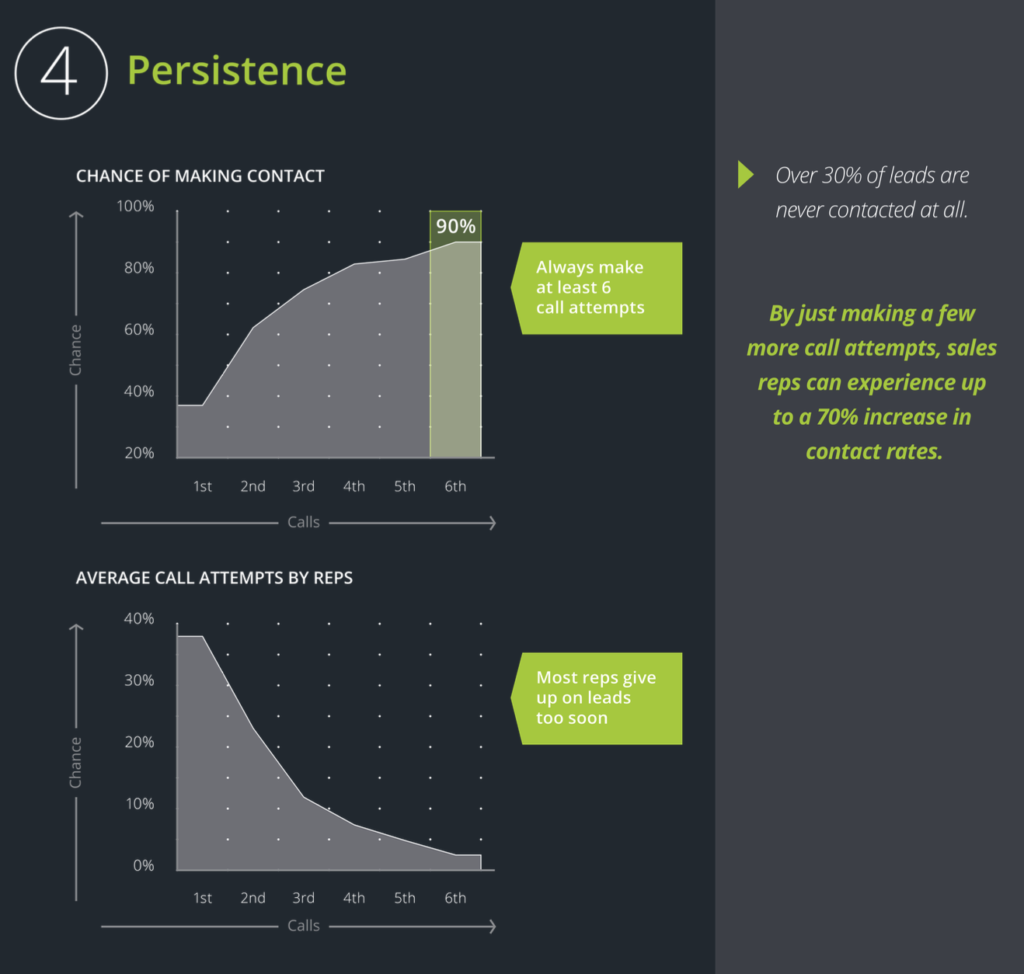
According to the Harvard Business Review research, contact probability increases significantly with additional call attempts. The study highlights that making at least six attempts materially improves your odds of reaching someone.
A few extra attempts can increase contact rates by as much as 70%.
Source: Harvard Business Review
Most agents never get there.
Two calls. Maybe three. Then the lead gets labeled “not responsive” and pushed aside.
The chart tells a different story. The probability curve rises with persistence. The opportunity often shows up after the third, fourth, or fifth try.
Tom Toole has shared the math behind this from his own numbers:
“We average a conversation from every four to six phone calls that are made. So you want to take the middle number, you can use five. My numbers closer to four. Some people are closer to six. That’s the range.”
This is where discipline makes the difference. A follow-up plan should not depend on how motivated you feel that day. It should be a rule. Six attempts minimum. Spread out across different times of day. Logged and tracked.
When you combine better days, stronger time windows, fast response, and consistent follow-up, you give yourself multiple chances to win the same opportunity.
Most agents don’t lose deals because of script. They lose them because they stop dialing too soon.
If you stop at two or three attempts, you’re quitting before the numbers even have a chance to work in your favor.
What This Looks Like on a Real Agent’s Calendar
All of this only matters if it changes how you plan your week.
Start by blocking two call windows each day. One in the morning. One in the late afternoon.
If you use the 9–11 a.m. and 4–6 p.m. blocks, you’re lining yourself up with the highest-performing time ranges from the data.
Give Wednesday some weight. If your week gets busy and you can only go hard on one or two days, make sure midweek is one of them. That’s where the contact rates spike.
Create a simple rule for new leads. When someone opts in, you call them right away. Not later that afternoon. Not tomorrow morning. Right away. Five minutes goes by fast, and the data shows it matters.
Then build a follow-up plan you actually stick to. Six attempts minimum. Different times of day. Different days of the week. Keep it simple and track it so you know it’s getting done.
This works when you do it consistently.
When you give yourself better odds and actually follow through, the pipeline starts to feel a lot less random.