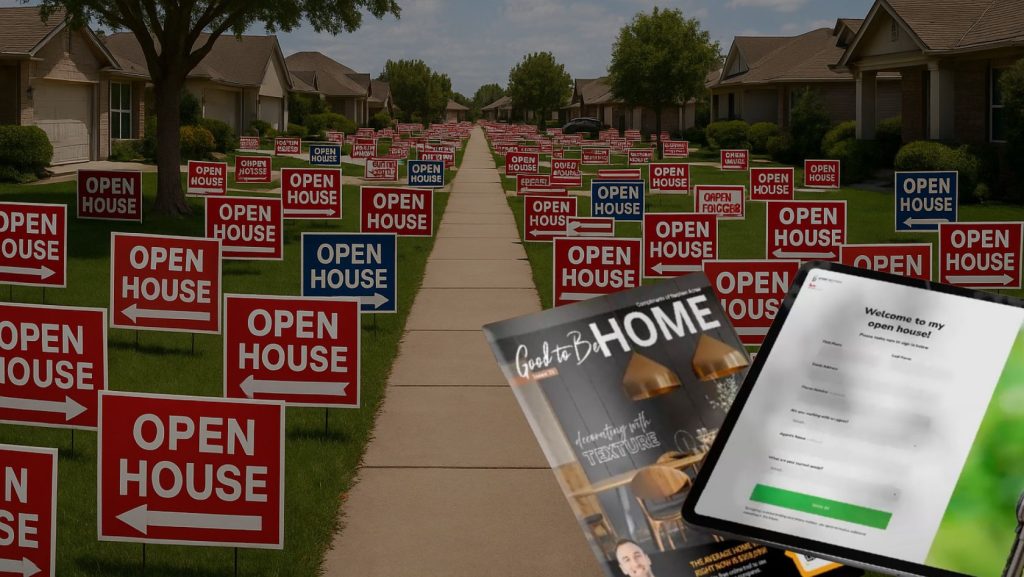


Plenty of agents are still treating open houses like a courtesy to the seller. They show up, put out a few signs, maybe print off some flyers, and hope someone scans the QR code.
Stephen Acree doesn’t hope. He converts.
In a recent BAM webinar with Luke Acree of ReminderMedia and Byron Lazine, Stephen shared the exact system his team uses to turn open house traffic into real business. We’re not talking about warm leads or new followers. We’re talking about 30 closed transactions in the past 18 months: 18 last year and 13 already for 2025.
It all started with one change in mindset.
As Stephen puts it,
“Everything should start with the end in mind…If you don’t start with the intentionality of actually getting a paycheck to go towards your why, your goals, then all of it is just a wash.”
Here’s how he does it.
Part 1: Choose the Right Listing
The biggest mistake agents make with open houses is holding them for the wrong listings. If the house is overpriced, in a slow-moving neighborhood, or already stale on the market, the best script in the world won’t save you.
Stephen went so far as to say,
“Choosing your listing is actually the most important thing that you can do in this business, especially if you’re gonna put time, effort, energy, gas, money, whatever into it.”
He shared the story of a new agent on his team who was doing everything right—following the checklist, setting up signs, showing up early—and still getting only two people through the door. Stephen stepped in, picked a different listing that was underpriced for the area, and that same agent brought 40 people through the next open house.
Traffic starts with the listing. Pick the wrong one, and everything else is a grind. Pick the right one, and everything else gets easier.
Part 2: Treat It Like a Paycheck, Not a Task
Before Stephen heads to an open house, he turns off the music in his car. No distractions, no autopilot. Just one question: how do I turn this open house into a closing?
That mindset shift changed everything.
“We go in with the checklist mentality that I’ve got to put up signs, I’ve got to be early, I’ve got to do all this stuff, instead of going in with the intentionality of, ‘I have got to get a closing from this open house.’”
When you treat open houses like a pipeline, not a passive marketing activity, you show up differently. You ask better questions, track your numbers, and follow up with purpose.
The alternative is what Byron has noticed with agents who treat open houses like an inconvenience:
“Agents will go to an open house, and they’ll treat it like it’s a Sunday thing. And they’ll forget the name of the property they’re in, or they’ll forget the price point they’re in. And I’m like, how do you forget the price point that you’re sitting in the living room of?”
Part 3: Execute the Weekly System
This isn’t a one-day event. It’s a five-day system that starts midweek and ends with an appointment. Here’s how Stephen’s team runs it:
- Wednesday: Pick the listing (based on price, location, and market activity) and run a quick CMA.
- Thursday: Post a simple carousel or listing video to social media, email the database, and update the MLS description to include open house details.
- Friday: Door-knock or circle prospect around the listing. Even if no one answers, this builds recognition.
- Saturday/Sunday: Host the open house with a clear goal in mind: get qualified contact info and book a follow-up.
- Post-event: Send a summary to the listing agent immediately and start follow-up that same day.
None of this is groundbreaking. In fact, that’s the point, as Luke explained:
“It’s not about how creative the creative is. It’s about the consistency. Everything in real estate is about compounding.”
Part 4: Convert Visitors at the Door
Here’s where most agents fall off. Visitors walk in, the agent offers a bottle of water and a sign-in sheet, and then lets them roam.
Stephen’s approach is direct.
“So a lot of people will put, you know, the QR code or the iPad or whatever at the kitchen island or something like that. I greet them at the door so there’s no way for them to get in the property without seeing me first. And I just say, ‘Hey, I need you to sign in right here, and then you can open up doors, drawers, whatever you need to see.”
Then he starts asking questions.
“As they’re signing in, this is where I interrogate them.”
He’s not chatting. He’s qualifying. How long have you been looking? Where do you live now? Do you rent or own? What’s your timeline? These answers shape the pitch he’ll use at the end.
He also watches how people behave. The ones who talk the most are usually just browsing. The quiet ones, the ones who seem guarded? Those are the serious buyers.
Byron contrasted Stephen’s proactive approach to what he’s seen with agents who just sort of exist while open house visitors are coming and going.
“Some of these agents are doing a disservice to the seller by sitting there, not saying a word, not asking for a signature, not collecting contact information. Why are you even there?”
Part 5: Go for the Appointment
Most open house visitors aren’t ready to make an offer on the spot. That’s not the goal. The goal is to set the next step before they walk out the door.
After giving them time to tour the house, Stephen always circles back.
“I’ll wait at the door for when they come back and I’ll ask them, ‘Hey, guys, what did you think of the house?’ If it’s positive, wouldn’t you want to buy the house? So, I immediately go, ‘Oh, it sounds like you guys want to make an offer.’”
If they say it’s not quite the right fit, Stephen uses what they told him at sign-in to pivot. He references off-market listings, known inventory, or runs a reverse search to find them a better option.
“What we need to do is sit down and go over exactly what needs to be done to find you this house. What does your schedule look like at 4:15 today?”
If they don’t bite right away, he follows up with a listing that’s close to what they want, but not quite. Luke explained:
“We’re purposely sending a listing that has one thing they want, but not everything, so we can ask them to tear it apart and tell us more.”
This is the kind of follow-up that keeps you top of mind with the people who can benefit most from your proactive approach to open houses. After all, as Byron added:
“Your job at an open house isn’t just to show up; it’s to find someone you can help. If you’re not following up, you’re wasting everyone’s time.”
Final Thoughts
Stephen Acree’s system isn’t built on luck or flashy marketing. It’s built on consistent action and the belief that open houses aren’t a weekend obligation. They’re a lead funnel.
If you want the full checklist, scripts, and tools Stephen’s team uses, you can grab the free Open House Kit here:
Then run the play. Every week. And go get your next 30 deals.