
Every single social media guru will tell you to lead with value, post consistently and be authentic.
But guess what? That is not helpful because literally every single person on earth knows this at this point.
What nobody tells you is that posting your feed post to your story kills your engagement.
Nobody tells you that your long, lifeless AI caption could ruin your account
And nobody tells you that selling your service through content could be detrimental for your business (and for your account).
These are the unwritten rules of social media. The stuff they don’t teach you. And today, we’re going through all of them.
Rule 1: Always Have Something Up
Let’s look at this from a real estate lens. Availability is everything if you’re a real estate agent. Whoever answers the phone first usually wins the client.
Social media can work in the same way.
Picture this: A buyer is scrolling Instagram. They search “Phoenix real estate agent.” Two agents pop up. The first is someone else, the other is you. They click on both profiles. The first agent posted this morning and has an Instagram story up. The second agent (you) hasn’t posted in two weeks and there’s no story.
The buyer will assume the first agent is more active, more responsive, and more likely to actually pick up the phone. They also might just DM that first agent from their story and start a conversation through Instagram.
So the rule is simple: every single day, you should have something up on your social channels. Even if it’s just an IG story reminding people you are still alive and active.
Also, the more you post, the more mindshare you have, obviously.
Rule 2: Don’t Announce Social Media Breaks
First off, taking a long break from Instagram will actually hurt your account.
The IG CEO Adam Mosseri confirmed this in one of his videos.
Instagram does not say “Eric hasn’t posted in 60 days, punish him.” But if you disappear, your audience stops interacting with you. When you return, Instagram has less recent data proving people care about your content, so your first few posts back may get weaker signals (less immediate engagement, fewer shares/saves), making distribution worse.
Mosseri’s general message has been: consistency helps because it creates more opportunities to learn what your audience responds to and keeps the relationship warm.
So now you know that taking a break is bad, know that announcing a break or return from a break is even worse… the main reason being because it’s just annoying.
At some point, everyone takes a break. Life happens. You get busy. You have a kid (like I just did). That’s fine. What is not fine is thinking you’re so important to everyone’s feed that you need to let them know you’ll be gone for a couple months.
Nobody noticed you were gone. Nobody was sitting there refreshing your profile wondering where you went.
If you take a break, just post good content again. You’re not Michael Jordan coming back from the White Sox.
Rule 3: Social Media Is Reciprocal
If someone consistently engages with your content, you should return the favor.
I’ve been running The Broke Agent account for 11 years, and I’ve always tried to engage with the people who engage with me the most. The reason is simple: social media is reciprocal. Your biggest supporters should feel that energy back.
And this goes for every comment. If someone leaves a comment on your post, respond. It’s good for the algorithm, it encourages more comments, and it’s just basic human decency. They took the time, so should you.
Rule 4: Don’t Post While Your Client Is Waiting on You
This one is more of a general life warning than a social media rule, but it applies.
Think about how annoying it is when you text a friend, they don’t respond, and then you see on their story that they’re at dinner with your other friends. It hurts, right?
Same thing here. If a client texts you something urgent and you don’t respond, and then you post that you’re poolside for a staycation…that client noticed. And now they’re mad at you.
Respond to your clients first. Then post the pool content. Seems simple, but some people don’t have awareness for this.
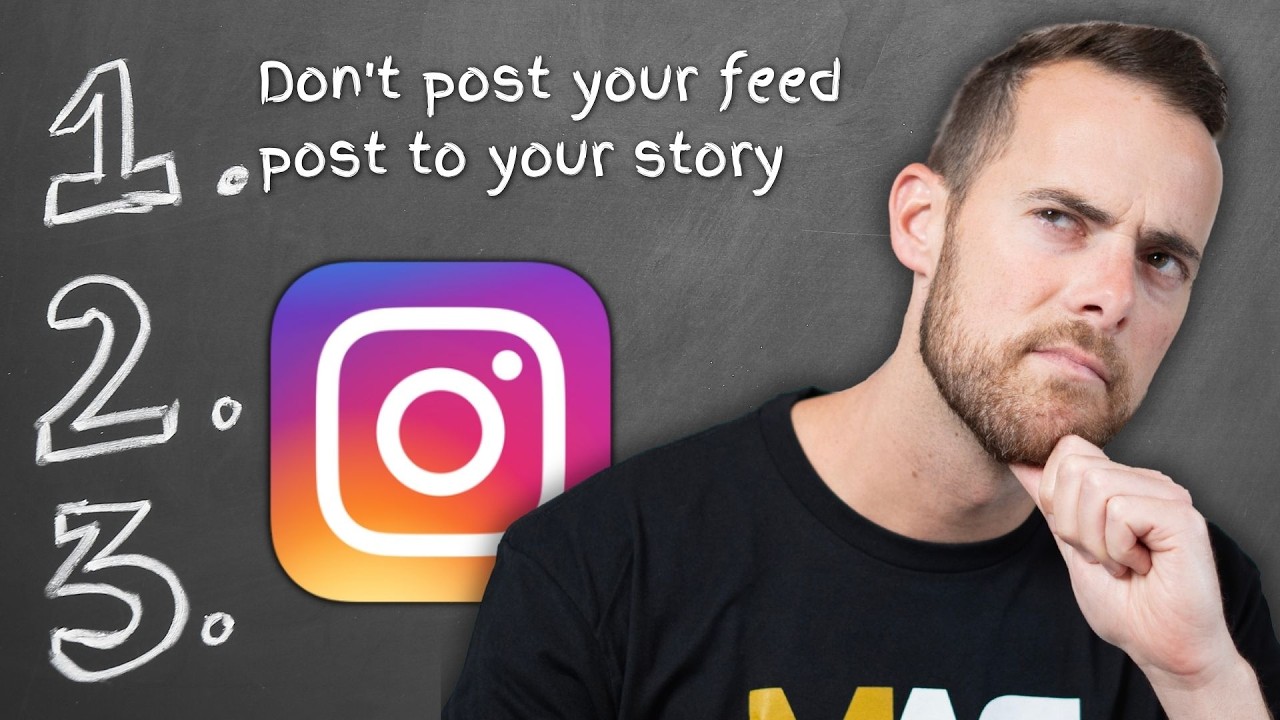
Rule 5: Do Not Share Your Feed Post to Your Story
This one drives me insane and almost nobody talks about it.
When you’re scrolling stories, you want raw, behind-the-scenes content. You don’t want to see a Canva carousel that belongs in the feed. If I wanted to see that, I’d be in the feed.
But here’s the real reason this is hurting you: the first interactions on your feed post are the most powerful signals you can send to the algorithm. Those early likes, comments, and saves are what tells Instagram to push your content to new people. If you share the post to your story immediately, your existing audience already saw it and is less likely to engage with it in the feed. You just robbed your own post of its best chance to perform.
Stories and feed serve completely different purposes. Feed is for discovery. Stories are for relationships. Stop cannibalizing one with the other.
Rule 6: The Caption Is Not a Press Release
A 400-word market breakdown that’s clearly copy-pasted ChatGPT slop with emojis and that choppy, lifeless cadence just screams that you’re incapable of an original thought. Nobody is reading that. I am not reading that. Your most loyal follower is not reading that.
Here’s how captions actually work: the first line is the only line that shows before the “more” button. That line either hooks someone or it doesn’t. If it doesn’t, nothing else matters.
Write a first line that makes someone want to keep reading. Then keep the rest tight. Say what you need to say and maybe ask a question for engagement.
This actually brings me to my next rule.
Rule 7: Stop Begging for Engagement
There’s a version of asking for engagement that works. And there’s a version that makes you sound like an idiot.
“Drop a comment below! Save this post! Like if you agree! Follow for more!”
Why would anyone do any of that just because you said to?
Instead, if you’re posting about a new pizza place in your market, try something like:
“What’s your go-to spot for a slice in Brentwood?”
or
“Have you been here yet? What would you rate it?” Something specific to the content.
If the content is good, people will engage. You don’t need to beg for it. And when every post ends with three calls to action, people tune it out completely. Pick one. Use it sparingly. Let the content do the heavy lifting.
Rule 8: Change the Packaging
If you post the same style of Reel every single time — same background, same hook format, same look — your audience starts to tune out. Not because the content is bad. Because the packaging got boring.
Mix it up. Reel, carousel, meme, static image. Film outside, in front of a listing, walking down the street. Look at The Broke Agent account: Reel, carousel, meme, talking head, b-roll. Never the same thing twice in a row. Same with BAM. Headline post, news, agent strategy, Reel, collab. All over the place. But that’s the point.
The algorithm also constantly favors different post types on different days. Mixing formats means you’re never fully at the mercy of whatever it decided to care about this week.
Rule 9: Your Content Sells Your Service. You Don’t Have To.
Stop telling people you love referrals. Stop posting that if anyone is looking to buy, sell, or invest they should reach out. Stop writing “here for all your real estate needs” in your caption like it’s 2011 and you’re handing out business cards.
Nobody needs to be told that a real estate agent wants real estate business. That is implied.
Don’t pitch on social media. Your content is the pitch. Your education, your hyperlocal takes, your listing videos, your client stories, your testimonials — that’s what sells you. If you show up consistently with good content, you don’t need to ask for business. The business finds you.
Rule 10: Your Audience Doesn’t Remember 90% of What You Post
This is the most liberating rule on this entire list.
If a video performed well three months ago, post it again. You can repost the exact same video, or reformat the concept. If it was a Reel, turn it into a carousel. If it was a carousel, turn it into a Reel.
Nobody is as tuned into your content as you are. Nobody is sitting there thinking, “I’ve seen this before, I now hate this person.” Everyone is just scrolling for dopamine.
If something worked, it’s validated. Stop leaving winning ideas on the floor because you’re worried about repeating yourself. Look at The Broke Agent account, I’ve basically rotated the same 30 concepts on different formats for 11 years.
Rule 11: If You Wouldn’t Like It, Don’t Post It
The final rule is simple. Before you post anything, flip the perspective. Would you stop scrolling for this? Would you send it to a friend? Did you actually learn something, laugh, or feel something?
If the answer is no, delete it.
This also goes for AI slop. We can tell. The em dashes, the hollow inspirational tone, the emojis placed with surgical precision, the complete absence of personality. It’s obvious. And it performs accordingly.
People don’t connect with perfection. They connect with real. Post the blooper from your listing video. Film something on your phone with no edit. Raw, unpolished, genuine content will beat a hyper-produced AI-generated caption every single time.
Final Thoughts
So to recap:
- Always have something up
- Don’t announce that you’re going away or coming back. You’re not Aaron Rodgers.
- Engage back with the people who engage with you.
- Respond to your clients before you post.
- Stop sharing feed posts to your story.
- Keep your captions tight.
- Change the packaging.
- Stop begging for engagement.
- Let your content do the selling.
- Repeat what works.
- Only post what you’d actually stop scrolling for.
These are the unwritten rules of social media.
If you want to go deeper, inside the BAMx community, I do live Instagram audits every month, plus weekly content drops, marketing templates, scripts, and on-demand trainings to help you build your brand and close more deals.