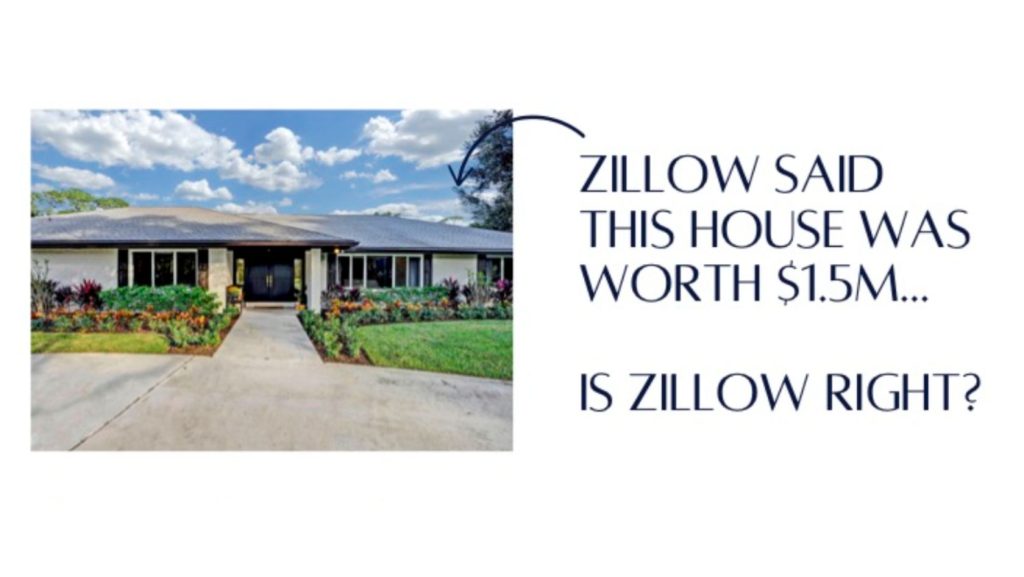


I think you’re smarter than Zillow.
Zillow can’t see the hoarders next door. Zillow can’t smell the lingering dog odor. And Zillow certainly can’t understand the emotional nuances of a neighborhood like you can.
But where do most sellers look to find their home value?
Zillow.
No matter how skilled you are at pricing a property, many sellers walk into the conversation with a preconceived number in mind—thanks to the estimates they’ve seen on online portals. Acknowledging and addressing these numbers is essential for building trust, demonstrating your expertise, and guiding sellers toward a realistic and profitable pricing strategy.
That’s why I created this one-page flyer: a simple, powerful tool to confidently discuss those online estimates and turn them into a springboard for winning listings.
Here’s how you can use it to showcase your expertise and stand out from the competition.
Meet Clients Where They Are
Your clients are on these online portals—and you should be, too. Start by addressing the property estimates directly with a simple flyer. Here is an example from a recent listing appointment:
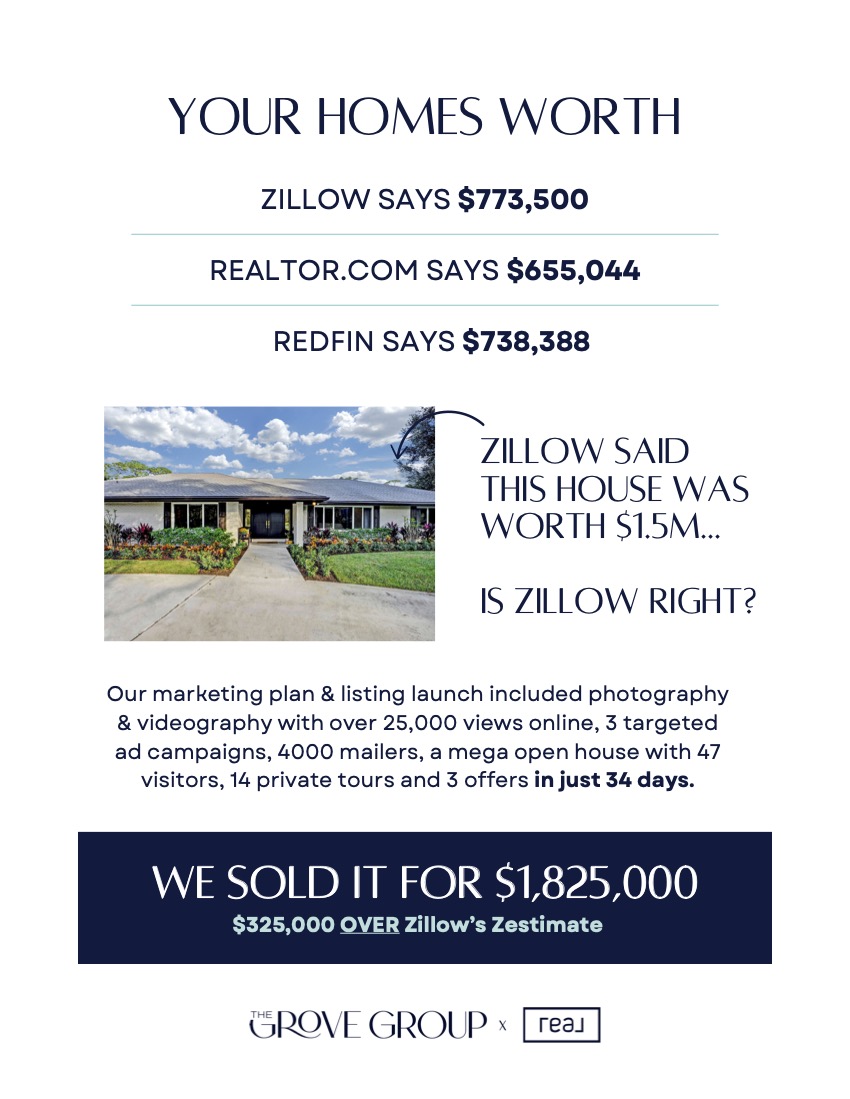
With this, I showcase all the most recent property estimates:
- Zillow says: $773,500
- Realtor.com says: $655,044
- Redfin says: $738,388
Sharing these figures upfront positions you as a transparent professional who understands the tools sellers rely on. By doing so, you immediately open the door to a collaborative discussion, rather than creating a divide between their expectations and your expertise.
Want to recreate this flyer for your appointments? Customize the template here.
Use Online Portal Numbers as a Conversation Starter
Educate your clients about how these estimates are generated. Most sellers don’t realize these numbers are based on broad algorithms that lack the localized market insights and nuanced property-specific data you bring to the table.
Explain that while online portals can provide a general idea, they don’t account for:
- Local market trends
- Property condition and unique features
- Comparable sales analysis (done by a human, not a machine)
By helping clients understand these limitations, you naturally transition into showcasing your own expertise and the custom strategies you offer.
Cause Them to Question Online Estimates with a Case Study
Nothing shifts perspectives like real results. Share a case study to illustrate the difference between relying on an algorithm and hiring a professional. Here’s an example of a property I sold:
Last year, Zillow valued a property I listed at $1.5 million. Through a tailored marketing strategy—including professional photography, videography, targeted ads, direct mail, and a mega open house—the property sold for $1,825,000. That’s $325,000 over the Zestimate in just 34 days.
A specific example like this makes sellers pause and reconsider the accuracy of online valuations. It positions you as the expert who can deliver better results than an automated tool ever could.
Prove the Case Study Results
Sellers don’t just want to hear promises—they want to see proof. Break down the specific actions and results that led to success in your case study. For example:
- Professional media: High-quality photography and videography to attract more buyers.
- Targeted ad campaigns: 3 hyper-targeted campaigns reaching qualified local and out-of-state buyers.
- Direct mailers: 4,000 personalized mailers that created buzz and drew attention.
- Open Houses and Showings: A mega open house with 47 visitors and 14 private tours that generated multiple offers.
When you present concrete numbers and strategies like these, you don’t just tell sellers you’re different—you show them.
Lean Into Your Full-Service Approach
Use this strategy to reiterate how your full-service marketing approach goes beyond basic listing practices. Walk sellers through your process, emphasizing how a proactive process like yours leads to faster sales and higher offers.
Your message should be clear: You don’t just list homes—you sell them. And you do it better than any algorithm ever could.
By using this one-page flyer as a part of your listing presentation, you demonstrate that you understand your client’s concerns and can provide real, data-backed results. Proof over promise is more than a buzzword, it’s a strategy that secures listings.