
Real estate agents on Instagram are noticing something.
Folks aren’t responding to hyper-edited, polished listing videos the way they used to. Most are scrolling right past.
Most people in your audience aren’t video critics. More importantly, though, many are reading over-edited as AI-generated. And that’s where attention goes to die.
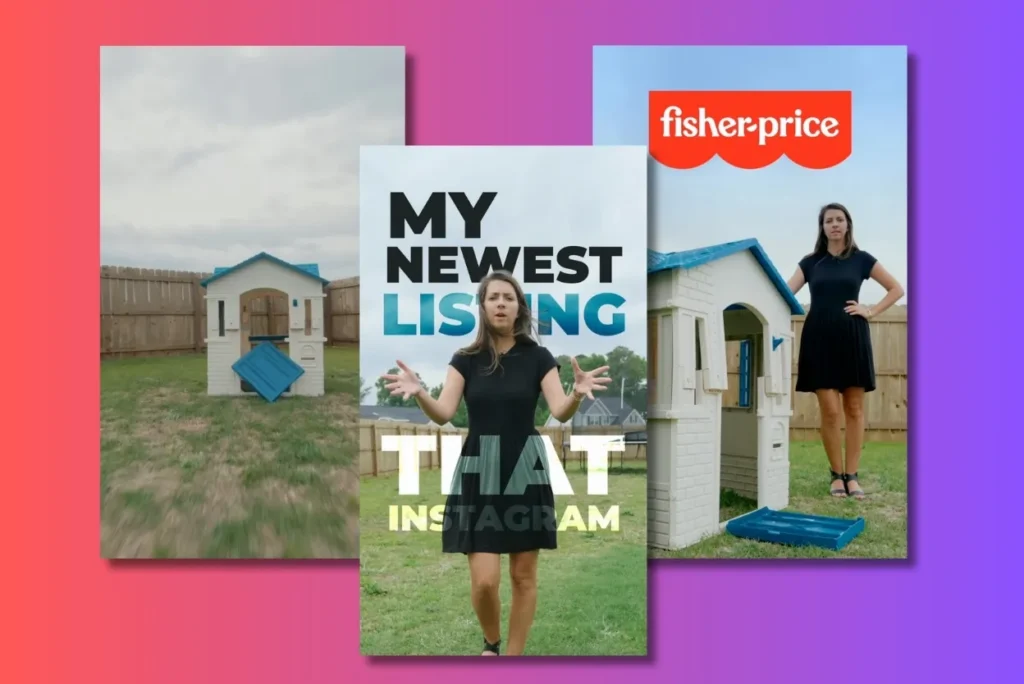
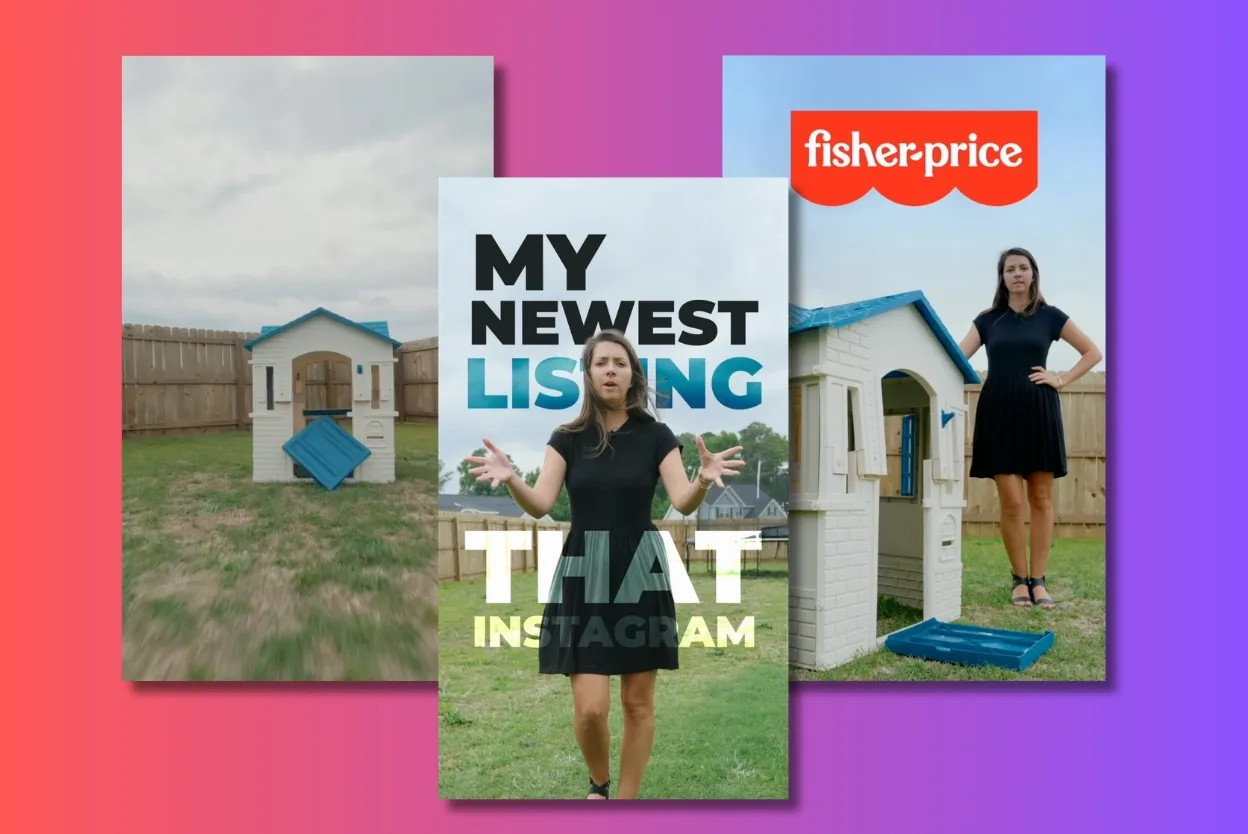
North Carolina Realtor Emily McAllister did something that made scrollers stop and take notice. She used the same formula in a parody listing video for a Fisher-Price playhouse.
BAM featured the reel in a carousel post:
View this post on Instagram
Here’s why it worked and what it means for real estate content.
Why This Parody Post Crushed & What It Means
McAllister’s original reel racked up nearly 29K likes and over a thousand comments, and the staying-in-character caption played a role in that, too:
“123 S***box Court is available now. This video captures all the right angles of this unique opportunity.”
So, right off the bat, here’s what we took from the post:
- Folks on Instagram love a good roast, especially of the IYKYK variety.
- They’re also tired of over-edited listing videos that look like “more of the same.”
- Housing affordability (or the lack thereof) is still very much on people’s minds.
Here’s a sampling of the comments from McAllister’s reel:








The parody in McAllister’s post did not go unnoticed, either:



If you’ve ever scrolled through listing video after listing video, you get it.
Once upon a time, though, those sweeping, cinematic “video tours” used to crush, too. Until they became the marketing move. Enter AI, and a lot of listing videos started looking eerily similar. And as more over-edited listing videos went live, fewer and fewer scrollers paused for a closer look.
Even good ideas go stale when they’re overused. Or when AI makes it too easy to mass-produce them.
McAllister’s post proved the best use for an overused content formula is to give people a reason to laugh at it. There’s an implicit compliment built in for viewers who spot the parody, which is why so many engaged with comments.
Should You Try This? A Few Things to Know First
Parody works when it’s done well. It’s not the safest play, and it’s not for every brand. Before you copy the format, run through this list.
- Pick a trope your audience already recognizes. If your followers haven’t seen enough dramatic listing videos to know the formula, the joke won’t land.
- Commit fully to the bit. McAllister’s script mirrors a real listing word for word. The moment you wink at the camera or add a joke that breaks character, the parody loses its edge.
- Choose a subject that’s obviously absurd. A playhouse works because nobody could mistake it for a real listing. Keep the mismatch between the script and the subject as wide as possible.
- Match the real format exactly. Same music cues, same on-screen text style, same voiceover cadence agents use for actual listings.
- Write a caption that keeps the bit going instead of explaining the joke. McAllister’s caption reads like a real listing description, not a punchline.
- Post it where your existing audience already expects listing content, so the contrast hits immediately.
- Watch the comments and reply in character for as long as it makes sense. That’s where a lot of the engagement builds.
- Don’t run this play often. Parody depends on novelty. Once you’ve done it, doing it again a month later reads as repetition instead of a fresh idea.
One honest note before you move forward: this only works if your brand, like McAllister’s, already has some personality built in.
If your audience is used to a formal, buttoned-up feed, there’s no shame in that, but a hard pivot into parody can feel like it’s coming from someone else.
One option is collaborating with a creator whose brand is a better fit for parody. Maybe you have the idea and they know exactly what to do with it. You get to see what goes into the post and how well it performs, and both creators get exposure to another audience.