


Photo credit: AJ Canaria
When Real President Sharran Srivatsaa took the stage at BAM Mania last Friday, he led the presentation with a brief video that told a true story. After asking the audience for words that came to mind after watching it, he made the following statement:
“That 38-second video can teach you more about winning more appointments than almost anything else.”

As hyperbolic as that may sound, it succeeded in raising the question, “How?” And that’s a question many agents are asking right now, on both the buying and listing sides:
- How do I get a buyer to sign my buyer agreement?
- How do I increase my value as an agent—and get paid what I’m worth?
- How do I get more listings—or increase the price point of my listings (or both)?
Unfortunately, plenty of agents in the industry are looking at the changes and misreading the situation completely. Srivatsaa shared some social posts illustrating this fact and reminding the audience, “This is your competition!”
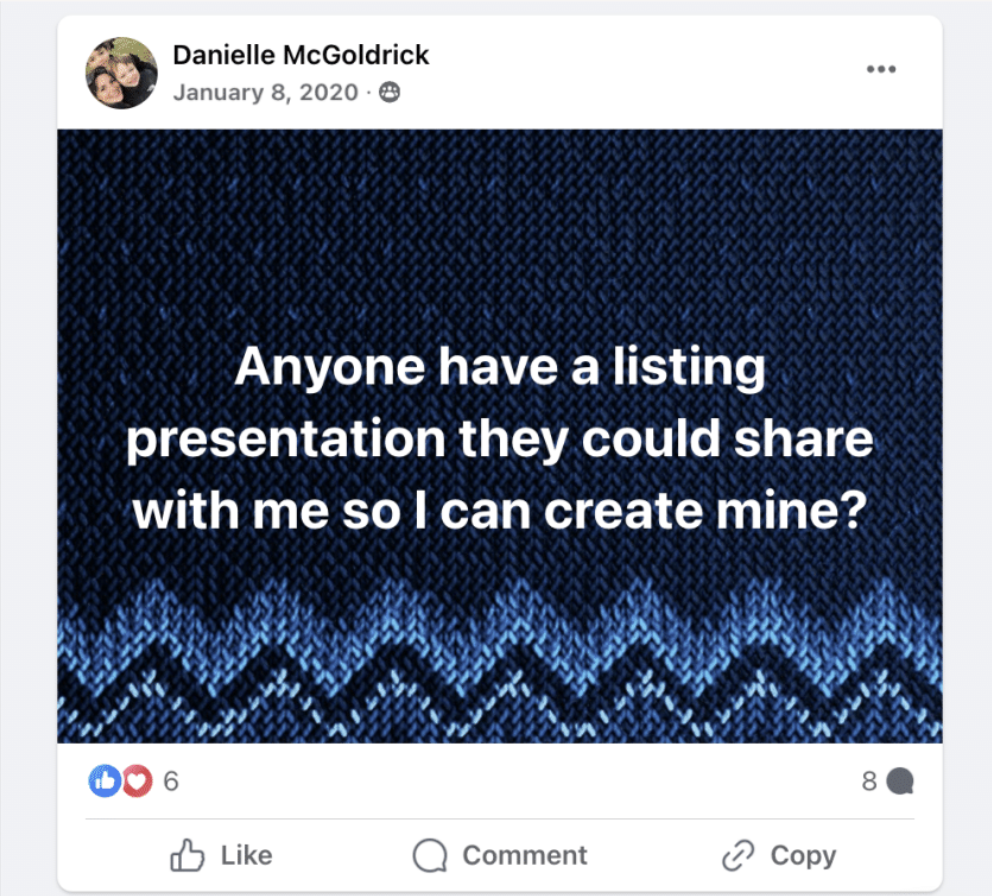
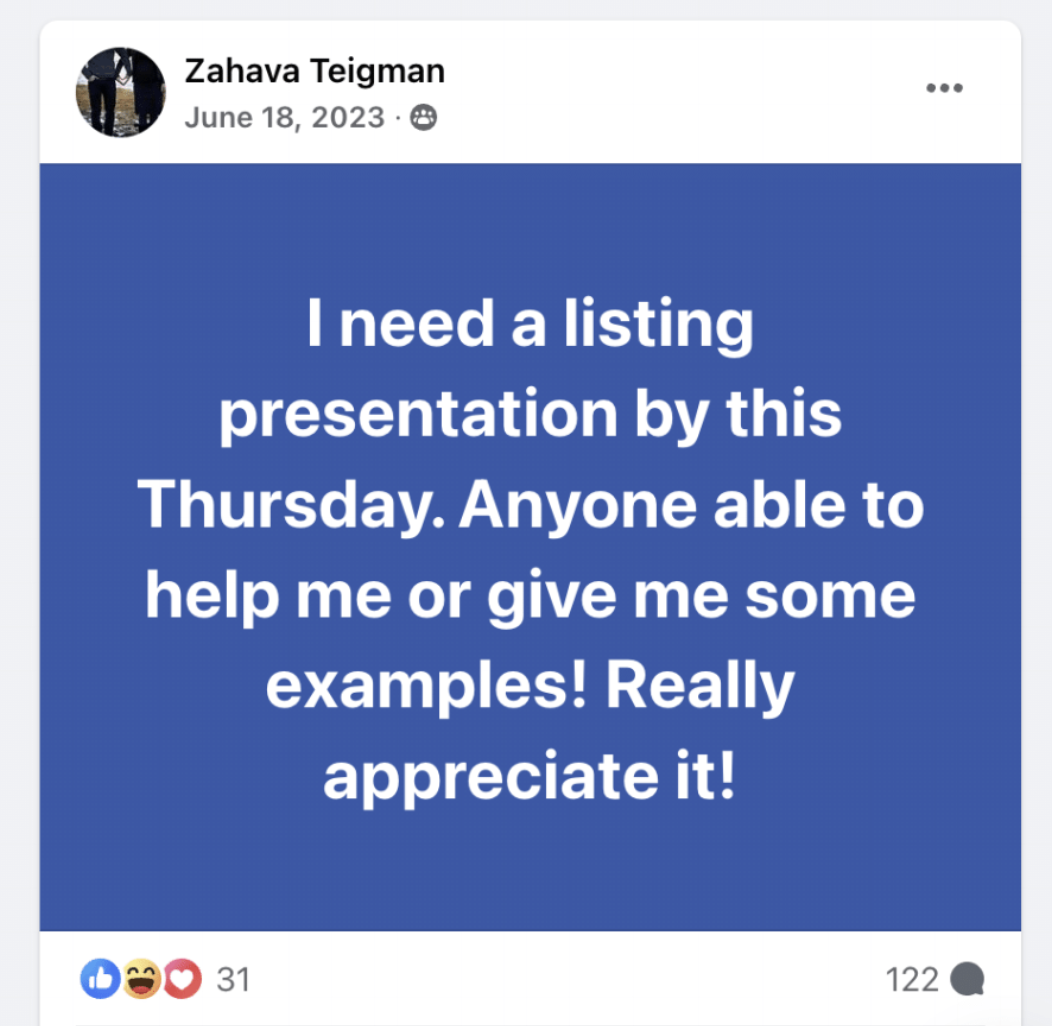
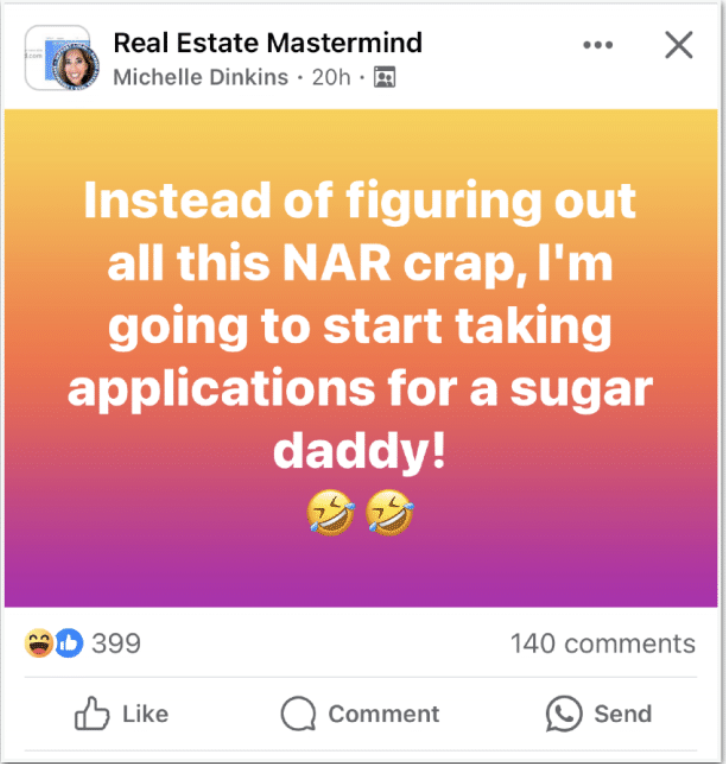
Walking the Talk
What Srivatsaa has done over the past two years is something any determined real estate agent can do themselves. It’s not the work of a few days or weeks, either. Sharran went on 248 listing appointments in 22 different markets over 23 months.
After each one, he wrote down every question asked during the appointment. From there, he distilled those to the following 10 questions that make up the standard pattern in every single appointment:
- What qualifies you to sell the house? (Capability)
- Why does it feel so stressful? (Complexity)
- Do you have a buyer for my house? (Result)
- What are you actually going to do? (Access)
- Does marketing even matter with Zillow, etc.? (Proof)
- It all looks the same – why is your stuff any better? (Process)
- Why does everyone claim to be the best? (Personalization)
- What can I sell my house for? (Market)
- Why does everyone look at comps differently? (Pricing)
- I’m not even sure what you’re negotiating (Black Box)
There’s a simple reason why Srivatsaa collected and distilled these questions—and why we’re sharing them here: If you don’t know the questions sellers are asking, you can’t practice answering them.
This is not optional. And it’s not something you save for when you “find the time.” Because, as Srivatsaa reminded the audience, practicing these questions is just as—or even more—important as practicing objections:

We’ll roleplay the objections, but we won’t roleplay the normal stuff. Think about that for a second. I want to roleplay the pricing objection, but I won’t roleplay the simple stuff. Which is really wild if you think about it.
5 Secrets of Listing Mastery
Srivatsaa revealed his five secrets to listing mastery, starting with one crucial realization every agent must have to tie everything together.
Here are those five secrets, with details to follow:
- Silver bullet
- Complexity
- Proof
- Process
- Pricing
#1: Silver Bullet
Who wouldn’t love a silver bullet—a magic script that always gets the agreement signed. You say the words and, just like that, the consumer is convinced and can’t sign with you quickly enough. And you’re off and running.
Alas…there is no magic script. And while learning and practicing what to say in response to consumer questions—and how to say it—is still just as important, if not more so, that alone won’t get you to a signed agreement.
So, Srivatsaa asked another question, “If there is no magic script, then what is the most important thing to a seller?”
He then played a reel by Jason Cassity that gave a simple, two-part answer to that question: “Every seller wants a buyer, and every buyer wants a house.”
#2: Complexity
When it comes to listing appointments, one of the biggest misconceptions sellers have is that the process is simple. They think, “I’ll put my home on Zillow, someone will make an offer, and boom—sold!”
But we all know that’s not the reality. The process is complex, and your ability to showcase that complexity—while simplifying it for the seller—is what sets you apart from the competition.
Sellers don’t always understand the level of detail that goes into selling their homes. And if you don’t explain it, they might not see the value in your service.
Srivatsaa gives a simple framework for handling this. Start every appointment by telling the sellers, “Mr. and Mrs. Seller; there are three major agreements that govern a real estate transaction. May I walk you through it?”
From there, take out the three agreements as you explain each one:
- Listing agreement between the seller and the agent.
- Buyer representation agreement between the buyer and their agent.
- Purchase contract between the buyer and the seller.
Lay these agreements out at the beginning of the appointment. Why? Because when you introduce the listing agreement too late, it feels abrupt and can create hesitation—resulting in the dreaded “Let me think about it” response. By laying out the process up front, you’re framing the entire conversation in a way that makes it easier for sellers to understand and trust you.
Want to take it a step further? Show the seller your access to the buyer universe. Explain how buyers fall into four categories and how you have access to them:
- Active buyers you know (showcase agreements of buyers you are working with)
- Passive buyers you know (showcase the people in your database that have inquired about buying a home)
- Active buyers you don’t know (showcase all the sign-ins from open houses that you host)
- Passive buyers you don’t know (showcase people who like/comment/share/DM on your social media)
By breaking this down live in the appointment, you’re showing the seller your full grasp of the market and your ability to attract buyers from all corners of the universe.
When you show the complexity like this, while simplifying it for the seller, you position yourself as the expert who can navigate the entire process with ease.
#3: Proof
The question at the heart of this secret to listing success is one Srivatsaa has heard from consumers: “Why does every agent claim they are the best?”
It’s a fair question. Talk is cheap, after all. Consumers don’t want to hear you tell them you’re the best agent in their market. They want to see proof of that so they can come to that conclusion themselves.
Any time you claim something that sets you apart, you have to show proof.
One thing your clients want to see is proof you have a process for selling their home—a process that has worked for your clients in past transactions and that shows everything you do to get the results each client wants.
Naturally, then, they want to see proof that other sellers not only loved the results you got them but that they also loved what you did for them throughout the process:
- How you kept them informed on a weekly basis
- How you broke down your process and showcased all the work you did for them
- How you listened to them and understood their needs and motivation
- How you then exceeded their expectations and over-delivered
- How you continue to deliver value well after closing day
Client reviews and testimonials are valuable pieces of social proof you can share to show new potential clients what your clients gain by working with you.
#4: Process
Once you show proof of what you’ve done for other clients and how that brought them the right buyer for their home, sellers want to know what exactly you’re going to do for them.
This is where, as Srivatsaa puts it, you “showcase the complexity and deliver the simplicity.”
He shared an example of how Stacy Corrigan, a real estate agent in Rhode Island, does that:
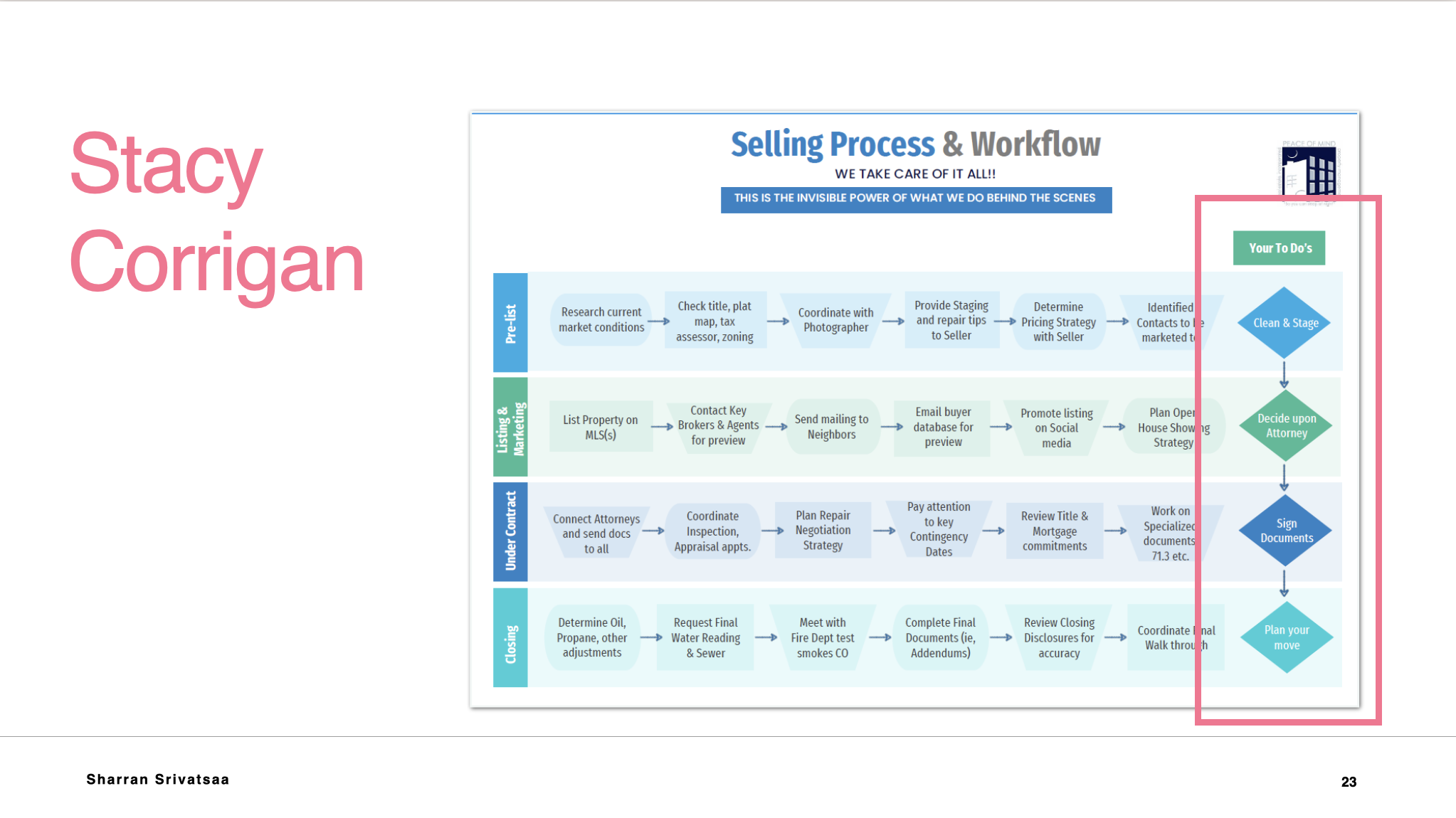
In essence, she’s framing up all of the work she is going to do for the seller (which makes the compensation conversation much easier). At the same time, she’s telling the sellers what their four responsibilities are.
But don’t stop there. Every step of the way, explain (and show proof) for each of your workflows.
Another way to showcase complexity and deliver simplicity is with Srivatsaa’s 4-1-2 Open House Formula. He does four things to market the home and attract buyers—
- 4 days prior
- 1 on the day of the open house
- 2 days afterwards

He shows the client the process behind his success in drawing buyers to the open house. Now they know what he’s going to do to make every open house a success.
Srivatsaa also shared an image of what he called “the magic whiteboard,” showing him in front of a whiteboard with his process visually mapped out.

Not only does that show your seller you have a process that visually represents the complexity of the process, they also get to hear you articulate what you will do for them to get their home sold at a price they’ll be happy with.
You’re showcasing the complexity and delivering simplicity: the results they want. You’re doing the work, and they’re not left thinking, “I guess my agent did something to attract a buyer, but I couldn’t tell you what.”
If they don’t know what you did for them—what process you followed—they don’t know what they’re paying you for.
#5: Pricing
The question at the root of this secret is “Why does everyone look at comps differently?”
This goes to the heart of the seller’s concerns about pricing strategy.
- What does the agent use to determine the best price for their home?
- Where do they get that information?
- And how do different agents with access to the same information come up with different pricing strategies?
In other words, “How can I be sure your pricing strategy will get me the results I want?”
It sounds very high-stakes—until you remember, as Srivatsaa posts in bold letters:
“Pricing is about positioning. The list price is just an invitation.”
This is something he encourages agents to share with sellers. And when the seller responds with, “I don’t understand…” you can then explain what it means.
Srivatsaa’s explanation started with an if-then question: “So, let’s say we list the home at $13 million. How many people do you think would come to look at the house?” Ultimately, he wants the seller to understand the difference between price and pricing.
Pricing is strategy; price is a number.
Another thing Srivatsaa pointed out: “The pricing strategy dissociates the list price from the final sale price.”
Essentially, your pricing strategy puts the list price in its proper context. In a sense, it demotes it on the scale of importance, without downplaying its usefulness. It shows your seller the big picture, allowing them to see exactly what you’ll do to get the price and terms they want.
This is why sellers need to understand the difference between an agent who articulates their pricing strategy and the agent who’s telling them, “I can get you $__ for your home.”
Any agent can throw out a big number up front to get the listing—only to negotiate the seller down once the contract is signed. This is not the way agents of change operate.
A better approach—and one that allows you to avoid being ruled out because you’re not making big promises with impressive numbers—is to focus on your pricing strategy and how it gets your sellers the best possible price for their home.
In other words, you as the agent sell the process, not a price.
The process is bigger than the list price and even the final sale price. It’s the sum total of everything you do to deliver the best possible client experience. That includes the sale price and the seller-friendly terms but goes well beyond that to make you their agent—and the one they’re happy to refer and recommend.
Interested in attending BAM Mania next year? Drop your email and you’ll be the first to know.