
Starter home inventory is up 4.5% year over year, and price cuts are more common.
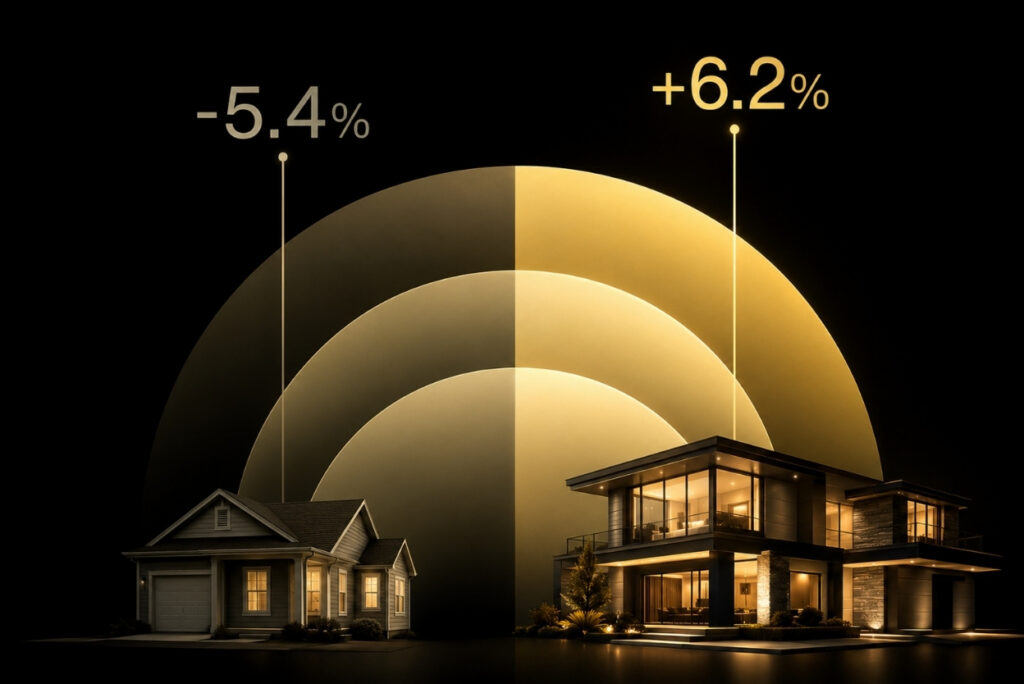
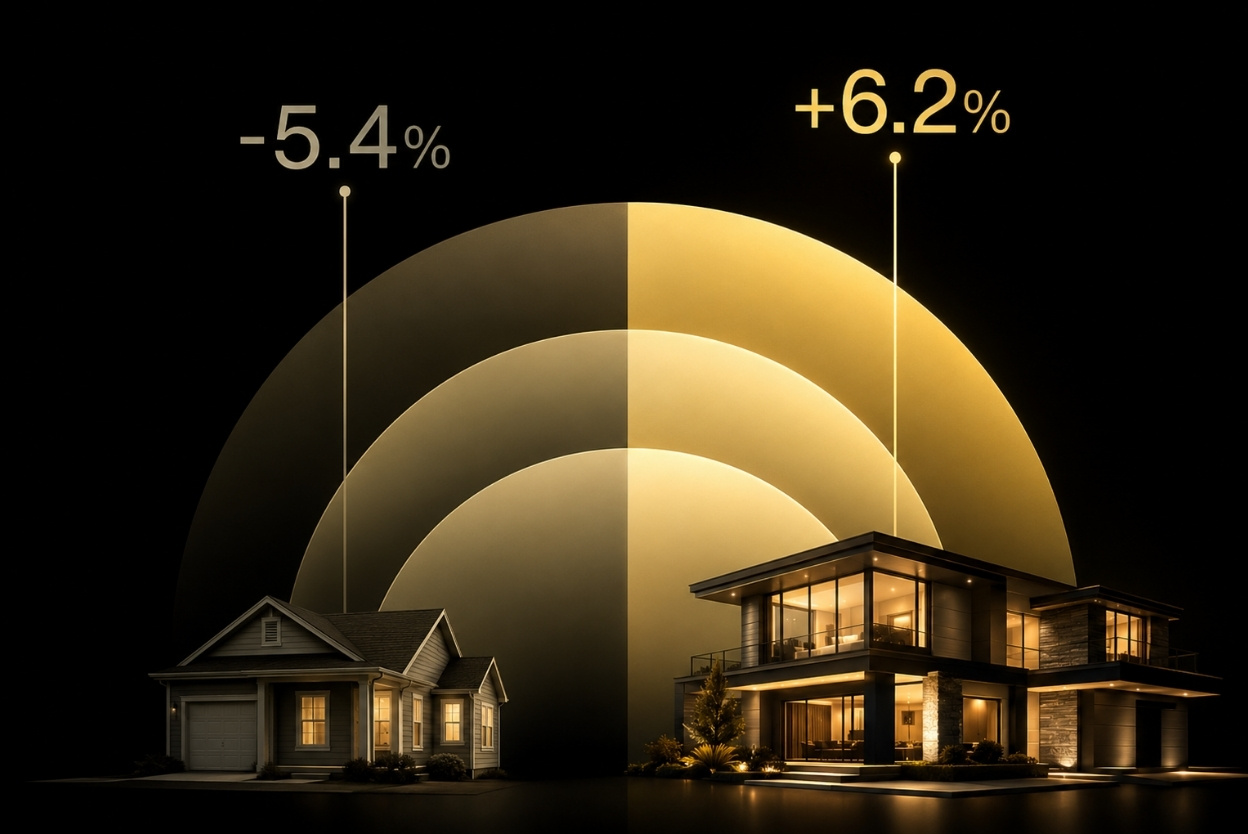
Despite that, starter home sales were still down 5.4% in May compared to a year ago.
At the same time, luxury home sales rose 6.2% with less inventory and fewer discounts, meaning these two segments of the U.S. housing market are moving in opposite directions.
New Zillow data lays out the divide between those two markets with national numbers showing conditions loosening for starter buyers while they hold back. San Francisco shows how wide that divide can get.
Underneath it sits a bigger story about whose incomes are keeping pace with the rising cost of housing and whose are not.
Here’s what the national numbers show and what the split says about today’s housing market.
Two Segments, Two Different Markets
Zillow defines starter homes as those in the 5th to 35th percentile of home values in a given region. Luxury homes sit in the top 5%.
The typical starter home is now worth about $202,000, up 2.3% year over year. The typical luxury home is worth about $1.9 million, up 3.1%.
Granted, those numbers can vary dramatically from one metro to another.
The national numbers, side by side:
- Starter home inventory: up 4.5% year over year in June. Luxury home inventory: down 5.2%
- Starter home sales: down 5.4% year over year in May. Luxury home sales: up 6.2%
- Starter home price cuts: 25.0% of listings in June. Luxury home price cuts: 20.6%
Some metros show this more sharply than the national average does. Let’s start with the top 10 metros for starter home inventory growth (year over year) for June 2026:
- Memphis, TN: up 51.7%
- Buffalo, NY: up 33.4%
- Louisville, KY: up 31.8%
- Pittsburgh, PA: up 26.3%
- Baltimore, MD: up 19.9%
- Indianapolis, IN: up 19.8%
- Oklahoma City, OK: up 18.9%
- St. Louis, MO: up 18.8%
- Boston, MA: up 18.5%
- Minneapolis, MN: up 17.5%
Even as inventory has grown, sales for starter homes have declined or remained roughly flat from the year before, though some metros bucked the trend, led by these five:
- Louisville, KY: up 19.3%
- New Orleans, LA: up 12.9%
- San Jose, CA: up 10.5%
- Miami, FL: up 8.2%
- Sacramento, CA: up 7.9%
Most major U.S. markets saw an annual decline in starter home sales, led by these 10:
- Detroit, MI: down 26.5%
- Cleveland, OH: down 24.6%
- New York, NY: down 22.3%
- Buffalo, NY: down 21.1%
- Hartford, CT: down 18.4%
- Atlanta, GA: down 16.2%
- St. Louis, MO: down 16.0%
- Las Vegas, NV: down 13.1%
- Indianapolis, IN: down 12.8%
- Virginia Beach, VA: down 12.7%
Compare that to the top 10 metros for luxury home sales growth (year over year) for May 2026:
- Memphis, TN: up 42.4%
- Nashville, TN: up 40.8%
- Cincinnati, OH: up 32.6%
- Austin, TX: up 27.7%
- Birmingham, AL: up 25.0%
- Chicago, IL: up 24.9%
- Oklahoma City, OK: up 24.1%
- Washington, DC: up 23.6%
- Cleveland, OH: up 23.2%
- San Francisco, CA and Denver, CO (tied): up 21.6%
And here’s where luxury and starter home sales are moving furthest apart:
- Cleveland, OH: luxury sales up 23.2%, starter sales down 24.6%
- Memphis, TN: luxury sales up 42.4%, starter sales down 1.7%
- Cincinnati, OH: luxury sales up 32.6%, starter sales down 8.4%
- Nashville, TN: luxury sales up 40.8%, starter sales up 3.1%
- Birmingham, AL: luxury sales up 25.0%, starter sales down 9.6%
- Indianapolis, IN: luxury sales up 20.5%, starter sales down 12.8%
- Denver, CO: luxury sales up 21.6%, starter sales down 6.7%
- Chicago, IL: luxury sales up 24.9%, starter sales flat
- Austin, TX: luxury sales up 27.7%, starter sales up 3.3%
- Detroit, MI: luxury sales down 2.6%, starter sales down 26.5%
Memphis lands at the top of two different lists here: starter inventory growth and luxury sales growth, putting both ends of the national trend inside a single metro.
What’s Driving Two Different Buyers
Starter home buyers are making decisions in a rough economic environment:
- Hiring has slowed
- Inflation remains elevated
- Consumer sentiment has fallen to historic lows
Households facing that kind of pressure tend to delay a major purchase like a home.
On the flipside, higher income households are facing a different set of circumstances. Stock market gains have boosted purchasing power at the top of the income spectrum, keeping demand for luxury homes strong.
Zillow senior economist Kara Ng points to the same forces holding starter buyers back from acting on today’s more favorable conditions.
“The best time to buy a home is when nobody else wants to. Starter home buyers today have more options, more negotiating power, and sellers who are more willing to deal. The challenge is that the same financial pressures making it harder to save for a down payment are also making it harder to take advantage of that opportunity.”
Luxury clients are operating on a different clock. With inventory shrinking and sales climbing, buyers in that segment need to move fast and come prepared before the right listing draws multiple offers.
None of this plays out the same way in every market. Pull your own metro’s numbers before the next buyer conversation, especially if you’re working somewhere like San Francisco, Cleveland, or Memphis, where the split is more pronounced.