
“Agents are losing their minds.”
That’s how Tom Toole opened last Friday’s Knowledge Brokers Podcast, setting the tone for a conversation that called out misinformation, misplaced outrage, and a widespread misunderstanding of what’s actually happening with Follow Up Boss.
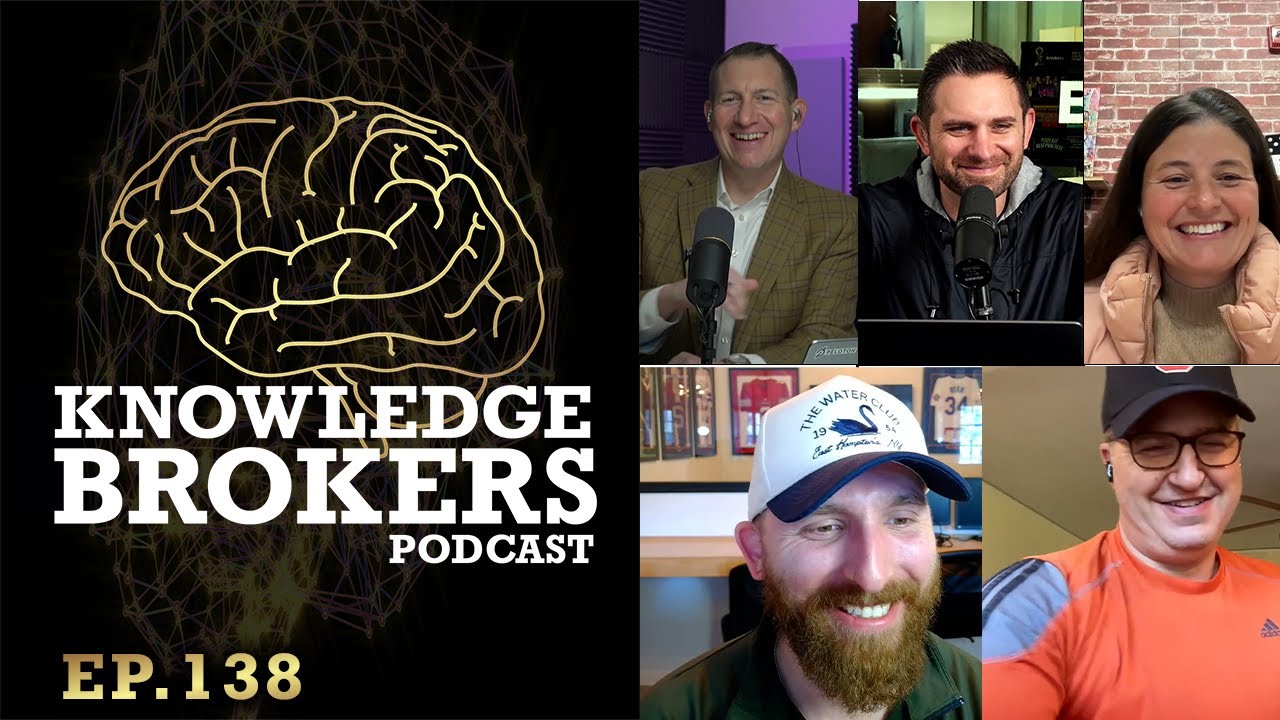
Chris Giannos and Josh Rubin joined Byron Lazine, Tom Toole, and Lisa Chinatti for a spirited discussion that started with the updated terms of service for Follow Up Boss (FUB), the popular CRM acquired by Zillow in 2023.
Just last week, Zillow announced Zillow Pro tools: a suite of products, including Follow Up Boss, curated to upgrade the way agents capture leads and meet the needs of consumers.
The FUB topic in particular sparked viral headlines and social media backlash from agents convinced that Zillow was suddenly gaining access to their entire database.
According to the panel, that interpretation couldn’t be further from the truth.
Agents Are Overreacting
Tom wasted no time calling out the hysteria.
“Agents are losing their minds,” he said, describing the online reaction as “insane.”
He read directly from Follow Up Boss’s updated FAQ, which clearly states that nothing fundamental about the platform has changed:
“Your experience stays the same, same product, same team. Your data remains protected and in your control.”
The only clarification, Tom pointed out, is that Zillow can use information from “mutual customers,” meaning clients who already have a Zillow account.
“If someone in your Follow Up Boss CRM also has a Zillow account, Zillow can use that overlapping data.”
For Tom, the real problem isn’t Zillow’s access to data, it’s agents’ lack of consistent communication.
“Instead of worrying about Zillow, call the people in your CRM.”
Zillow Is the Scapegoat
Former Zillow employee and Humanize.io founder Chris Giannos provided the technical breakdown many agents missed.
Before diving in, he clarified that he’s not an attorney and encouraged agents to read the terms themselves. But the outrage, he said, is misplaced.
“Zillow is an easy scapegoat,” he explained. “This change isn’t a data grab. It’s codifying how data has already been handled.”
Chris outlined the new two-tier system within Follow Up Boss.
“The big change everyone’s talking about comes down to what they call ‘mutual customers.’ Those are people who also have a Zillow, Trulia, or StreetEasy account. Zillow can use that data for marketing, for improving user experience, or training AI models.
“Then there are what they call ‘agent-only contacts.’ Those are people who exist only in your CRM. Zillow cannot use that data for any reason, in any way, shape, or form.”
He reminded listeners that “every CRM, including mine, is training AI models on aggregated data.” Zillow didn’t suddenly gain new powers.
“This isn’t that big of a deal. Zillow already had this access.”
His advice for agents was simple.
“Stop panicking and do the Tom Toole: get on the phone.”
Entrepreneurs Don’t Cry Over Terms of Service
Byron Lazine turned the conversation toward mindset, arguing that the reaction revealed a deeper issue.
“When Zillow bought Follow Up Boss in 2023, I said it then: Zillow doesn’t have to steal your data, they already have it. Every client you’ve ever worked with has already used Zillow. They’re in that ecosystem. A real entrepreneur doesn’t cry over terms-of-service updates.”
Every client who has ever used Zillow has already shared their information voluntarily.
He compared agents’ sense of client ownership to financial planners expecting exclusivity.
“Thinking your clients belong to you forever is ludicrous. You have a client when you’re providing value. The second you stop doing that, they’re gone.”
Byron accepted Lisa’s invitation to play devil’s advocate, noting that the policy technically gives Zillow “an easier path to refine its offers and marketing using Follow Up Boss connections.”
But the real takeaway, he said, is that agents should diversify their tech stacks instead of relying on one system.
“If you’re chasing a one-size-fits-all platform, you’re just average at a lot of things.”
Byron encouraged agents to keep clients engaged post-close through specialized tools like Mosaik and RealScout.
“The smart operators are building systems where past clients stay connected to them, not just to Zillow.”
Consumers Are Already on Zillow
Lisa Chinatti jumped in to address one of the biggest criticisms she and her co-hosts received online, that they’re “pro-Zillow” because of their Flex partnerships.
“People say we’re pro-Zillow because we’re Flex partners,” she said. “But that’s not bias, it’s just reality. Consumers are already there.”
She used her own family to illustrate the point.
“My two kids, 19 and 21, both have Zillow profiles. They’re not buying homes, but they’re on there anyway. So, if we’re pretending people aren’t using Zillow, we’re fooling ourselves.”
Put another way, spitting into the wind has predictable consequences.
So does learning to leverage the tools that allow you to spend more time and energy on what buyers and sellers need from you.
Zillow Exists Because Agents Don’t Follow Up
Josh Rubin, who runs the number one resale team at Douglas Elliman in New York City, cut to the root of the issue.
“Zillow exists because agents don’t do the work.”
Rubin argued that the industry’s low barrier to entry and inconsistent work ethic paved the way for portals like Zillow.
“The only reason that Zillow exists is because we have such a low bar for entry into our business. And there’s such a high degree of attrition by way of failure because people refuse to do the work.
“So, you got to do the work in order to achieve success. And who cares if there’s a Zillow? Who cares if there isn’t a Zillow? Because you know what? There’s another Zillow right behind the Zillow that’s out there right now because it’s such an easy way to just gather all the data and then you’re going to win.”
The Industry Built This
As the discussion wrapped up, Byron pointed the finger squarely at the industry itself.
“Brokers built this problem,” he said. “NAR wanted control instead of transparency, and Zillow beat the hell out of everybody’s brokers.”
He added that companies like Compass are at least trying to innovate and reclaim ground through technology and better client experiences. The others agreed: Zillow didn’t take power away from agents, it earned it through innovation while much of the industry stood still.
Agents who adapt, innovate, and consistently nurture their database have nothing to worry about. They’ll come out ahead.
The rest will keep blaming the platforms that outwork them.