
AI is everywhere right now, and honestly, it can feel a little overwhelming.
Most of what I see sounds impressive, but very little of it actually shows you how to use it in a way that impacts your business.
After listing 17 homes and doing 28 deals in Q1 and seeing what worked across my business and my content, I’ve realized there are three simple ways I’m using AI every day that are consistently driving measurable results.
AI Use #1: Turn Local News Into Attention-Grabbing Headlines
Agents have more than enough content to post. The real issue is how that information shows up to the person scrolling.
If someone has to reread your post to figure out what it means, you’ve already lost them.
What changed everything for me was using AI to take real-world information and turn it into something that makes sense instantly. The focus is on the headline that earns attention.
Because that’s what determines whether someone stops scrolling or keeps going.
Here’s exactly what I do
Every week starts the same way. I’m looking at real information:
- Local news
- Housing data
- Market updates
- Anything tied to housing, money, or movement in my market
When I find something relevant, I drop it into AI with one goal:
Make this immediately understandable.
Then I go back and forth until it passes 3 tests.
- Can someone understand it in under one second? If it requires effort, it won’t perform.
- Would someone send this to a friend? If it’s not worth sharing, it’s not strong enough.
- Does it sound like news instead of marketing? The moment it feels like a pitch, people scroll past it.
What this looks like in practice
Most agents would post something like:
“Southern California housing market sees increase in sales activity”
Instead, we turn it into:
View this post on Instagram
Or instead of this:
“Fannie Mae introduces crypto-backed mortgage option”
It becomes:
View this post on Instagram
Same information. Different impact.
What this turned into in real business
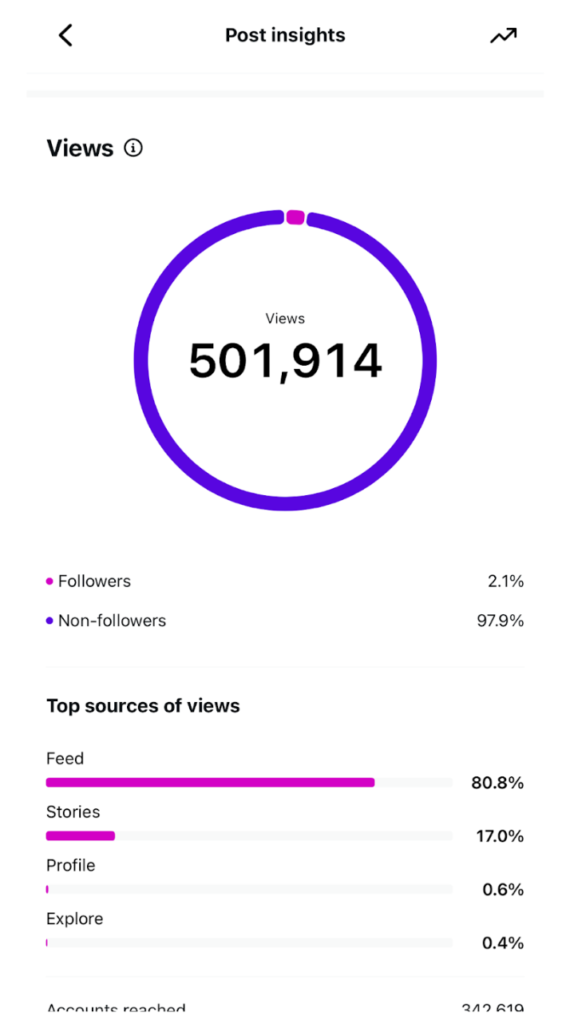
In Q1 alone, these headline graphics generated:
- 750,000+ views
- 15,000+ shares
- 4,000+ saves
And that’s only from the posts I tracked directly.
One post alone crossed half a million views, and everything else validated that it wasn’t a one-off.
What matters even more than the numbers
Clients bring these posts up in conversations.
They reference them in appointments because they remember them and because it doesn’t feel like marketing. It feels like information.
The role of AI in all this is helping you refine the message until it actually lands.
And in today’s market, the agents who win are the ones who can make valuable information make sense immediately.
AI Use #2: Deliver Information in Real Time
Most of my work doesn’t happen sitting behind a desk. It happens in the car, in between appointments, and in the middle of conversations with clients.
For a long time, that created a gap in how I operated.
I would be on the phone with a client parked outside a house waiting for another client to arrive, when we would start talking about pricing or comparable sales. And I would tell them I’d send everything over once I got back to my office.
The intention was always there.
But the reality was that it often got pushed to later that night, which meant the client ended up waiting longer than they should have.
Or it simply got lost in everything else that needed to get done.
None of those outcomes are acceptable if you’re trying to operate at a high level.
What changed
Last quarter, I started using an app called Breezy, and it changed that for me.
Most of my day is still spent in the car or in between appointments. And now I’ll get a call from a friend like:
“Hey, gas is $6 a gallon right now… we’re thinking about moving to Florida…”
And instead of saying, “Let me check comps when I get back to the office,” I’ll pull them right there in the car, build a CMA, send it over, and they have it immediately.
Why this matters
Speed is important, but this is more about eliminating the gap between when someone asks a question and when you actually give them clarity.
That’s where deals slow down and where trust starts to weaken.
This really comes down to removing the moments where momentum gets lost.
AI Use #3: Get Clear on What I’m Going to Say Before I Say It
The third way I’m using AI is in making sure I don’t say the wrong thing in conversations that matter.
Because at a certain level in this business, not having the right information isn’t as risky as communicating that information the wrong way.
What this looked like in a real situation
I was working through a $2.5M transaction where we got into a high-stress negotiation around repairs.
And the challenge wasn’t just the numbers. It was how I was going to walk my client through it.
- What’s reasonable here?
- Where do I push?
- Where do I give?
- How do I explain this in a way that actually makes sense to him?
Those moments are easy to underestimate, but they’re the ones clients remember.
What I actually did
Before I had that conversation, I talked it through out loud.
I ran different scenarios on how I could explain it, how it might be received, and where it could go sideways, because I wanted to be intentional about how I communicated it.
What most agents miss
Agents spend a lot of time getting ready for the listing appointment.
The real pressure shows up during the transaction, where conversations around negotiations and key decisions shape the client’s experience.
Failing to prepare for those conversations can create confusion and weaken confidence at a critical time.
Final Thought
AI isn’t replacing real estate agents. But agents who know how to use it are going to operate at a completely different level.
Because the technology allows you to communicate more clearly and follow through faster when clients need answers.
And in this business, that’s where the real advantage is.