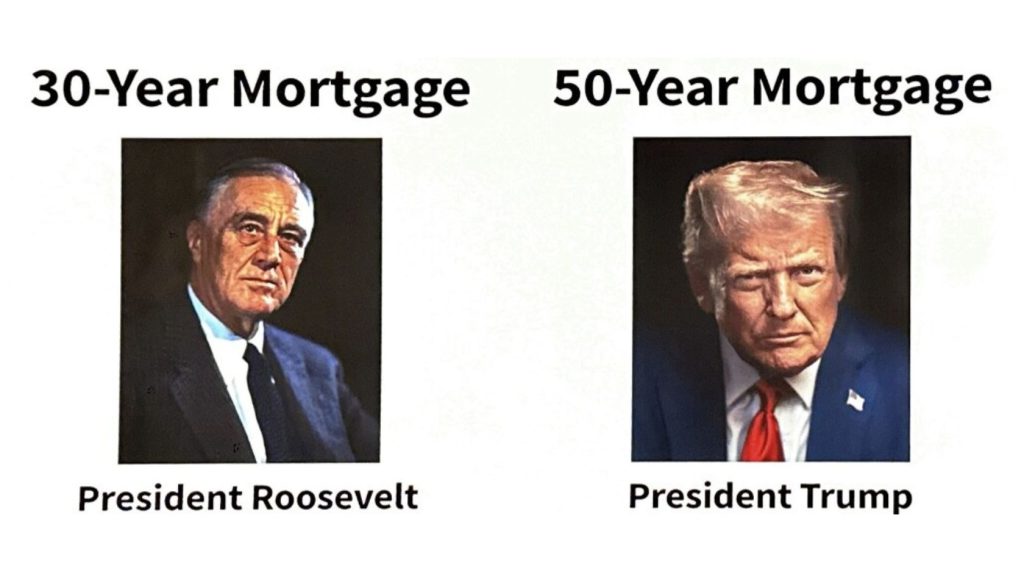

On Saturday, President Donald Trump made headlines after hinting at a proposal for 50-year mortgages, a move aimed at tackling America’s housing affordability crisis by lowering monthly payments.
There’s just one catch: under current law, anything over a 30-year mortgage is not considered a “qualified mortgage.”
Trump’s Truth Social Post Sparks Speculation
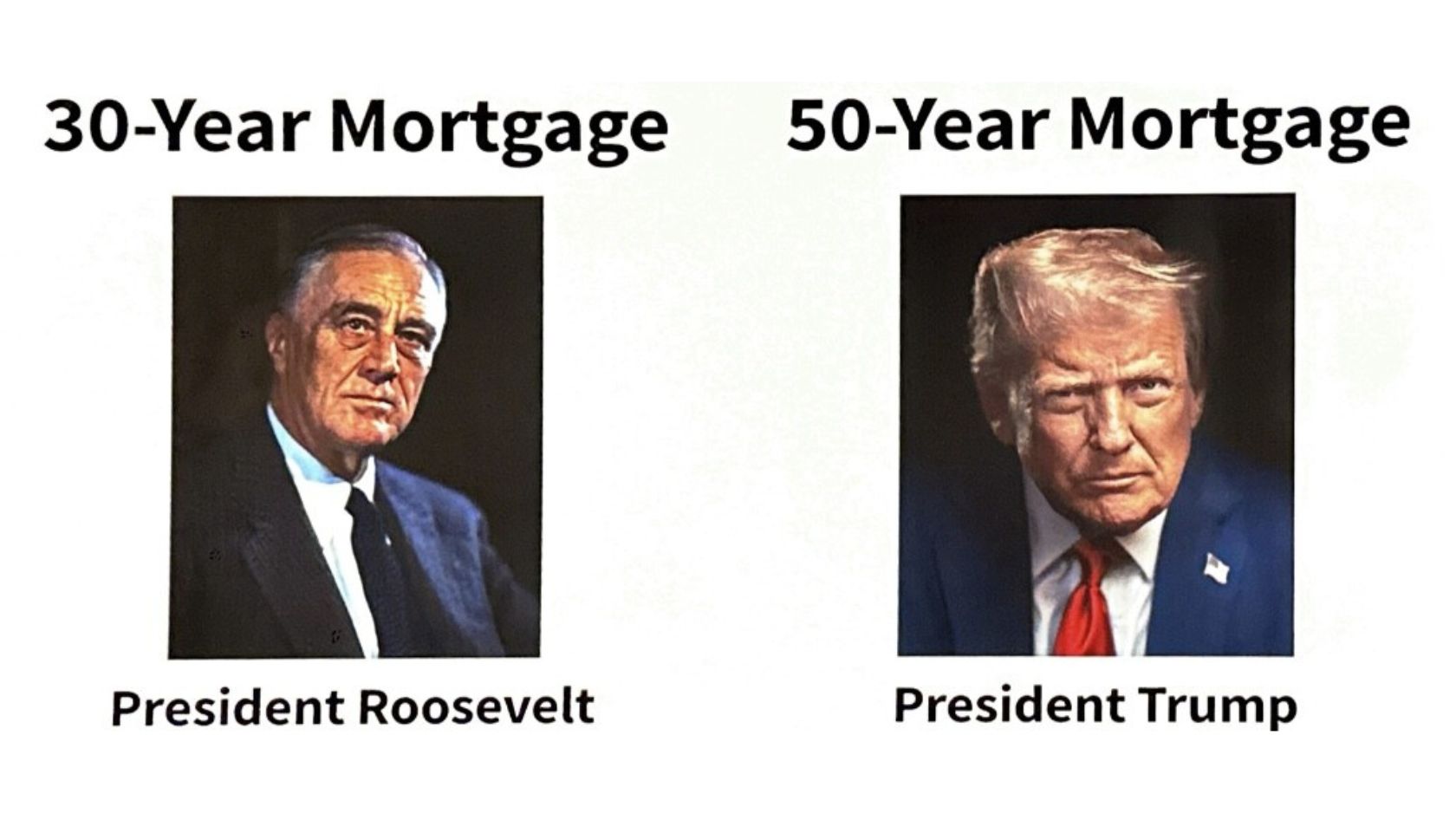
Trump shared an image on Truth Social comparing the 30-year mortgage, introduced under Franklin D. Roosevelt, to his proposed 50-year mortgage.
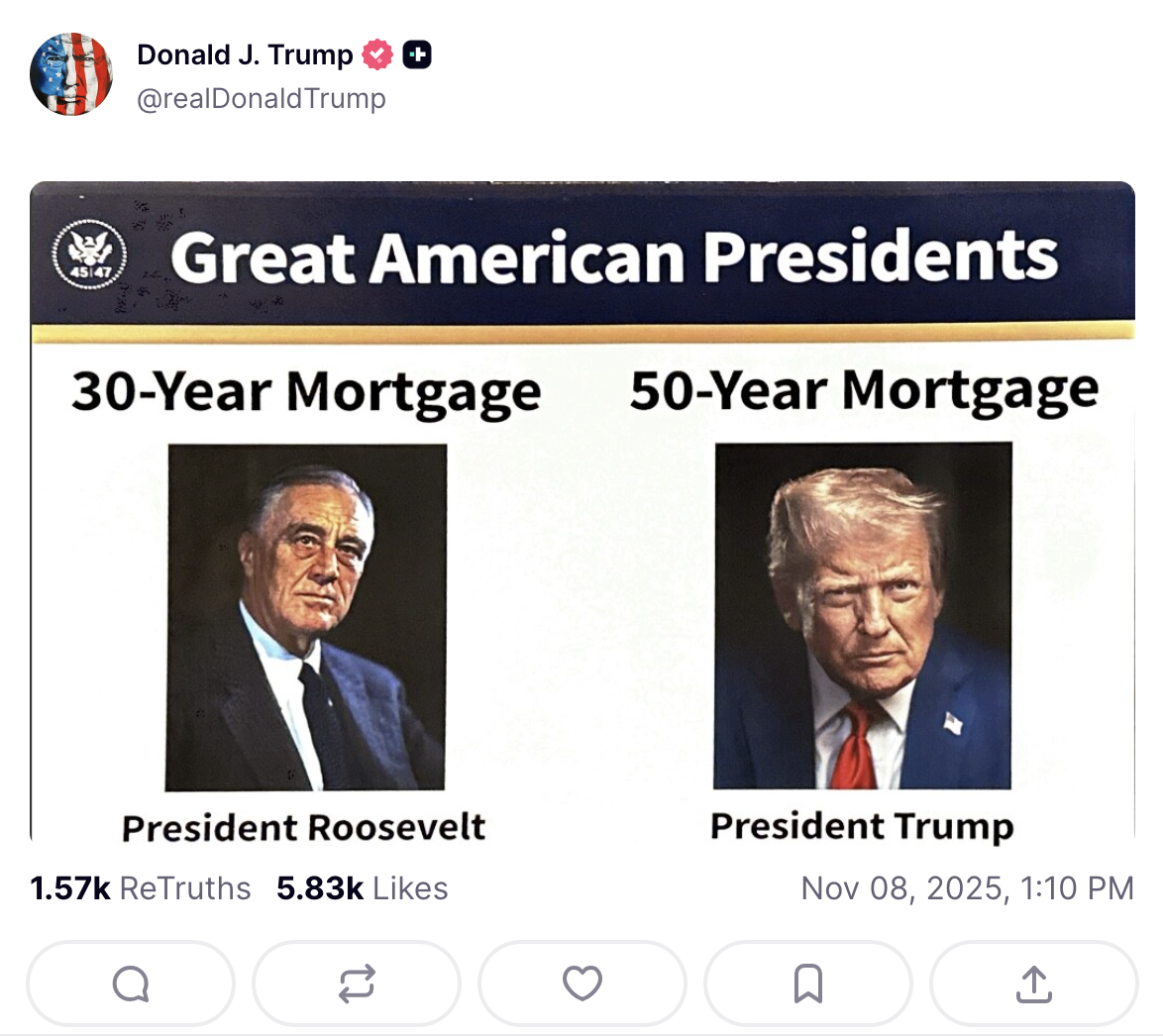
Thanks to President Trump, we are indeed working on The 50 year Mortgage – a complete game changer. https://t.co/HZDPzO0qJG
— Pulte (@pulte) November 8, 2025
As of publication, the White House has not released an official statement or additional details on the proposal.
Why A 50-Year Mortgage is Not Legal (For Now)
Under the Dodd-Frank Wall Street Reform and Consumer Protection Act, passed after the 2008 financial crisis, the Qualified Mortgage (QM) rule limits loan terms to 30 years or less.
To make 50-year mortgages widely available, that rule would need to be amended, or lenders would have to classify the loans as non-QM, which usually come with higher rates and stricter underwriting standards.
According to HousingWire, Lead Analyst Logan Mohtashami cautioned against the move, saying it could stall housing market recovery and slow homeowners’ equity gains.
“I understand that we have housing affordability challenges in America, but subsidizing more demand from 30- to 50-year mortgages is not the policy we want to take now. Housing has to balance itself out through slowing home-price growth and wages increasing — as it has for many decades. To add another subsidization to the market just prevents that healing process from occurring, which also prevents less equity build out as well. So I am not a fan of any increasing in the amortization, the 30-year fixed is perfectly fine as is.”
The Bottom Line
Trump’s proposed 50-year mortgage could lower payments, but unless Dodd-Frank changes, it may not be possible.
And even if it did pass, it could do more harm than good by keeping home prices inflated and delaying long-term equity growth.