Two million empty lots.
It’s not just a random housing statistic. It’s a snapshot of what’s broken in America’s supply chain for new homes.
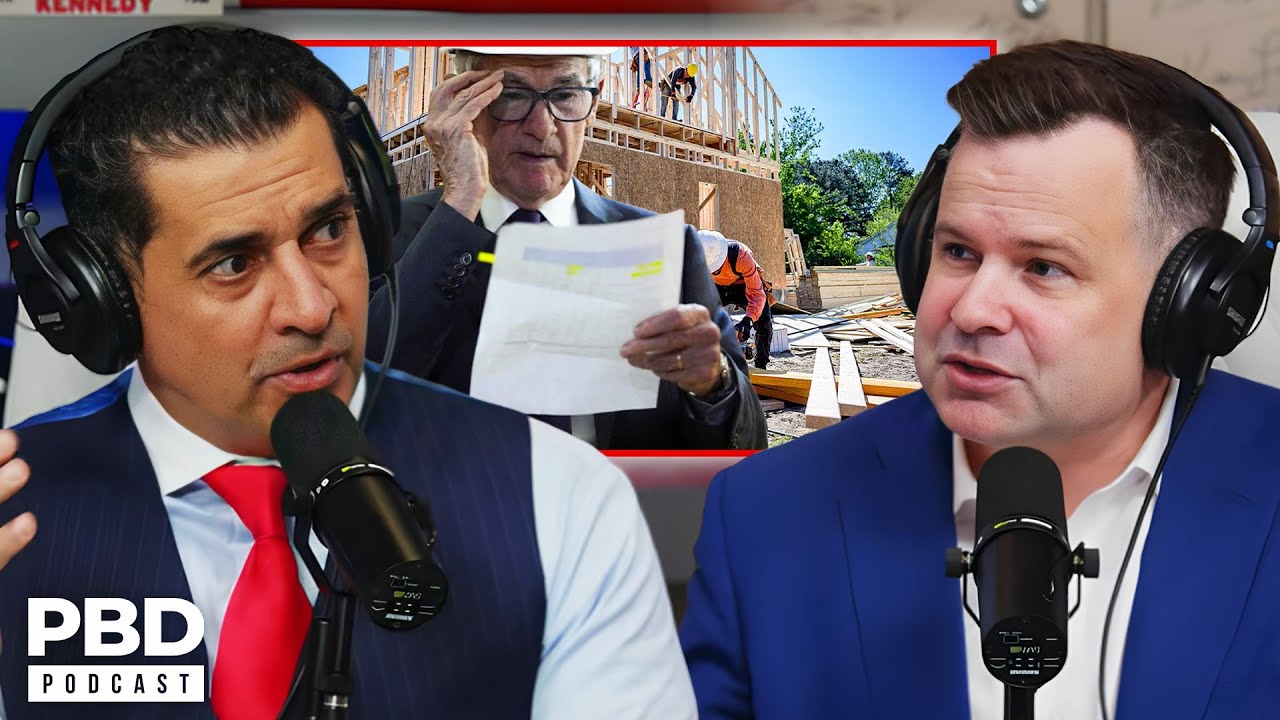
In a recent PBD podcast, housing investor Bill Pulte, Director of the Federal Housing Finance Agency (FHFA), joined host Patrick Bet-David to talk about what’s really driving America’s housing shortage.
While most conversations focus on high rates or permitting delays, Pulte pointed to what he called a “dirty secret”:
“The builders sit on a lot of land. They sit on over two million lots by what we can tell. Two million empty lots. That’s the dirty secret.”
According to Pulte, builders collectively control enough undeveloped land to reshape the market if they choose to build. Instead, he says many are holding back, waiting for conditions that keep prices and margins high.
He explained how consolidation among the biggest players has concentrated control of the entire new-construction market.
“When I was a kid at Pulte Homes…less than 10% of the market was the big builders. Now it’s almost 60%. They’re like the automakers these days, and it’s even worse because they control the land.”
That shift, he said, has changed the entire supply dynamic. Where once small and mid-sized builders drove affordability, the market is now dominated by publicly traded companies motivated by quarterly earnings and shareholder expectations.
The result is a market where demand far exceeds supply and new housing is being rationed, not released.
Why Builders Are Holding Back
When Bet-David asked why these companies aren’t building, Pulte said they often blame the same obstacles: permitting delays, sewer and utility costs, and supply-chain issues.
But he pushed back on the idea that these problems fully explain the slowdown.
“They’ll say, ‘Well, it’s not entitled and there aren’t sewers in it.’ Well, then get putting the sewers in ’em, okay?”
That line drew laughter in the studio, but his point was serious. Builders can always find reasons to wait, yet every delay adds to the affordability crisis.
Construction costs have risen sharply, with concrete up 150% since 2010, but Pulte says that’s not the real reason companies are holding back.
“They may need to bring their prices down. They may also need to figure out how to make monthly payments only for people who are qualified, but make it more affordable for people to buy homes.”
Profitability, he said, has become the real constraint. With margins already near record highs, builders have little incentive to move aggressively into lower-priced housing. Instead, they’re maintaining tight control of new supply, what Pulte compared to a coordinated strategy.
“We want to be constructive, but at the same time, people have to step up and do the right thing by the American consumer. They can’t be like the oil cartel where they collude with each other, keep the prices high, and then gentlemen like this guy can’t buy a home.”
His choice of comparison was deliberate. When production is concentrated in a few hands, withholding supply can be more profitable than expanding it.
In housing, that strategy keeps affordability out of reach for millions of buyers.
Federal Leverage and What Comes Next
Pulte’s argument isn’t that builders should be punished for making money. It’s that federal policymakers have leverage they aren’t using.
He noted that Fannie Mae and Freddie Mac are deeply entwined with the construction industry, funneling billions of dollars to the same companies sitting on undeveloped land.
That funding, he said, gives Washington an opening to drive change.
“We can motivate ’em. We’re trying to do it in a constructive way. The top two homebuilders in the country, we give at Fannie Mae, year-to-date, eight billion in liquidity to.”
The idea is simple: tie federal liquidity to action.
If companies want access to favorable financing, they should also move dirt, not just hold it. Builders could be encouraged, or even required, to prioritize affordable inventory, build smaller floor plans, or bring new communities online faster.
Pulte also said the federal government can play a role in unlocking local bottlenecks.
He referenced recent meetings with top housing and economic officials, including Scott Turner, the Secretary of HUD, and Kevin Hassett, the Secretary of the Treasury.
“We recently held a meeting… looking at all types of different ideas on housing. Is there a way we could incentivize with federal funds or otherwise some of these municipalities to get going?”
The takeaway: the federal government may soon push harder for measurable results from both local regulators and national builders. That pressure could come in the form of incentives, faster permitting, or funding tied to specific production benchmarks.
The Road to 2026
Pulte believes this builder standoff won’t last forever. He predicts that by 2026, housing will become one of the biggest political and economic issues in the country, forcing action from both the public and private sectors.
“The good news is, Patrick, I do think that in 2026, this is going to be a huge issue both in terms of the election, but I also think that the House and the Senate, they’re telling me…’Well, housing is the number one issue amongst my constituency.’
“So, I think there’s enormous momentum going into 26. And I think you’re going to see some meaningful announcements out of us in the coming months.”
If he’s right, the next housing boom won’t start with rate cuts or investor optimism. It’ll start when the builders who’ve been holding back finally start building.
Two million empty lots represent both a problem and an opportunity. The only question is who will move first.
For anyone watching the market closely, that’s the signal to prepare now. The land is there, the demand is there, and when the first wave of projects hits, it could redefine the balance of supply for years to come. Those who understand what’s coming and position themselves to work with builders when it happens will be the first to benefit when America’s next housing boom begins.