


Real estate brokerages are splintering. On one side, you’ve got boutique firms focused on hyperlocal markets or ultra-luxury listings. On the other, you’ve got low-cost platforms offering bare-bones splits with few strings attached.
And everything in the middle? If you ask Craig McClelland, it’s on life support.
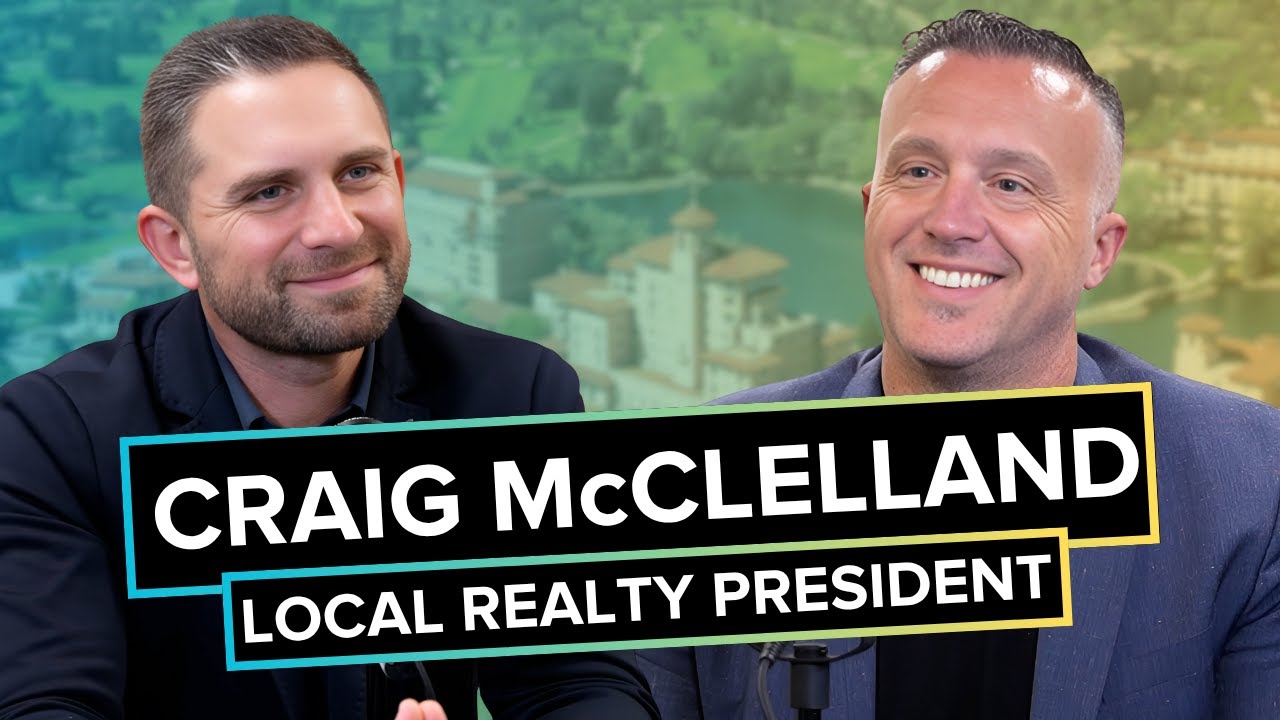
In a recent interview with BAM’s Byron Lazine, McClelland didn’t hold back. The longtime brokerage operator and co-founder of Local Realty outlined the sharp decline of the traditional full-service brokerage and what’s rising to take its place.
Watch the full interview below to hear Craig break down what’s coming next and how agents can position themselves before it’s too late.
What Is “Middle Brokerage” and Why Is It Failing?
McClelland defines the “middle” as brokerages that try to be everything to everyone but fail to stand out in any one area. They offer a decent split, some branding support, some tech, and some training. But none of it’s exceptional.
And in a market where margins are thin and brand loyalty is low, “meh” isn’t cutting it.
“I think that middle brokerage is dead. It doesn’t know it yet. Somebody needs to send it a memo.”
According to McClelland, agents are abandoning these jack-of-all-trades firms and moving in two distinct directions:
- The Niche Model: Ultra-focused brokerages specializing in a niche such as high-end luxury, lake homes, or even public service markets like police and teachers.
- The Utility Model: Low-cost brokerages that give agents a platform, a login, and freedom to run their business with minimal oversight.
Each model knows exactly what it is. The middle does not.
“Everything’s just meh. That’s where the erosion happens. Everyone is exiting to one side or the other.”
Why Identity Matters More Than Tools
One of the biggest reasons middle brokerages are losing agents is their lack of a clear identity. They may claim to support luxury or commercial, but it’s usually surface-level. True specialization, according to McClelland, requires aligning every part of your business, from brand to training to office decor.
That’s exactly what he’s doing at Local Realty, a brokerage focused on $400K to $500K homes in suburban markets that serve teachers, firefighters, and police officers.
“We don’t want to have a brand that’s highlighted over the agents. So, we really want the agent to be front and center…So, we’re a grayed-out brand. We did that purposely on the signs. And agents are required to have their photography on the sign. We want to have an agent on every single sign that’s out there.”
Local Realty only opens offices on small-town main streets. Every piece of furniture, art, and staging material is sourced from local vendors. No IKEA. No excuses. The goal? Total alignment between brand, customer, and community.
“I want to have this character in the office that is a local character. I want all of the artwork to be of local buildings…because I want that to be our identity. And the reason why we did that is because we propped up a 501(c)(3) foundation that gives back to all firefighters, police officers, and school teachers in the local area… That’s our DNA.”
Some of the agents who learn about Local Realty are aligned with that culture. Others love the idea as long as it ticks another box that ranks higher on their list.
“I’ve met with a lot of agents that came in, and they’re like, ‘I like all that, but I need this split. You’ve got to match my split from my old company.’ I said, ‘You know who could match that split? Your old company. Stay there.’”
The Pitfalls of Playing It Safe
Middle brokerages often make the mistake of chasing scale without a strong identity. They think they can dabble in everything (luxury, commercial, new agent training) without committing to any of it. That lack of focus is fatal.
Here’s how Craig put it:
“It’s the identification that you say, ‘My business model does this extremely well. And by doing this extremely well, we do fail at other things. So, if you want to do those other things, you’ve got to go somewhere else.
“The problem is we’ve got too many brokerage companies that say, ‘We can do everything! We’re everything to everybody.’ And they’re out there with thousands and thousands of agents. And they’ve been eroding away… And that’s because they haven’t found their identity. They haven’t picked their lane.
‘You have to have a value trade-off for anybody to work with you.”
The numbers back it up. McClelland shared how brokerages he’s watched in Atlanta have lost half their agent count over the past few years. And it’s not because agents left the industry. They just found a model that fit them better.
And with referral platforms, portals, and teams now controlling a large share of buyer leads, agents are more mobile than ever.
For Agents: What Comes Next
If you’re an agent still parked at a “meh” brokerage, this might be the time to reassess. Ask yourself:
- Does your brokerage have a clear identity and target market?
- Do its tools, brand, and leadership support your specific business model?
- Are you surrounded by agents who are there for the same reasons you are?
The future belongs to firms that are known for something, together with the agents who align with that something.
What does that look like for you?