
If you’ve been in real estate long enough, you’ve had a version this call.
The buyer signs the agreement. Everything feels solid. Then later that night, your phone rings and suddenly they want a piece of your compensation back because their friends “all got a rebate.”
Most agents freeze in that moment. Some cave. Some get defensive and damage the relationship. A few know exactly how to handle it and strengthen their position.
This is a situation I’ve seen firsthand. I’ve had this conversation. I know what works and what blows the deal.
Here’s how to handle this in a way that protects your value and keeps the deal intact.
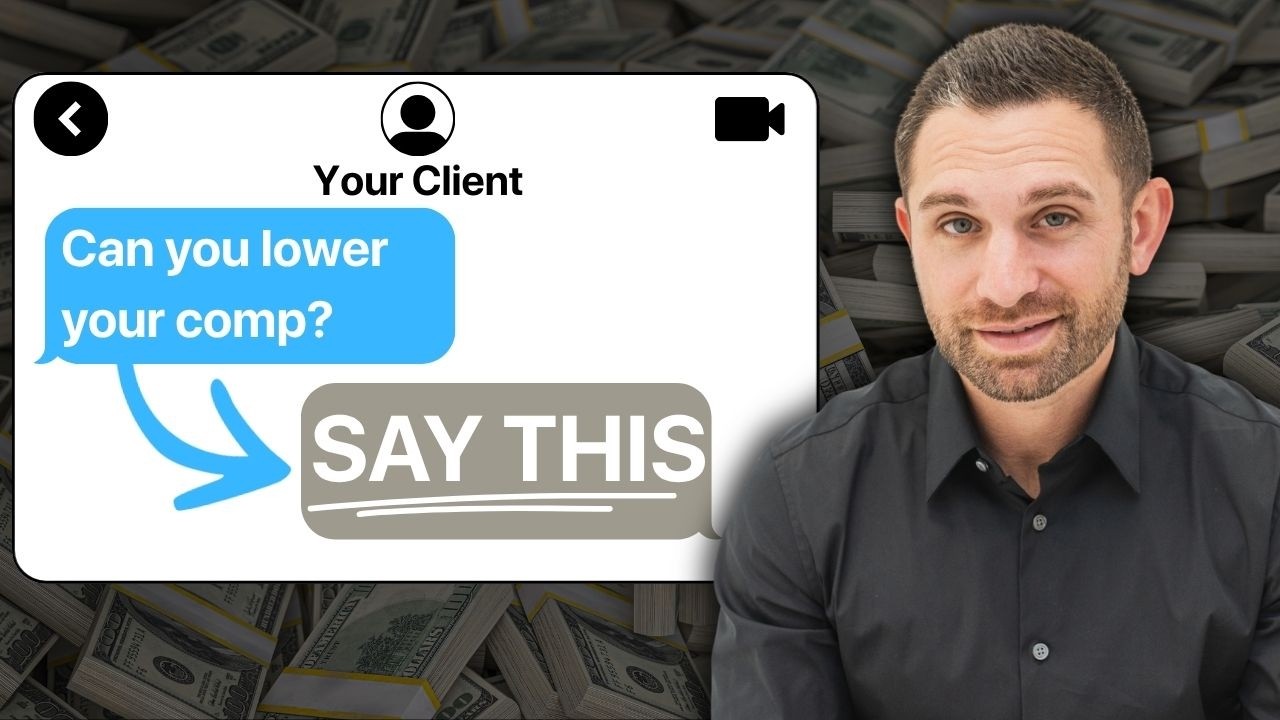
How to Handle a Rebate Request Mid-Deal
An agent brought this exact situation to one of our live BAMx Role Play Masterminds. She had a $2.5 million land buyer, the buyer rep agreement was signed, everything was locked in, and then the client called with this:
“All my friends are getting a portion of the Realtor’s commission back, and I would like some of your commission back as well.”
Most agents don’t expect this after the agreement is signed. So, the reaction is usually hesitation, maybe even a little panic. You end up saying something like:
“Let me think about it, and I’ll get back to you.”
Now you’ve created a new problem. You’ve signaled that this is negotiable. You can’t undo that moment. You can only control what happens next.
And before you respond, you need to understand what the client is actually saying. For most, it’s about getting maximum value from their home purchase. Getting a rebate on their agent’s commission sounds like they’re getting more for their money.
Not always the case.
Start With the ACA Framework
If you haven’t heard me talk about ACA before, here’s what it stands for:
- Acknowledge
- Compliment
- Ask
This is the framework I come back to anytime a client is pushing back mid-deal. It’s the framework we need here to get back into alignment with the buyer.
Here’s how it applies directly to the rebate conversation.
The first move is to acknowledge the world they’re living in, without agreeing with their request. Something like:
“Hey, so glad you brought up rebates. A lot of people are talking about rebates right now and hearing about rebates. I’m glad you brought this to me directly.”
So, not only have you acknowledged their question and the reasoning behind it, you’ve also paid them a compliment for asking the question, bringing this to your attention. Because it gives you both a chance to get more clarity on the right next steps.
From there, you ask a clarifying question, which does two things:
- It puts the ball back in their court
- It forces them to articulate what they actually want, which is often less specific than you’d assume.
Try this:
“Just so we’re clear, your goal here is to get the biggest rebate at closing, or is it to get the right home on the right terms at the right price with the most protection? A or B?”
Then you reanchor to their answer. Whatever they say, you use it to steer the conversation toward the two models they’re actually choosing between: the full-service model or the discount model.
When You’ve Already Said “Let Me Think About It”
If you’re already in the situation where you told a client you’d think about it and call back, you can still recover. The callback is a reset.
Lead with the clarifying question rather than jumping straight to an answer on the rebate. Here’s how I’d open that call:
“Hey, I’m glad you brought this to me directly. I want to make sure we’re on the same page before I respond. Main goal here for you: is it A, to get the biggest rebate at closing, or B, to make sure the terms and conditions on that closing document are the ones we presented, that you have protection through the deal, and that you get the right home on your timeline? Which one is most important?”
After they answer, you transition into the two-model framework.
Find Out What They’re Actually Asking For
One of the biggest mistakes agents make in this conversation is responding before they know the number their client has in mind. You might agree to something you never needed to agree to, or push back on something that would have been easy to accommodate.
Tom Toole shared this script to get clarity on that number:
“Hey, it’s smart you’re asking. So tell me, what are you looking for? I mean, I don’t really know where you’re at. I’ve got to see if this is even doable on my end because I know what I’m going to bring to the table.
“And just like when you go to any other professional, whether it’s an attorney, an accountant, or even a doctor, there’s value to those services. So tell me what you’re looking for to see if we can even get aligned here. We might be too far apart.”
That’s the big question: “Can we get aligned?” I offer full-service. Some agents run a discount model. We want to explain things to customers in frameworks.
Explain the Two Models Without Being Preachy About It
Some buyers are effectively choosing between a full-service model and a discount model. Most of them don’t realize they’re making that choice. Your job is to make the choice visible.
Here’s how to frame it:
“I offer full service. Some agents run a discount model. They promise rebates, but there’s a tradeoff with everything. The tradeoff on discount is cutting corners. They usually don’t prioritize your time, prioritize property, push as hard in negotiation. These are the things that I do differently from the discount model. Are you not looking for XYZ protection anymore?”
You’re drawing a clear line between two different value propositions and asking them to confirm which one they actually want.
What to Do Before the Rebate Conversation Happens at All
The best time to handle the rebate conversation is before it ever happens. Set up the buyer relationship correctly from the start, and you won’t be blindsided by a late-night phone call.
During the initial consultation, before anything is signed, walk through the two models explicitly:
- Tell them upfront that you operate a full-service model and explain what’s included.
- Acknowledge that discount models and rebate structures exist in the market.
- Ask them directly which model aligns with what they’re looking for.
- Get genuine buy-in before the agreement is signed.
When a client understands what they’re choosing and why, a friend’s anecdote about a rebate loses most of its power. They already have a frame for understanding the tradeoff.
The Real Reason This Conversation Is Hard
Most agents cave on compensation because they’re too close to the deal. The pipeline isn’t full enough. Losing this client feels catastrophic. So, they negotiate against themselves, often more than they ever needed to.
The frameworks above are solid. But they hold up better when you’re not desperate. The best position to be in when a client pushes back on commission is one where you can genuinely walk away if the terms don’t make sense.
A full pipeline solves a lot of problems that scripts alone can’t.