
I know what you’re thinking: “Virtual staging… yuck!”
We all have a natural preference for actual, physically staged furniture because it not only looks better but also because there is actual furniture for buyers to experience as they walk through a home.
So, why would you ever consider virtual staging?
- Limited Budget: Whether it’s due to a low commission offered by the seller or because the price point or quality of the home doesn’t justify actual staging, virtual staging is a cost-effective alternative.
- Speed and Convenience: At times, we encounter sellers with tight timeframes. Virtual staging can be a swift solution, with staged photos often returned within 48 hours.
- Enhancing Small, Empty Spaces: This situation occurs more frequently than the others. Many homes have at least one empty room that could benefit from virtual staging.
We can all agree that buyers start their home shopping online. Your listing needs to capture their visual attention before any other does.
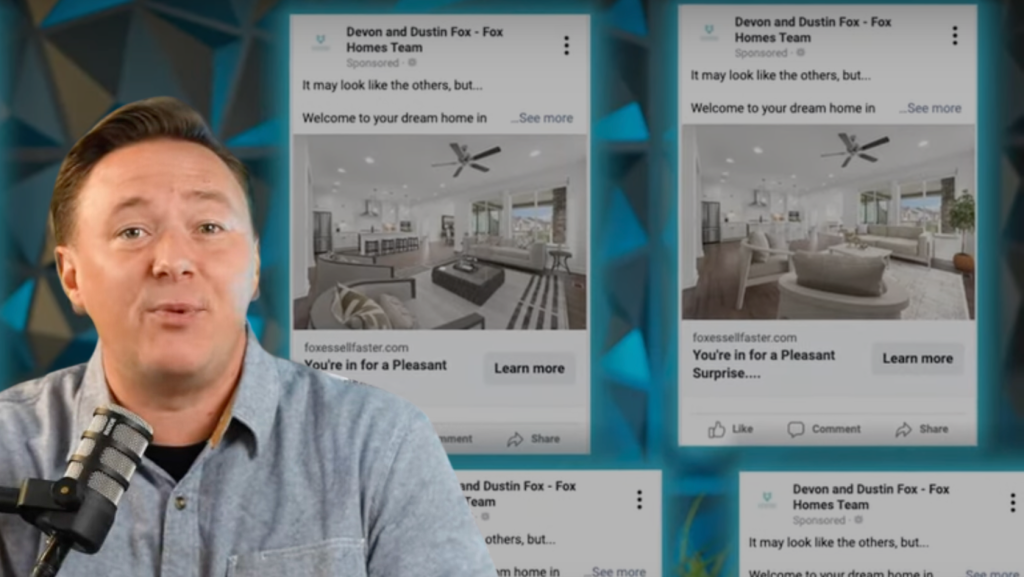
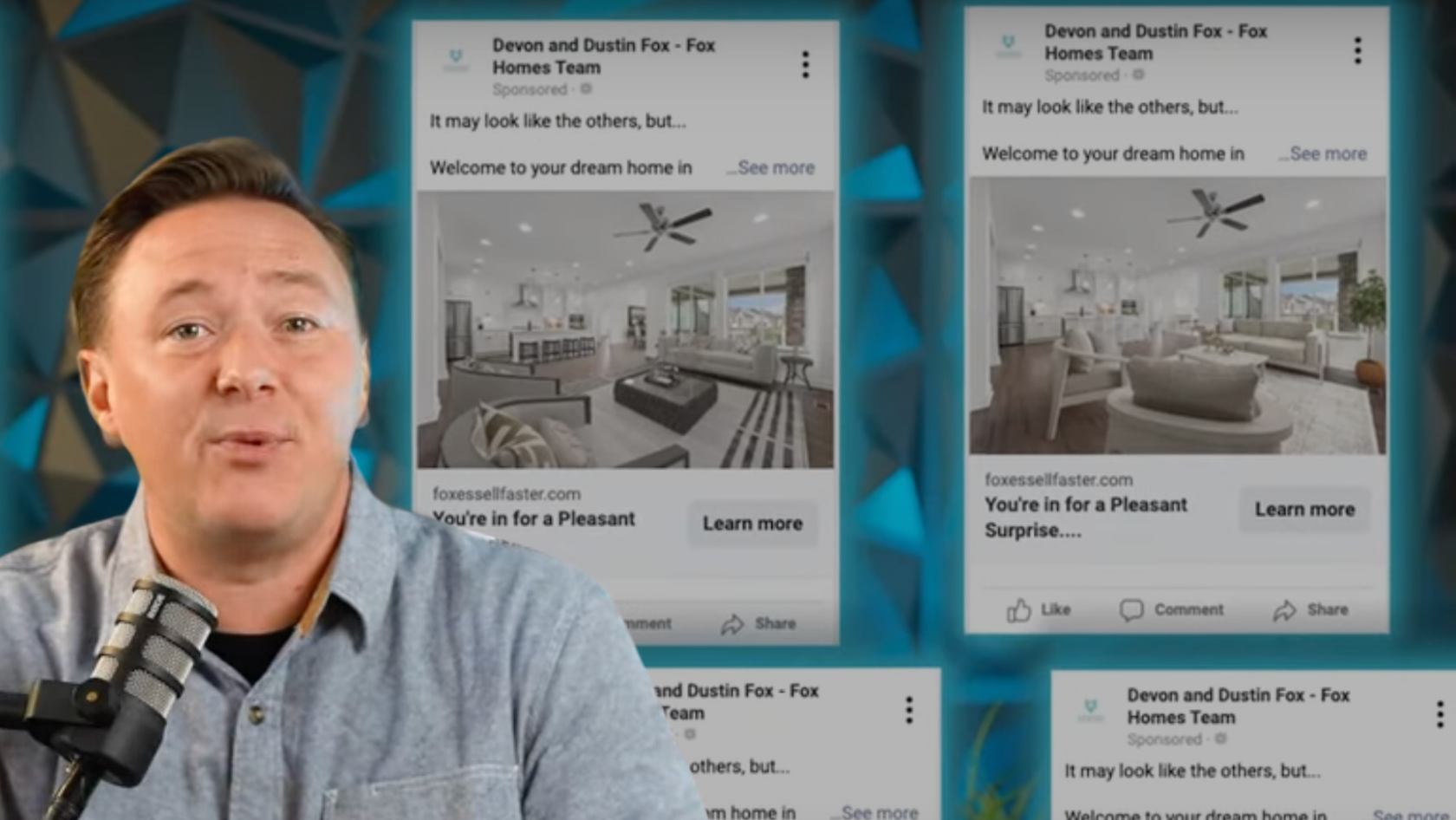
But how do we know which style of virtual staging actually makes a difference? To answer this, I conducted a split-test experiment to see how various design styles affect click-through rates on my property listings.

The Experiment
To start, I took the same room photo (living room) and leveraged the virtual staging services of BoxBrownie.com. If you’ve never virtually staged before, each room will cost you $24. Professional photographers will likely charge you two to three times as much for the same service.
I ran a split-test involving every available property style:
- Modern
- Hamptons
- Scandinavian
- Urban/Industrial
- Contemporary
- Traditional
- Farmhouse
Swipe below to see all seven ads:
As far as ad spend, I spent $150 on each ad, running them through Meta’s Ad Manager with an “Awareness” objective for a more organic reach. I avoided the “Traffic” objective, which often attracts click-happy Facebook and Instagram users.
Each ad featured the same room, with the same budget, over the same timeframe (one week), and with identical spending.
The Results

The Scandinavian and Urban/Industrial styles were close third and fouth, each receiving 34 clicks for their unique appeals.
The Contemporary and Traditional styles, though distinctively elegant, received 26 clicks each.
The Farmhouse style, despite its cozy charm, lagged behind with 18 clicks.
The Cost Implications
Consider this: a weekly investment of $200 in ad campaigns amounts to $10,400 annually. In aggregate, the choice of virtual staging style proves to be crucial here.
Selecting the Modern style would result in approximately 2,080 clicks per year. On the other hand, the Farmhouse style would only achieve about 936 clicks. This shows that the Modern style would receive 222% more clicks than the Farmhouse style, which translates to considerable savings in advertising costs for the same level of engagement.
The Takeaway
Design is not just an aesthetic choice but a strategic one. The style of virtual staging chosen can significantly impact engagement rates, cost-efficiency, and, ultimately, the return on investment (ROI). It’s about understanding consumer preferences and using them to enhance the effectiveness of your listings.
Moreover, it’s a crucial reminder to continually split-test your ads. The furniture style that resonates in my market (Washington DC Metro) may differ from yours.
Ultimately, the appropriate virtual staging style can do more than merely improve a space’s appearance—it can dramatically boost the appeal of your listings, more than doubling clicks and leading to superior results. By recognizing and utilizing these insights—real furniture or otherwise—you can distinguish your properties, attract potential buyers, and generate more leads at a lower cost.