

BAM Key Details:
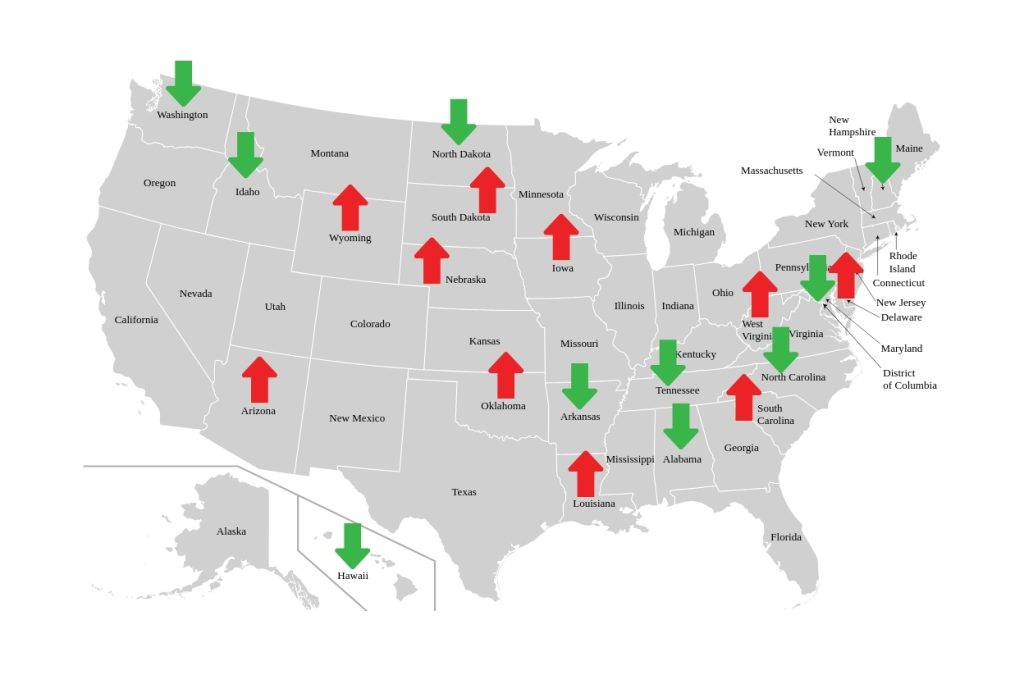
- Atlas reports steady interstate moves in 2025 and identifies the top 10 inbound and outbound states, led by Arkansas on the inbound list and Louisiana on the outbound list.
- The study covers relocations from November 2024 to October 2025 and includes international flows, with India ranking number one for inbound global moves.
Some states keep drawing people in no matter what the market does. Others can’t seem to keep residents from packing a truck and heading somewhere else.
The latest Migration Patterns Study from Atlas offers a full year of relocation data, showing exactly where people moved from and where they moved to between November 2024 and October 2025.
It’s one of the longest-running annual snapshots of mobility trends, and this year’s results land in the middle of an historic affordability crunch.
The study found that interstate moves held steady compared to past years. Even as overall mobility remains low and buyers stretch to make the math work, people are still moving for jobs, family, lifestyle, and opportunity.
Read on for a quick breakdown of the states and provinces gaining the most traction, the places people are leaving, and the global relocation patterns shaping 2025.
Let’s get into it.
Top States With the Highest Inbound Migration
The Southeast kept up its momentum this year, along with parts of the Mountain West and Pacific regions. Affordability is still a major migration driver. So’s the search for better weather, more space, and strong job markets.
The top inbound states are seeing an influx of residents who want lower living costs or a lifestyle upgrade (or both). Here are the states with the highest share of inbound moves in 2025.
- Arkansas (68.2%)
- Idaho (63.6%)
- North Carolina (60.3%)
- Hawaii (60.0%)
- Washington, D.C. (59.0%)
- Tennessee (57.3%)
- Washington (56.9%)
- Alabama (56.8%)
- North Dakota (56.1%)
- New Hampshire (55.0%)
If you work or live in one of these markets, you’re likely seeing steady buyer interest, competitive rental demand, and higher expectations around pricing and speed. These states are becoming magnets for people who want predictability in a market that hasn’t offered much of it.
Top States With the Highest Outbound Migration
Outbound activity spread across several regions, but the Great Plains stood out. Iowa, Nebraska, South Dakota, and Wyoming led many of the departures, driven by economic shifts and lifestyle decisions.
Louisiana, meanwhile, held its position as the top outbound state for the second year in a row.
At the metro level, Sioux Falls, South Dakota, recorded the most outbound moves by city.
These were the ten states with the highest share of outbound moves.
- Louisiana (65.5%)
- West Virginia (61.2%)
- Wyoming (58.5%)
- Delaware (57.0%)
- Nebraska (57.1%)
- Arizona (57.0%)
- Iowa (56.4%)
- Oklahoma (56.3%)
- South Dakota (56.2%)
- South Carolina (56.0%)
If you’re in one of these markets, you may be working with more sellers who feel tapped out by affordability pressure or a lack of job mobility. You may also be seeing fewer incoming buyers, which puts more weight on accurate pricing conversations and realistic timelines.
The Lock-In Effect Is Still Restricting Mobility
The Atlas study also shows how the lock-in effect continues to shape migration trends. California, Illinois, and New York, all major outbound states in 2024, shifted into balanced status this year.
High mortgage rates made many homeowners think twice before trading in their current monthly payment for a significantly higher new one.
Despite the overall drop in mobility nationwide, the volume of interstate relocations stayed steady. Job changes, family needs, and lifestyle decisions kept a baseline of movement alive even as affordability reached new limits.
International Relocation Trends
Atlas World Group International tracked overseas relocation activity for 2025, offering a sharper look at global movement.
Inbound flows leaned heavily toward countries with expanding job markets and strong cross-border ties, while outbound flows showed a mix of corporate reassignment and personal relocation choices.
These were the top 10 inbound countries:
- India
- France
- Canada
- Turkey
- Spain
- Thailand
- Senegal
- Philippines
- Vietnam
- Belgium
And these were the top 10 outbound destinations:
- Bangladesh
- Tanzania
- Cambodia
- Mexico
- Pakistan
- Indonesia
- Estonia
- China
- Greece
- Macedonia
Canadian Provincial Migration
Canada’s relocation patterns shifted northward and toward the coasts. Many households moved away from central provinces in search of affordability, more space, or different lifestyle amenities. Incoming trends favored colder but less crowded regions with more available housing.
These were the provinces with the highest inbound activity:
- New Brunswick
- Yukon
- Newfoundland and Labrador
- Alberta
And these three recorded the most outbound movement:
- Quebec
- Manitoba
- Ontario
The Atlas study determines inbound or outbound status using a threshold model. A region is considered inbound or outbound when at least 55% of its total shipments fall into that category.
Anything below that share is labeled balanced. The study includes both interprovincial moves within Canada and cross-border relocations between the U.S. and Canada.
The 2025 migration landscape displays the same forces shaping the housing market: affordability pressure, job mobility, and lifestyle demand. As prices, rates, and inventory shift in 2026, these patterns will continue to signal where opportunity is growing and where stability is getting tougher to maintain.