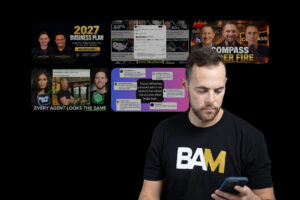
I just got back from Real Estate Video Blueprint in Nashville, where some of the most effective real estate marketers in the country were in the same room.
These aren’t agents guessing their way through content or chasing trends. They’re leading top teams, closing at a high level in their markets, and in many cases building audiences in the hundreds of thousands, all while generating real business from their marketing.
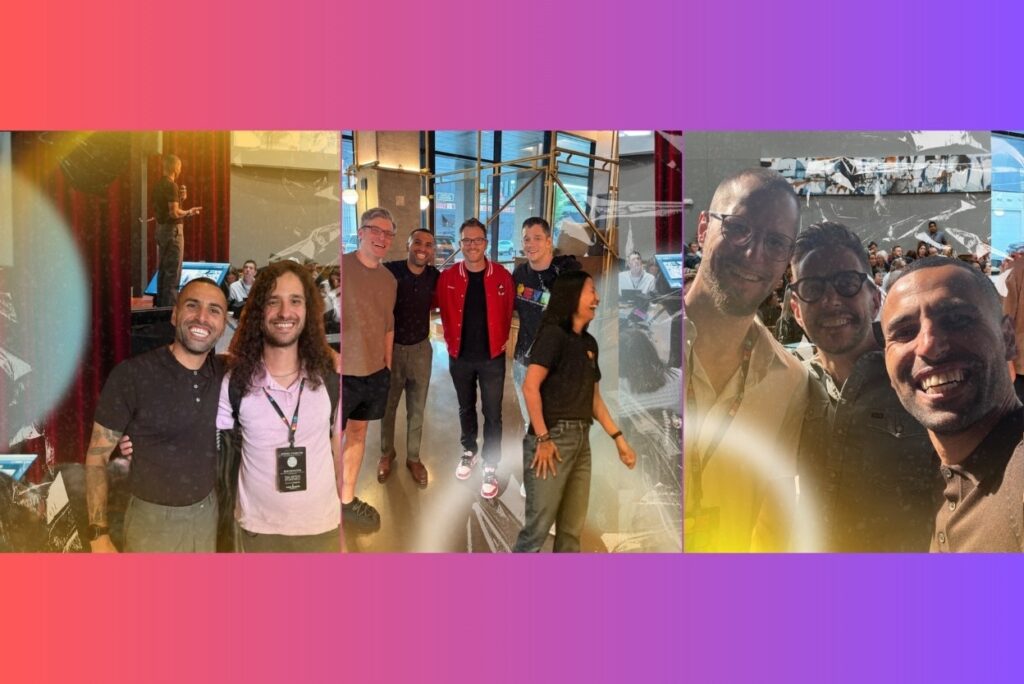
So instead of asking broad questions, I asked a simple one:
What’s actually working in your marketing right now?
Here are seven strategies that stood out.
1. Specific, local content is outperforming everything else
One of the clearest takeaways from these conversations is that the content performing best right now isn’t broad. It’s focused and intentional in the way it’s delivered.
Take Ken Pozek, who’s sold over $1.5 billion in real estate, leads the number one team in Orlando, and has built an audience of more than 370,000 across platforms. He shared that one of his most effective videos recently focused on areas around Orlando that most people didn’t even know existed. That shift toward specificity drove over 75,000 views on YouTube and, more importantly, a meaningful amount of inbound leads.
Kyle Pettit, who operates in Colorado Springs and ranks in the top 3% of agents in his state, took a different approach but arrived at a similar outcome. He created content around a proposed AI data center in his market, not because it was trending, but because there was confusion around it and people were already forming opinions without full context. By slowing the conversation down and adding clarity, he created something people felt compelled to share.
What stands out isn’t the topic as much as it is the approach. The content that’s working is rooted in specificity and perspective.
2. Different types of content serve different jobs
Another pattern that showed up quickly is that not all content is being created for the same outcome, and the agents performing at a high level are very aware of that distinction.
Ken explained that carousels are currently driving reach, shares, and new followers at scale, while stories are where most of the conversations are happening. At the same time, direct real estate posts, even though they may not perform as well from a reach standpoint, tend to convert at a much higher rate.
Keegan Shivers, who has built an audience of more than 300,000 followers on Instagram alone, is known for his ability to tell stories through content, sees a similar breakdown. Content tied to trends or timely topics tends to get shared, while practical, value-based content is what people save and return to over time.
Jen Dillard, who runs one of the top teams in Hood River, Oregon, sees this dynamic play out clearly within her own business as well. Personality-driven, team-focused content builds engagement and familiarity, while listing-specific content is what ultimately drives inbound and client activity.
When you step back and look at it collectively, the takeaway becomes clear. The agents doing this well aren’t guessing, they’re intentional about what each piece of content is designed to do.
Ken also described this as a long-term approach he’s built over time, what he referred to as a “jab, jab, jab, right hook” strategy, where the majority of content is focused on providing value, local insight, and lifestyle, while a smaller portion is intentionally designed to convert. That balance allows the audience to build familiarity first, before ever being asked to take action.
3. Stories and real-time content are driving the most conversations
One of the more interesting takeaways from these conversations is how often simple, real-time content came up as a driver of actual business.
Ken pointed out that while feed content still plays an important role, a significant amount of inbound is coming from Stories, where people are responding in real time and starting conversations that can then be handed off and worked through his team.
There’s something about that format that feels more immediate and more human, and people respond to it differently because of that.
It’s easy to assume that higher production leads to better results, but in many cases, the content that feels closest to real life is what actually drives conversations and creates opportunities. If you are posting on your feed and not posting on your story, that might be one reason why you aren’t starting as many conversations.
4. Evergreen content continues to outperform short-term trends
While a lot of attention goes toward what’s working at the moment, some of the most valuable insights came from content designed to last.
Brad McCallum shared that a “Moving to Calgary” video he created continues to generate business years after it was first published, producing seven figures in GCI over time.
The concept itself isn’t flashy, but the demand behind it is consistent, which is what makes it so effective.
Instead of constantly chasing new ideas, he’s leaned into creating content that continues to get discovered and deliver value over time. It’s a different way of thinking about marketing, one that prioritizes longevity over immediacy.
5. The content people remember isn’t always the most polished
Not all of the content that’s working right now is structured or strategic in the traditional sense.
Ray Ellen, who has over 17 years of experience and runs one of the top teams in Arkansas, shared a simple video he created about a moving truck he bought to help his clients. He set up a camera, explained why he had it, and talked through what it meant as people moved from one home to another.
It wasn’t highly produced, but it resonated. People reach out asking to use the truck, and others reference the video when deciding to work with him.
It’s a reminder that not everything that drives business looks like marketing. Sometimes it’s just something real enough that people remember it later.
6. Collaborations are one of the fastest ways to expand your reach
Another clear theme that came up is how agents are growing beyond their own audience in a way that feels both strategic and scalable.
Keegan emphasized that one of the most effective ways to do that right now is through collaborations, especially with people in adjacent industries. Builders, local businesses, and other creators bring in new audiences, and when those audiences overlap, the reach multiplies quickly.
Instead of relying solely on your own following to grow incrementally, collaborations allow you to tap into attention that already exists and position yourself in front of people who may not have otherwise found you.
It’s a different way to think about growth, less about building in isolation and more about creating shared exposure.
7. Your highest-converting posts aren’t your latest, they’re your pinned ones
Another insight that stood out came from how top agents think about their content at the profile level.
Ray Ellen was asked which of his last ten posts would be most likely to bring in a client. His answer wasn’t his most recent post, and it wasn’t the one with the most engagement. It was his pinned posts.
Those posts are intentional because they’re designed to introduce who he is, who he works with, and how someone can take the next step.
So when someone lands on his profile, they aren’t left to scroll and figure it out on their own. They’re given a clear entry point.
It’s a small adjustment, but it changes the way your content functions. Most agents treat their profile like a timeline, while the agents doing this well are treating it more like a landing page.
What this means if you’re an agent right now
If you step back and look at everything together, the shift isn’t about doing more, it’s about doing things with more intention.
It’s about focusing on specific, local angles that actually resonate, understanding that different types of content serve different purposes, and showing up in a way that feels real rather than overly produced.
It’s about creating assets that continue to work over time, leveraging collaborations to expand your reach, and structuring your profile in a way that actually converts attention into action.
The agents winning right now are building systems that turn attention into trust, and trust into business.