
Geographic farming is a staple of real estate marketing—a long-term strategy meant to build brand awareness and deliver the occasional warm lead. If you haven’t given it a try, then this blog is a great place to start.
But if you have and given up, it’s likely for one of two reasons:
- You didn’t fully value it as a prolonged approach to lead generation because you weren’t seeing “results.”
- You simply didn’t pick the right area to farm.

Regarding the first issue, geo farming is like planting an orchard, where each tree requires time to grow before it bears fruit. Just because you need to wait for a sapling to produce a harvest doesn’t mean you stop watering and feeding it. Similarly, homeowners can take years to decide it’s time to move, so you shouldn’t give up on nurturing relationships with potential clients.

Second-place finishers don’t get paid
According to NAR, 71% of buyers and 81% of sellers hire the first agent they interview, which means that if you’re not the one who’s top of mind, you’re not in the game.
First, you need people to know you exist. Plain and simple, if no one knows that you’re in business as an agent, no one is going to hire you. Geo farming is an easy and cost-effective way to get the word out.
Second, you need them to know who you are and what you do. Brand recognition is a result of frequently and regularly appearing in front of your audience with the right marketing. Again, farming is a simple solution.

Step 1. Consider your goals
A lot of agents want to raise the average price of the homes they buy or sell, either because they want a larger GCI or to maintain their current GCI by closing fewer transactions. If you want a price point of $350K, then you need to select a farm or target homes that meet that minimum. Consult public records or use Zillow, Realtor.com, Trulia, or Redfin to find an area that offers homes in your desired range.
Step 2. Choose a community where you’re already active
If step one doesn’t apply to your situation, try this: upload your list of client addresses from past years to Google My Maps. The platform will drop pins on those locations, instantly showing you where you do the bulk of your business. If you find you’ve already got a decently sized foothold in a particular area, leverage it by farming there.

Step 3. Calculate the turnover rate
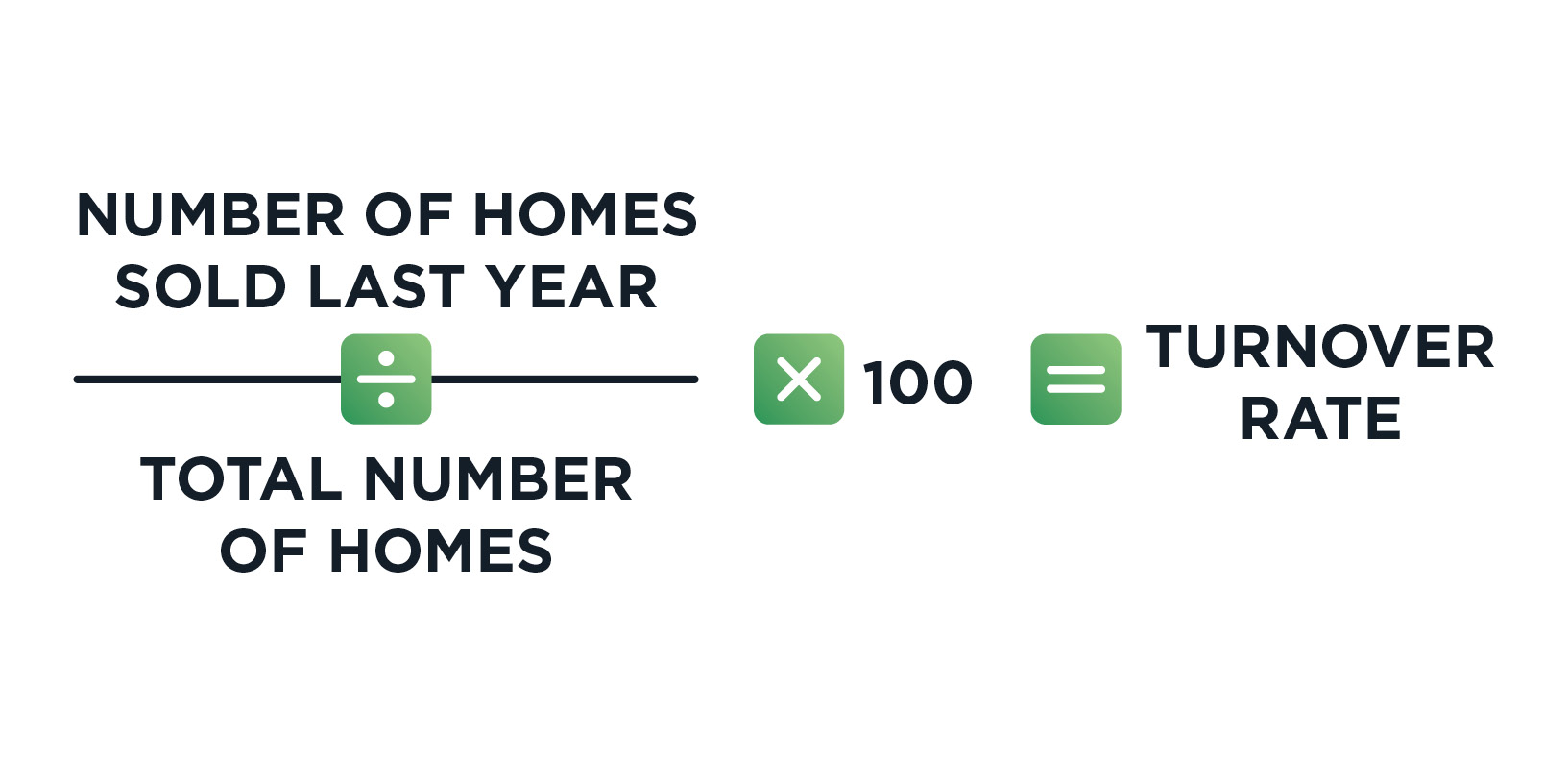
The turnover rate refers to how many homes in a named area were bought and sold over a specified period. To figure it out, select your time frame (typically the prior 12 months), find the number of transactions that occurred within it, and divide by the total number of homes in the vicinity. Then multiply the result by 100 to get a percentage.
Tom Ferry recommends looking for a turnover rate of at least 6%. Because the market can ebb and flow, I recommend checking the rate for at least each of the last five years to get a truer figure. (If you want to dive deeper into turnover rates, including where you can get the numbers you need to do the math, check out this blog.)
Step 4. Assess the competition
Cracking into a competitive real estate market isn’t easy, especially when it has established agents already in the mix. But don’t let that hold you back—sometimes, the “top agent” has only sold three homes.
To find out who they are:
- Check your MLS for who sold what and where.
- Watch for signage in the places you’re interested in to see if someone stands out.
- Make calls to brokers and simply ask. (But take this info with a grain of salt.)
- Consult third-party marketplaces to see which agents are representing the most homeowners.
Combined, this data should give you a pretty good idea of whether there’s a single agent dominating a market.

So how do you get noticed when others are ahead? You could consider selecting a different farm altogether, or you could take another approach. Aside from geo farming, there’s also demographic and predictive farming, either of which can produce promising results.
Demographic farming (or niche farming) targets those who share certain interests or characteristics. A popular choice is first-time homebuyers, but there are also seniors, divorced parents, those looking to buy a second home, and luxury homebuyers, just to name a few. These groups might be underserved and could benefit from your specialized approach. Plus, targeting a specific group lets you get super specific with your marketing message, which can make you come across as the go-to expert.
Predictive farming, meanwhile, relies on the application of AI-generated algorithms to large quantities of publicly available data to predict who is likely to buy or sell a home in the near future (typically within 12 months). Once these people are identified, you have the opportunity to add them to your list and be the first agent to get their foot in the door. Open a free account with ReminderMedia, and you can use our Likely to Move tool to find leads in your selected farm.

Take action
Geo farming is all about planting seeds for long-term growth—it takes patience and the right care, but the results are worth it. Shirley Jones, an agent in Winter Park, Florida, and a ReminderMedia postcard client, recently gave us this report:

Above all, once you have your farm, be consistent, and keep nurturing leads with frequent, top-quality touchpoints. Remember that the goal is to establish a presence. While you’ll occasionally sign a client, brand recognition is the primary focus.

Stick to this strategy, and you’ll build a reliable flow of leads coming your way.
ReminderMedia is a participant in the Amazon Services LLC Associates Program, an advertising program designed to provide a means for companies to earn a small fee by linking to Amazon.com and affiliated sites.