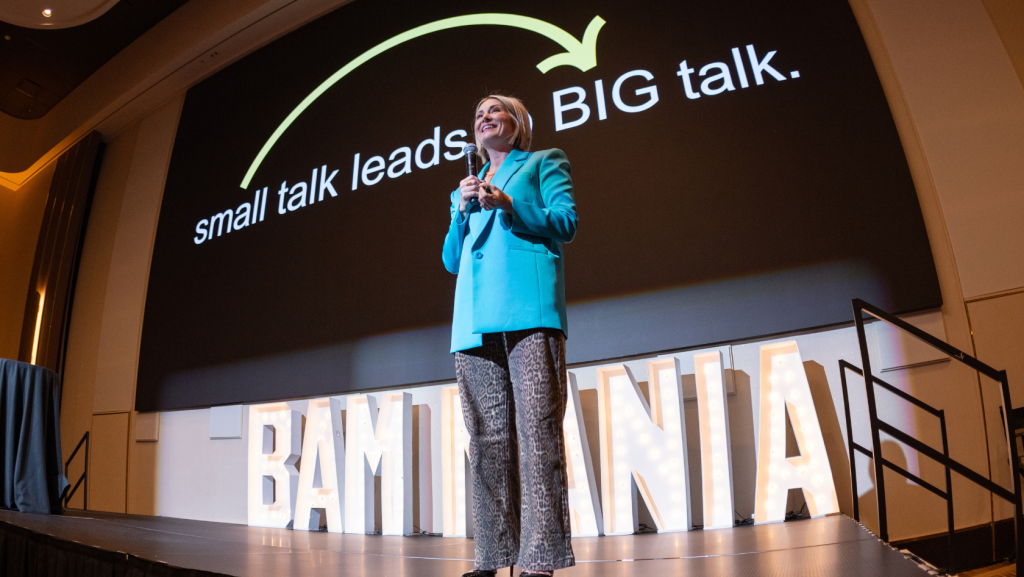


Photo credit: AJ Canaria
When Chelsea Peitz introduced her ‘small talk leads to big talk’ philosophy at BAM Mania, she hit a nerve. Attendees like Krys Benyamein and Tessabella Jelten left her session inspired by her message: that relatability—not just professional expertise—opens the door to meaningful client relationships.
Her approach, rooted in the psychology of connection, shows agents how to use everyday moments to draw people in and keep them engaged. Let’s break it down.
People Come for the Plot, Stay for the Characters
Peitz kicked off with a story from her childhood, recalling the excitement of being 13 years old and waiting for the first season of The Real World. This early experience with unscripted reality television introduced her to the power of real, unfiltered moments.
“People come for the plot, but they always stay for the characters,” she said, noting that audiences are drawn to personalities and relatable moments more than just a storyline.

Years later, as an early adopter of Snapchat, Peitz started connecting with other real estate professionals daily through the app. When her husband questioned whether her “Snapchat friends” were even real, she responded, “I feel like I know these people. I see their living rooms. I see their kids.”
These digital connections grew so deep that she eventually met her closet Snapchat friends in person. This experience led to a year-long study of the psychology of “screen-to-screen relationships,” a topic she also wrote a book about.
Through her study of psychology and social media, Peitz uncovered a key insight: “High-converting content requires high-level trust.”
So, how do you create that high-level trust online? According to Peitz, it all starts with authenticity—and context.
Small Talk Builds the Foundation for Big Talk
Trust begins when people feel safe. It’s why, as Peitz pointed out, strangers often end up chatting about the weather—it’s the most uncontroversial topic there is. But that small talk can be the gateway to much bigger conversations.
Online, it’s not any different.

“If you want people to initiate—that’s the key word, initiate—conversations, where they’re DMing you, where they actually are participating, where they actually are commenting…you need to give them multiple opportunities for a psychologically safe opening conversation.”
Agents often feel unsure about sharing personal content like dog photos or weekend outings, questioning its relevance to their business. Peitz debunked this hesitation: “Can I correlate the fact that I posted a picture of my dog to the sale of somebody signing up for my coaching? Maybe, maybe not. But they started talking to me because of this completely unrelated topic.”
These small interactions open doors for trust and engagement that can eventually lead to business.
Why Context Matters
Peitz also emphasized that creating high-converting content isn’t just about posting more—it’s about posting with context. This means tailoring your content so it feels deeply personal and relevant to your audience. Peitz broke this down into two parts: the context of you and the context of your audience. Here’s how each can elevate your social media strategy.
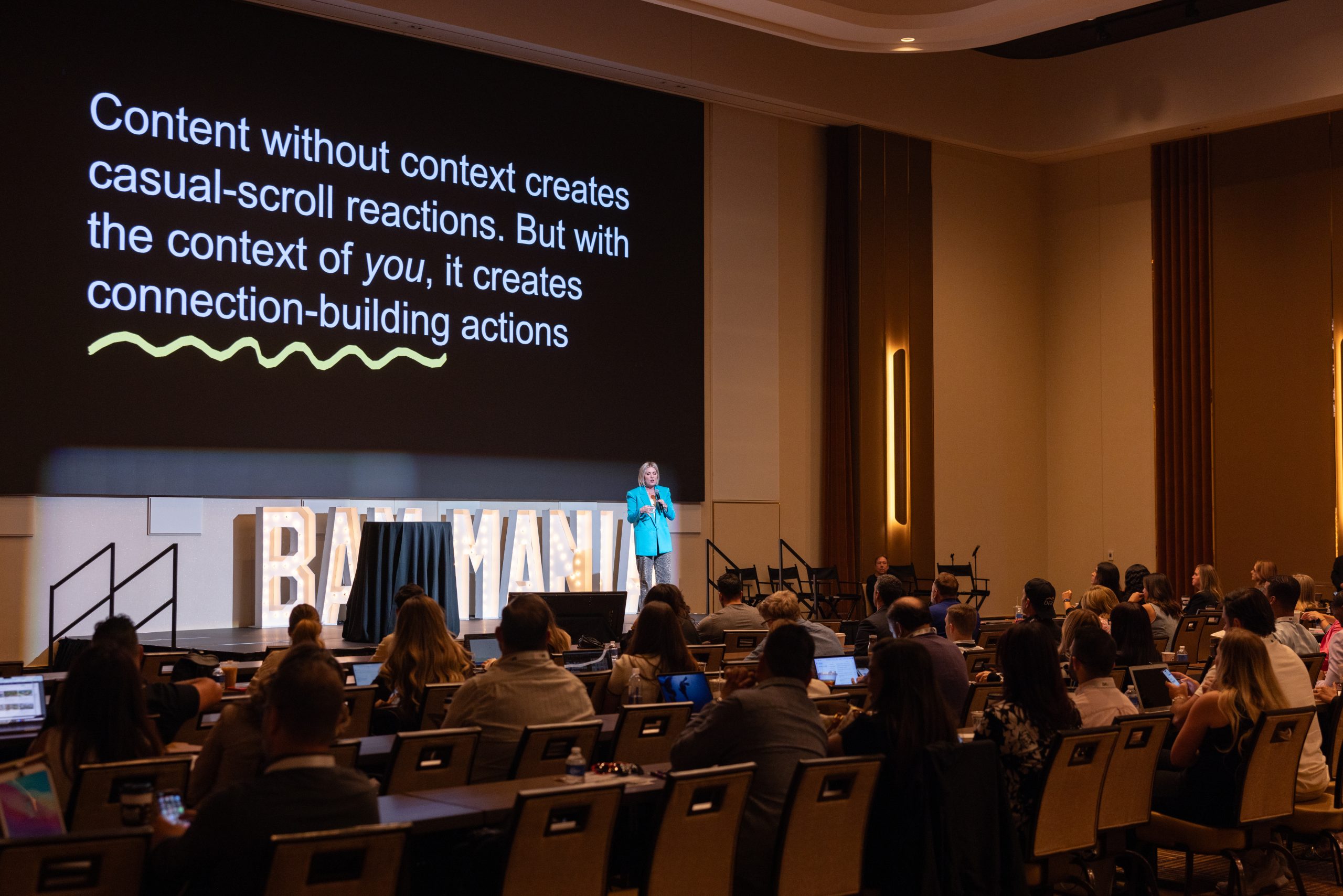
The Context of You: Show Who You Are to Build Trust
Sharing your own story and personality helps build a sense of connection and trust. People want to know who they’re working with, beyond the job title and industry accolades. Here’s how to create content that communicates the context of you:
#1—Show Your Face and Personality Often
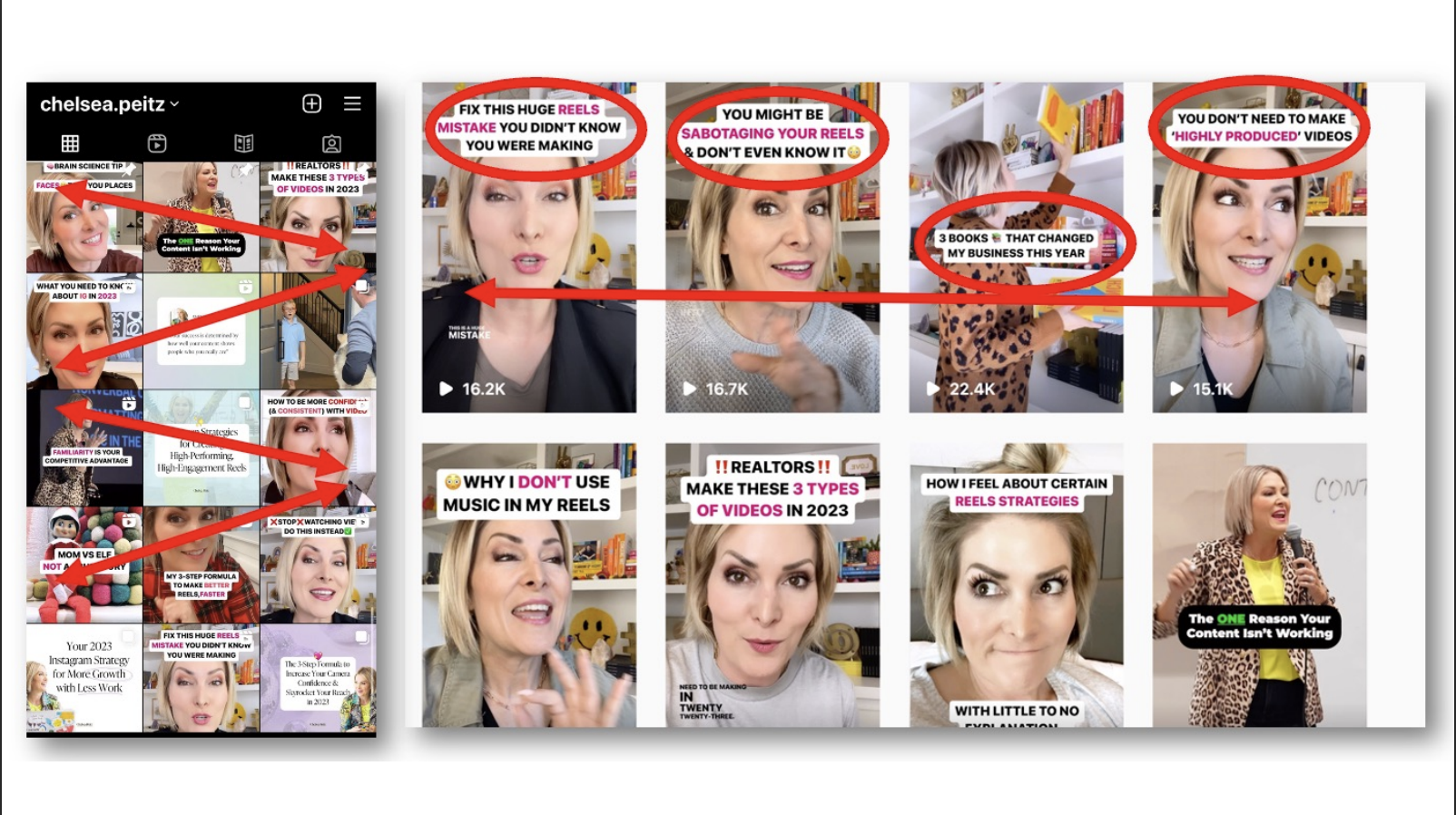
Real estate can feel impersonal if clients only see listings and market stats. Make sure your face is in the majority of your content, whether it’s through videos, photos, or even a consistent avatar image. Peitz advised agents to think about each post as an introduction, saying, “Can I see your face in the majority of your content?” Your audience should recognize you, even in a quick scan.
#2—Use a Content Library That’s Scannable and Story-Driven
Peitz recommended creating a “scannable” content library with text overlays on thumbnails so viewers can quickly understand what your posts are about. If someone sees 40 videos with titles like “Buying Your First Home,” they’ll instantly recognize your expertise. “I’m not going to watch all 40 of your videos,” Peitz explained, “but I’m going to scan like this, and I’m going to say, ‘Oh, wow, they have 40 videos about this topic—they probably know what they’re talking about.’”
#3—Embrace Imperfections
Science shows that small imperfections make you more relatable. Peitz cited the “pratfall effect,” which suggests people are more likely to trust you if you show some vulnerability. Don’t worry about making every post perfect—authentic moments make you more approachable and trustworthy. As she put it, “People can’t relate to perfection. They actually need you to be human and a little imperfect.”
The Context of Your Audience: Tailor Content to Their Worldview
While sharing your story is essential, Peitz emphasized that understanding your audience’s worldview is the other half of building trust. Here’s how to tailor your content to their mindset and emotional needs.
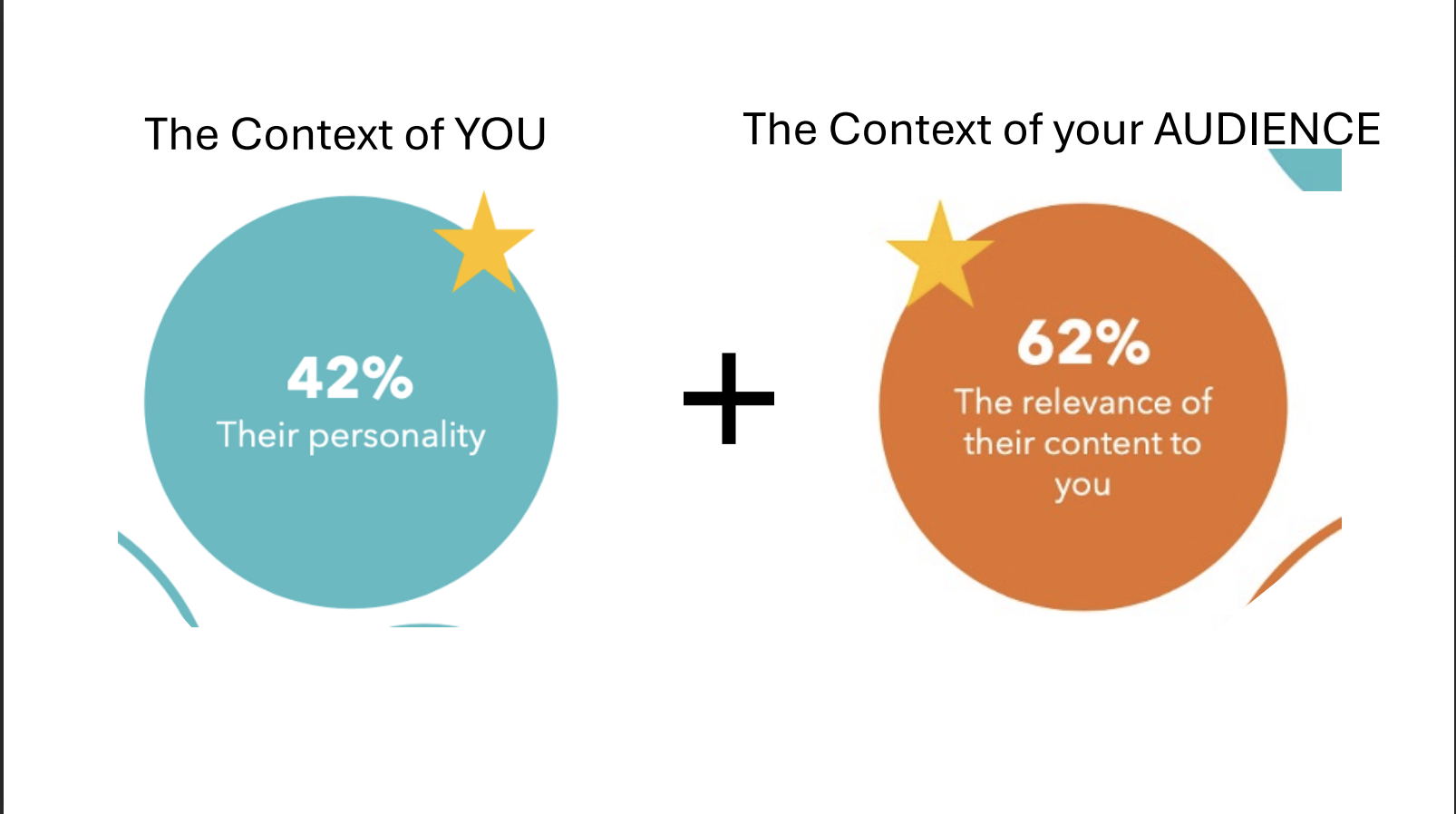
#1—Identify Their Beliefs and Worldview
Peitz shared a powerful takeaway from marketing expert Seth Godin: “Group people based on their worldview, not just their demographics.” Instead of thinking in terms of age or income, focus on their mindset and motivations. For example, a first-time homebuyer may feel insecure and overwhelmed, while an investor might prioritize ROI and market trends. Understand your audience’s values, and you’ll connect with them more authentically.
#2—Address Unspoken Concerns with Targeted Prompts
Peitz advised agents to use ChatGPT to uncover questions clients aren’t asking but are thinking about. Prompt ChatGPT with “What are the unspoken fears of a first-time homebuyer?” or “What are the stories that my clients are telling themselves?” Answering these silent concerns in your content can make clients feel understood and supported.
#3—Create Hooks Based on Their Stories
To craft content that connects, Peitz suggests starting with ChatGPT prompts like, “What stories are my clients telling themselves about buying or selling a home?” From there, use hooks that speak to these beliefs:
- “Feeling like you’re the only one struggling to buy in today’s market?”
- “The hidden truth about home loans no one tells you.”
These hooks make clients feel seen and understood, leading them to trust you with their real estate journey.
#4—Frame Your Expertise as a Solution
Once you’ve connected with their worldview, position yourself as the solution to their problems. Use ChatGPT to brainstorm authority-building phrases, such as “How my experience with [specific scenario] helped clients overcome [specific challenge].” This allows you to share your expertise in a way that directly relates to their unique concerns.
From Small Talk to Big Business
Peitz’s session left BAM Mania attendees with a straightforward reminder: to turn content into trust, and trust into revenue, agents need to get comfortable being themselves.
As she summed it up, “People come for the plot, but they stay for the characters.” When you embrace small talk, share your quirks, and meet your audience where they are, you create connections that last. So, put your story out there, let clients see the real you, and watch those small interactions lead to big business.
Want more from Chelsea Peitz? Check out her resources and downloads here.
Interested in attending BAM Mania next year? Drop your email, and you’ll be the first to know.