

For the second FOMC meeting in a row, the Federal Reserve opted to cut rates by 25 basis points, bringing the target range down to 3.75%–4%.
The vote was 10-2 in favor of the cut. As for those two dissenting vote:
- Governor Stephen Miran (President Trump’s appointee) voted for a steeper cut of 50 bp
- Kansas City Fed President Jeffrey Schmid voted for no cut at all
At the FOMC press conference, housing came up only in reference to housing services inflation, in comparison to non-housing services.
This month, reporters seemed more focused on the data the Fed is using for inflation during the government shutdown, whether a continued shutdown could aggravate uncertainty and stifle any further rate cuts in December, and what the AI investment boom could mean for job numbers in the coming months.
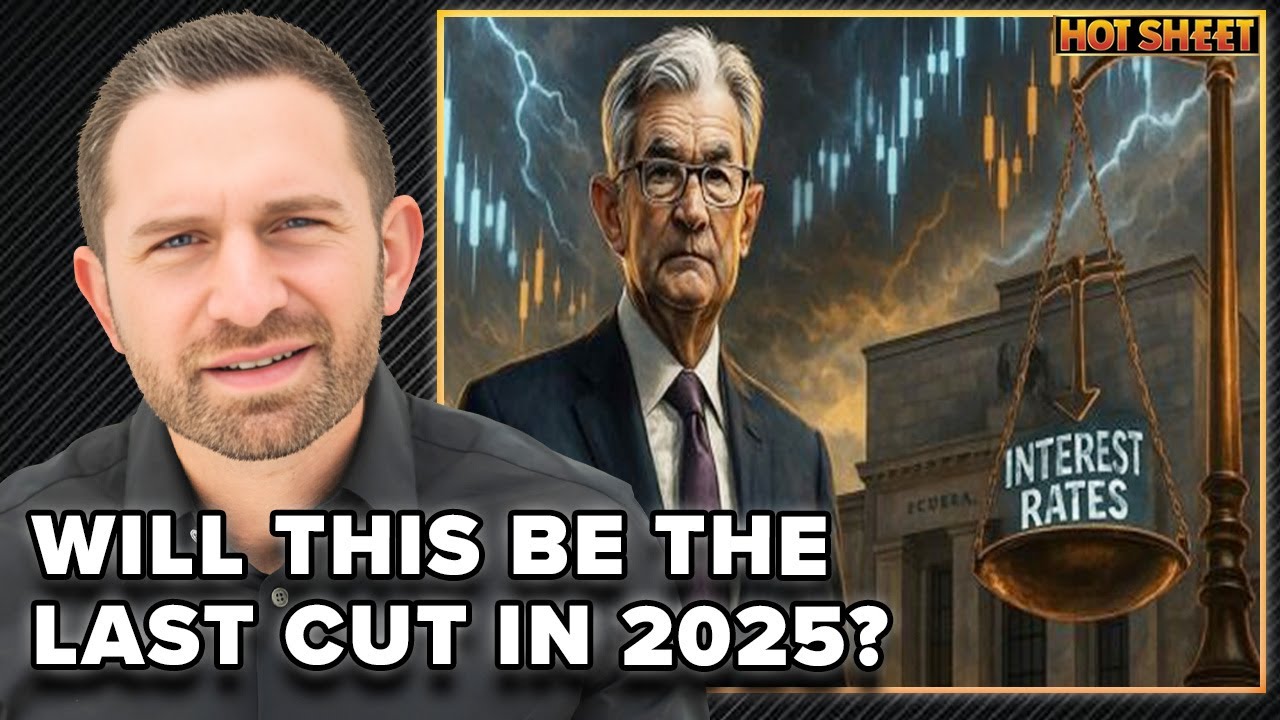
Don’t miss today’s Hot Sheet for Byron Lazine’s full breakdown:
What This Means for Mortgage Rates
This morning, the 10-year Treasury rate was up above 4.1% (though it’s dropped a bit since 9:00 am ET), and the 30-year jumped 0.14 percentage points to 6.27%, up from yesterday’s year-to-date low of 6.13%.
Byron neatly summed up the likely reason for the surge.
“He told you everything right there about his plan. He can’t see what’s going on. He believes he’s in the fog, and he’s just going to slow down. And that’s a signal he’s made to the market: ‘I don’t know if I’m going up, down, left, or right. I don’t know if I’m cutting, increasing, or easing. I’ve got no idea what I’m doing currently, at this moment, as your Fed Chairman. It is too foggy. I cannot make a decision.’ He told you everything. ‘We are slowing down. My goal is to slow down and do nothing, and hope that inaction is the right decision.’'”
Housing Mentions During the FOMC Press Conference
Powell mentioned housing only once and very briefly during his opening statement.
(02:34) — “Data available prior to the shutdown show that growth in economic activity may be on a somewhat firmer trajectory than expected, primarily reflecting stronger consumer spending. Business investment in equipment and intangibles has continued to expand, while activity in the housing sector remains weak.
“The shutdown of the federal government will weigh on economic activity while it persists, but these effects should reverse after the shutdown ends.”
Housing (or Related) Mentions during the Press Conference
As mentioned earlier, reporters at the press conference didn’t actually ask about housing, though the word came up a few times (housing services inflation versus non-housing services).
We’re including that exchange as well as a few others that caught our attention.
Question from Jonelle Marte, Bloomberg (21:04):
“How are officials interpreting the latest CPI report? So some components came in lower than expected, but core inflation was still at 3%. So at this moment, what are you learning about the drivers, and also do you view that the risks are greater that the Fed makes a mistake on employment or inflation?”
Powell’s response (21:27):
“So, the September CPI report—we didn’t get PPI after that, which is important for translation into what we look at, which is PCE inflation, but we can still make a pretty good assessment of what that will be. When we get PPI, there might be some adjustments, but directionally, you know, it was a little softer than expected. And we always break it down into the three components.
“So, basically, you’ve seen goods prices increasing, and that’s really due to tariffs and that’s compared to a longer-run trend of very, very mild deflation in goods. So that’s moving inflation up.
“On the other side of that: good news—housing services inflation has been coming down and is expected to continue to come down. So, if you remember, a couple years ago, that’s the one we kept expecting to do that. Now it’s been doing that for some time, and we expect to continue that.
“That leaves the biggest category is services other than housing services, and that’s kind of been moving sideways over the last few months. But a significant part of that is non-market services, and we don’t take a lot of signal about the tightness of the economy from that.
“So, if you add all that up, a couple things to say. One is that inflation, away from tariffs, is actually not so far from our 2% goal….”
Follow-up question from Marte (23:58):
“With the stubborn(ness) in services inflation, what are some of the things that the Fed could do to address that, especially when we’re seeing potentially labor supply challenges?”
Powell’s response (24:15):
“Well, again, the part of services inflation that isn’t coming down as we would like it to is the non-market part of non-housing services. And you know overall, that’s just something that we expect will come down. The non-market part of it should come down. It largely reflects higher stock prices, and financial services that are imputed rather than actually paid is a big part of that.
“But also just, you know, we think policy is still modestly restrictive in my telling. So, that’s the kind of thing that should lead to a gradually cooling economy. That’s one of the reasons you see a gradually cooling labor market is because, you know, the Fed policy is modestly restrictive. So, that should also help get that.”
Question from Chris Rugaber, Associated Press (25:21):
“So there’s a big investment boom in AI infrastructure right now, as you know, and wondering if the existence of such a boom would indicate that rates are not that restrictive after all? And could further rate cuts at this point perhaps fuel an excess level of investment there or market bubbles? How is the Fed thinking about that?
Powell’s response (25:47):
“So, … you’re right, there are a lot of data centers being built and other investments being made around the country and around the world. And big US companies are just investing a lot of resources in thinking about how AI, which will be run through those data centers, is going to affect their businesses. So it’s a big deal. I don’t think that the spending that happens to build data centers all over the country is especially interest-sensitive. It’s longer-run assessments that this is an area where there’s going to be a lot of investment, and that’s going to drive higher productivity and that sort of thing. I don’t know how those investments will work out, but I don’t think they’re particularly interest sensitive compared to some of the other sectors.”
Follow-up question from Rugaber (26:45):
“And then just a quick follow-up: you mentioned that you do have data that you’re looking at for inflation and growth in the absence of government data. Could you give us a sense… I think we know a lot about the jobs data that’s out there. Can you give us a sense of what you’re looking at to track inflation in the absence of government data?”
Powell’s response (27:02):
So it’s a lot of things, and it doesn’t replace government data, and you know all of these… I’ll just mention some of the many many names. PriceStats, Adobe, and others. For wage inflation, there’s ADP data. On spending, you’re going to ask about spending at some point. You know, there are lots of other things that we look at, but it’s again, it’s many different sources, including what we get out of the Beige book, which will come out midcycle as always. It doesn’t replace the government data but it gives us a picture. I think if something material were happening, if there were material developments, I think we would pick that up. I don’t think we’ll be able to have the very granular understanding of the economy while this data is not available.”
Question from Howard Schneider, Reuters (28:02):
“I just want you to elaborate a little on what you said about the lack of continued data from the shutdown making it more difficult to make a move in December, and that it may make you more cautious. To the degree you are relying on private data that isn’t the gold standard, or relying on your own surveys or the Beige Book, do you worry at some point you’re going to have to start making policy by anecdote?”
Powell’s response (28:27):
“This is a temporary state of affairs, and we’re going to do our jobs. We’re going to collect every scrap of data we can find, evaluate it, and think carefully about it. That’s our job. Could it affect the December meeting? I’m not saying it’s going to, but you could imagine if you’re driving in the fog, you slow down. We may get the data back, but there’s a possibility it would make sense to be more cautious about moving. I’m not committing to that, just saying it’s a possibility that if we really can’t see, we slow down.”
Regarding auto loans & broader implications for credit…
Question from Jennifer Shonberger, Yahoo Finance (53:30):
“Both regional and large banks have taken losses on loans given delinquencies on subprime auto loans. JP Morgan CEO Jamie Dimon warned, ‘When you see one cockroach, there may be more likely.’ I’m curious how the Fed is looking at these loan losses and if it poses risks to the financial system or the outlook for the economy. Is it a warning sign?”
Powell’s response (53:54):
“So, you know, obviously, we watch credit conditions very carefully. You’re right. You’ve seen rising defaults in subprime credit for some time now. And now you’ve seen a number of subprime automobile credit institutions having significant losses. And some of those losses are now showing up on the books of banks. You know, we’re looking at it carefully. We’re paying close attention.
“I don’t see, at this point, a broader credit issue. It doesn’t seem to be something that has very broad application across financial institutions. But you know we’re going to be monitoring this quite carefully and making sure that that is the case.”