
BAM Key Details:
- Zillow projects 20 of the 50 largest metros will be affordable by December 2026, up from just 7 at the October 2023 low when mortgage payments consumed 38.2% of income.
- Zillow expects national affordability to improve from 32.6% today to 31.8% by year-end as monthly mortgage costs fall from $2,337 to $2,358 while rates move toward 6%.
- The forecast assumes buyers put 20% down, which equals $71,800 on today’s $359,078 typical home and over $73,000 by the end of 2026.
After years of whiplash in housing costs, Zillow is finally calling something close to a reset.
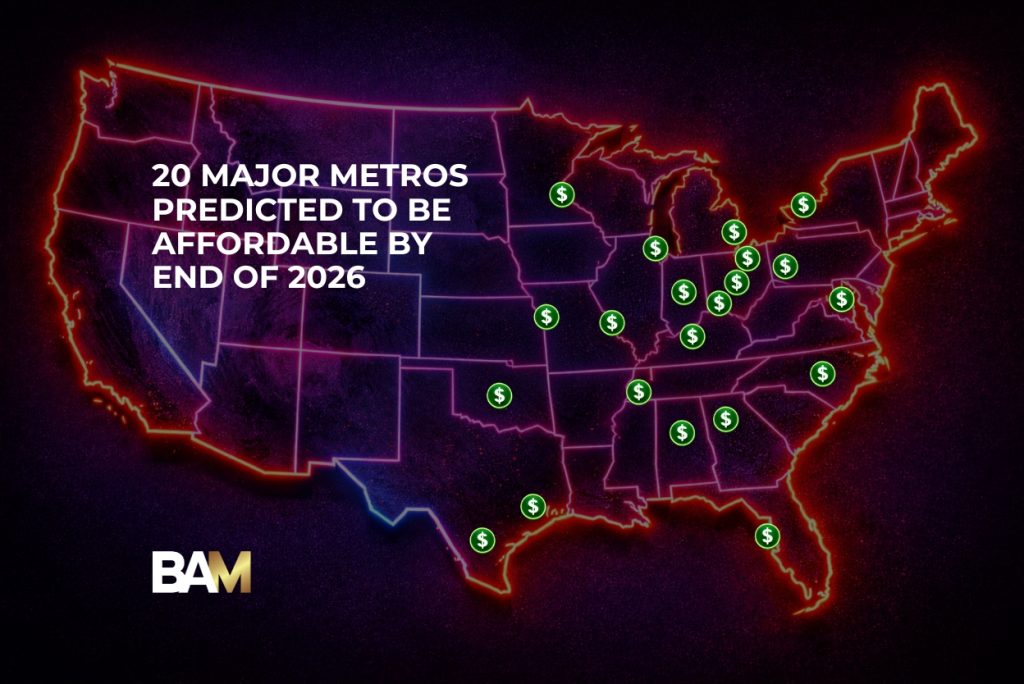
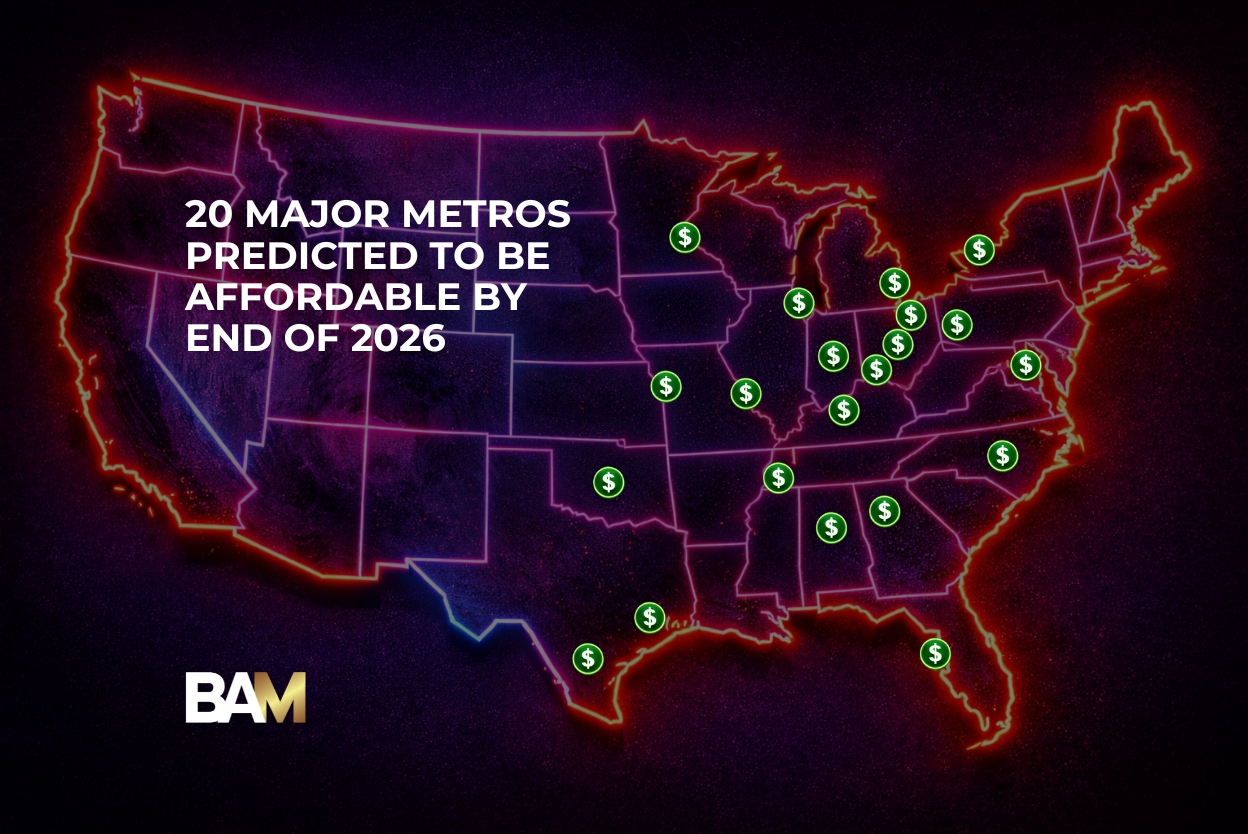
In its latest market report, the company projects that a mortgage payment on a typical home will be affordable in 20 of the nation’s 50 largest metro areas by December 2026, the highest count since 2022.
That shift comes after affordability collapsed to historic lows just over two years ago, when rising prices and surging mortgage rates pushed monthly payments far beyond what most households could reasonably handle.
Zillow’s forecast is built on what it calls a trifecta of slow-growing home prices, falling mortgage rates and rising household incomes.
Together, those forces are expected to gradually bring mortgage payments back toward a sustainable share of income, even in markets that were completely out of reach during the post-pandemic housing boom.
What Zillow Means by “Affordable”
Zillow defines affordability as a mortgage payment that doesn’t exceed 30% of the median household income. Once housing costs rise above that threshold, families are forced to divert more of their budget away from everyday necessities like food, transportation and healthcare.
Before the pandemic, that balance was mostly intact. In the 5 years leading up to 2020, mortgage payments on a typical U.S. home required between 22.5% and 26.5% of median household income, assuming a 20% down payment.
That changed dramatically as prices surged and mortgage rates doubled. By October 2023, a typical mortgage payment consumed 38.2% of median income, and only 7 of the 50 largest metro areas were considered affordable.
The recovery since then has been slow but meaningful. Today, the national mortgage payment takes 32.6% of median household income, which Zillow says is already the best affordability reading since August 2022.
By December 2026, that figure is expected to fall further to 31.8%.
Zillow Senior Economist Kara Ng put that gradual improvement into context:
“This is what a small-wins year looks like for housing. Rising incomes, subdued price growth, and gradually easing mortgage rates would help buyers regain their footing while allowing homeowners to continue building wealth. These types of slow and steady affordability improvements are exactly what the housing market needs over the long-run.”
The Math Behind Zillow’s Forecast
Zillow’s national affordability outlook rests on three key assumptions that drive both home values and monthly payments.
Zillow expects:
- Mortgage rates to drift down to near 6% by the end of the year,
- Home values to grow a modest 1.9%, and
- Household incomes to rise 3.3% based on Bloomberg consensus estimates.
Those inputs lead to a U.S. home value of $365,795 by the end of 2026, up from today’s $359,078, according to the Zillow Home Value Index.
Assuming a 20% down payment and a mortgage rate of 6.2%, the typical monthly payment is at $2,337. That includes principal and interest, plus taxes and insurance. That payment is $92 lower than one year ago and $177 lower than the October 2023 peak.
If Zillow’s forecast holds, that monthly payment will reach $2,358 by the end of the year. And, in case you’re doing a double-take (like I did), the 3.3% annual increase in household income would bring that slightly higher monthly number within the 30% affordability threshold.
Those numbers show why affordability can improve even while prices keep rising. In Zillow’s model, slower appreciation combined with lower rates and higher incomes gradually compresses the share of income required to carry a mortgage.
Which Markets Are Getting More Affordable
Zillow expects affordability to improve in 49 of the 50 largest metro areas by the end of 2026.
That includes Chicago, Atlanta and Raleigh, which are projected to newly cross into affordable territory by year-end. It also includes most of the country’s biggest and most expensive markets, even though many will still remain far above the 30% affordability threshold.
For example, New York’s typical home is valued at $703,649, with a monthly mortgage cost of $4,833 that consumes 55.4% of median income today. Zillow expects that share to fall to 53.9% by December 2026.
Los Angeles sits even higher, with a $942,285 home value and a mortgage that eats up 67.3% of income, improving to 65.4% by year-end.
Only one major metro is projected to move in the opposite direction. Hartford, Connecticut is forecast to see affordability worsen even as prices rise 4.5%, pushing monthly mortgage costs up $100 to $2,761 and nudging the income share from 33.5% to 33.6%.
Zillow still expects Hartford to be the hottest housing market of 2026, a reminder that demand and affordability don’t always move in the same direction.
The Down Payment Reality
All of Zillow’s affordability math assumes a 20% down payment, which remains one of the biggest barriers to entry.
On today’s typical U.S. home priced at $359,078, that means bringing $71,800 in cash to the table.
Based on Zillow’s appreciation forecast, that figure would exceed $73,000 by the end of 2026.
A smaller down payment pushes monthly costs higher and makes affordability worse, which is why preparation and financing strategy still matter even in a slowly improving market.
Ng addressed that directly when Zillow released the forecast.
“Preparation doesn’t just make the process smoother. It can change the outcome. Knowing your numbers ahead of time helps buyers compete without overreaching. And for many first-time buyers, exploring down payment assistance programs on the Zillow listing is a low-effort way to clear a financial hurdle.”
For the first time in years, the math is finally bending back in a healthier direction. With 20 of the largest metros projected to be affordable by December 2026, Zillow’s outlook suggests the era of relentless affordability erosion may be giving way to something more sustainable, even if the recovery is happening one small win at a time.