
Most real estate agents spend their mornings crafting newsletters that compete with billion-dollar portals.
Here’s what they don’t understand: buyers wake up to Zillow alerts at 6 AM, check price histories during coffee, and drive by properties before lunch. By the time your “market update” arrives, they’ve already consumed more data than your pretty pictures can compete with.
After analyzing 1,000 real estate emails across 47 markets, the difference between agents who get responses and those who get ignored comes down to one systematic insight: successful agents don’t try to be information sources. They become conversation starters.
Why Your “Stay in Touch” Strategy Trains People to Ignore You
Most agents ignore email, with 80% of agents saying they don’t consistently send emails, according to a recent BAM x ReminderMedia survey.
And the ones who do tend to rely on three types of emails that buyers immediately recognize as sales pitches disguised as helpfulness:
- Just Listed emails arrive hours after Zillow alerts. Your buyer has already seen the photos, checked comps, and maybe scheduled a showing. Your announcement feels like yesterday’s news delivered with a “click here” button.
- Market Updates share statistics that mean nothing to someone who doesn’t know if “31 new listings this week” is good, bad, or completely irrelevant to their budget and timeline.
- Neighborhood Guides compete directly with Google Maps, Yelp, and local Facebook groups that provide more current information with better user experience.
Your inbox placement tells the whole story. Agents with high open rates but low response rates are getting polite clicks to nowhere. Buyers are trained to consume your content without ever engaging with you personally.
The 9-Word Email That Generated 23% Response Rates
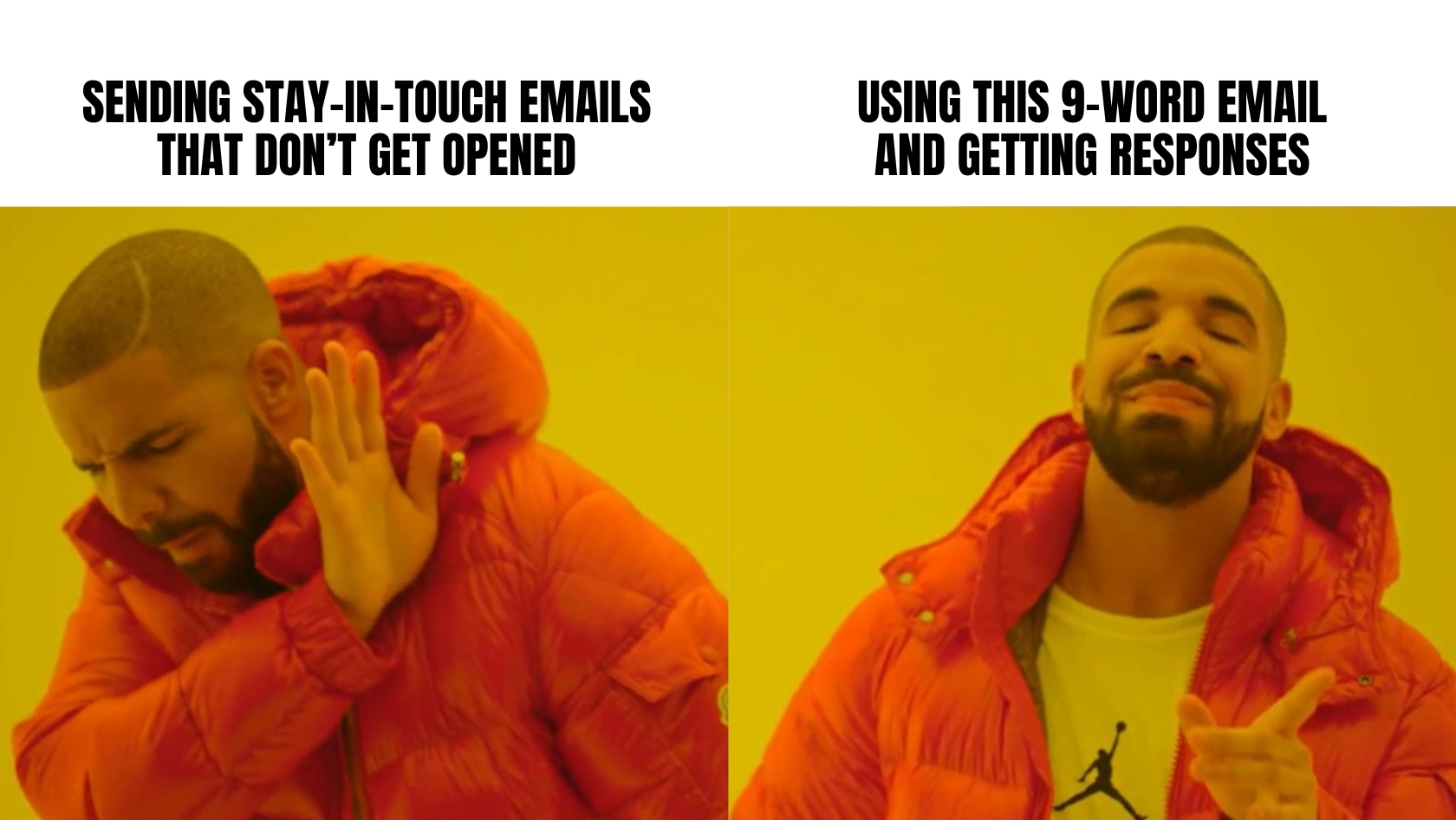
The highest-performing email in my analysis contained exactly nine words:
“Are you still interested in buying a home in [specific city]?”
No market statistics. No property photos. No “click here to see more.”
Just a simple question that follows three psychological principles proven across industries:
- Lower the Stakes: It requests a simple reply, not a phone call or meeting commitment. Anyone can answer yes or no without feeling pressured into a sales conversation.
- Reduce Cognitive Load: It requires zero analysis of market conditions or consideration of multiple neighborhoods. The mental effort to respond is minimal.
- Start Real Conversations: It sounds like something you’d ask a friend, not a marketing message designed to capture leads.
The response rate difference is dramatic. Industry newsletters average less than 2% meaningful engagement. This simple question generated 23% responses because it treated email recipients like humans instead of marketing targets.
Response Mapping: What Separates Winners from Wishful Thinking
Getting responses means nothing if you don’t know what to do with them. Most agents who receive a “yes” reply panic and send something generic like “Great! Let me know if you have any real estate needs.”
Nobody wakes up with “real estate needs.” They have specific problems: no backyard for their dog, cramped space for their growing family, or schools that don’t match their values.
Smart agents respond with sorting questions that continue low-stakes conversations while positioning themselves strategically:
“Are you looking at homes currently on the market, or would you be interested in off-market opportunities as well?“
This approach accomplishes two things simultaneously. It maintains the conversational tone while establishing you as someone with exclusive access. Every response provides additional information to guide the next part of your dialogue.
The Systematic Framework That Turns Replies Into Revenue
Successful agents map their response scenarios before hitting send. Each possible reply—yes, maybe, or no—triggers a different systematic approach:
“Yes” responses get sorting questions about timeline, budget range, and property preferences. The goal becomes scheduling a brief phone conversation, not an immediate showing.
“Maybe” responses reveal specific hesitations that become conversation topics. “What would need to change for the timing to work better?” often uncovers valuable information about their actual situation.
“No” responses position you for future opportunities. “Thanks for letting me know. Can I ask what changed?” keeps relationships warm without pressure.
The agents who consistently convert email conversations into transactions have systematized their response process. They know exactly what to say when someone replies, which removes the panic that causes most agents to revert to generic sales language.
Implementation Framework: From Newsletter to Conversation Engine
Can I make a specific recommendation for your next email?
Send one simple conversation-starting question to your database this week instead of a market update or newsletter. You’ll discover which people actually want to talk to you, and they’ll appreciate that you asked instead of assuming.
Do this in three steps:
- Start by choosing your most engaged email segment and send a simple question relevant to their situation.
- Track responses and note what you learn about each person’s actual circumstances.
- Map your response scenarios before sending. Write out exactly what you’ll say to yes, maybe, and no replies. This preparation prevents the generic responses that kill conversations.
Focus on having 100 low-stakes conversations instead of three high-pressure ones. Volume creates more opportunities than perfect timing ever will.