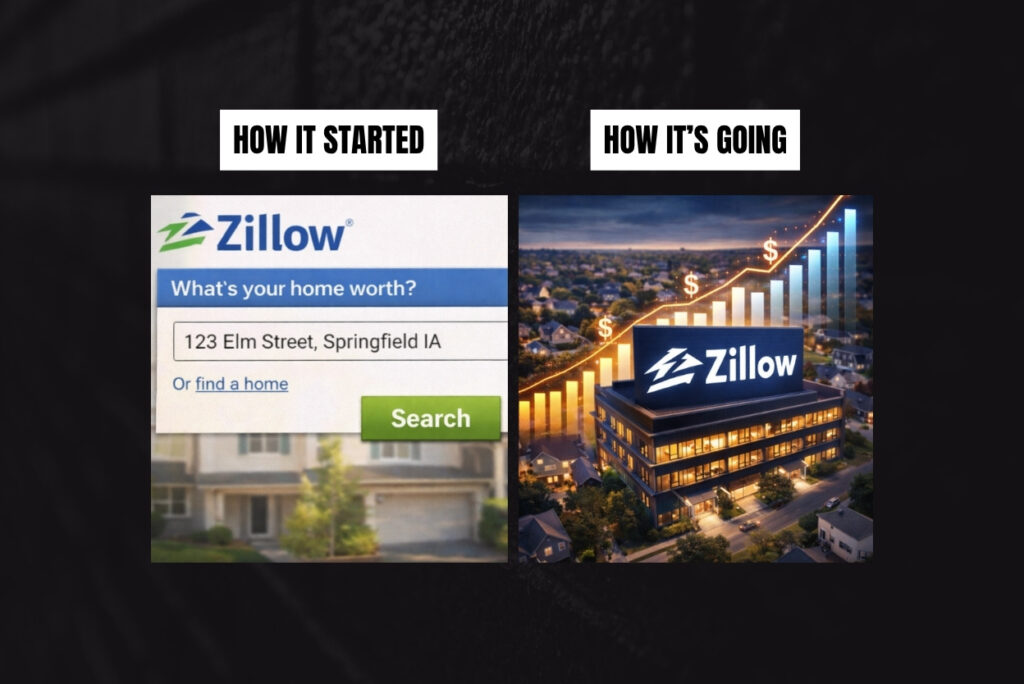
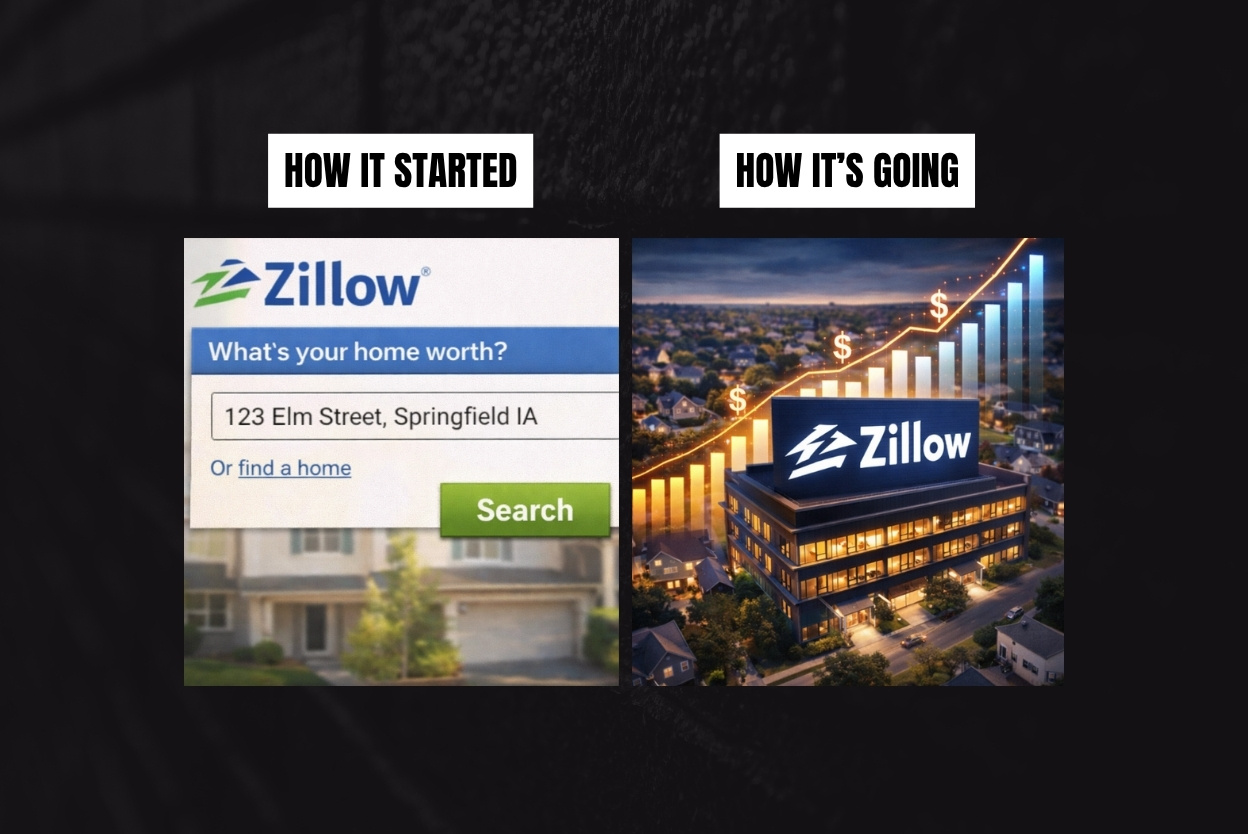
Zillow turned 20 this year. And, love it or hate it, there’s no denying the role it’s played in shaping how consumers search for homes.
In a recent BAM interview, Byron Lazine sat down with Zillow COO Jun Choo to unpack what’s driven that growth over the past two decades, focusing on the decisions and priorities that have stayed consistent since day one.
The company built momentum by solving a real problem for consumers and continuing to refine that approach over time.
If you want to understand why Zillow’s brand still dominates today, you have to start with how it approached the problem from the beginning.
Zillow Built the Brand by Solving the Consumer Problem First
Zillow began with a gap in how consumers accessed real estate information.
The founders were trying to solve a frustrating, real-world experience that exposed how difficult it was to get a clear picture of the housing market.
Choo explained how that experience led directly to Zillow’s creation:
“I think if you think back to why Zillow was founded in the first place, it was Rich Barton, Lloyd Frank, they were trying to buy a house of their own. And they realized there was no place they could go to actually see what was available. And that a lot of the information that a buyer would need to start their home journey wasn’t available to them.”
Zillow launched to change that by giving consumers access to home values, listings, and market data in one place.
Then, when the Zestimate was introduced, it accelerated Zillow’s growth by giving consumers a fast way to think about home values. It created curiosity and brought more people into the platform.
Byron addressed why that same tool still frustrates agents and where it actually creates opportunity:
“If you have a hard time with the Zestimate, you’re probably lacking creativity is the way I’ve looked at it. Zestimate, to me, has been a gift to agents over the years because it creates instant hand raisers: ‘Hey, there’s this thing online that says X about my home. I have Y feeling, do you have a solution?’”
The Zestimate started driving conversations by giving homeowners a reason to raise their hand and ask questions, creating an opening for agents to step in and add context.
The Strategy Evolved From Consumer Tool to Industry Infrastructure
As Zillow grew, the scope of who it serves expanded with it.
What started with buyers didn’t stay there. Agents became a core part of the equation, followed by teams and brokerages. Over time, Zillow moved from being a place consumers visited to becoming part of how transactions get done.
Choo described how that evolution played out:
“I think what has evolved pretty significantly over time is how Zillow relates to the industry and the professionals in the business. Because the initial launch of Zillow with the Zestimate and then with home listings, we can talk a little bit about how we think about products, but the business model wasn’t apparent yet.”
As the platform grew, Zillow found a model that aligned with both sides. Premier Agent became the engine, connecting consumer demand with agents who could serve it.
From there, Zillow could monetize while continuing to prioritize the user experience.
At the same time, the company invested more heavily in tools built for agents.
Choo pointed to how much that side of the business has grown:
“And I’d say now I think maybe one of the most unknown things about Zillow is how much we have invested on the B2B side of things over the years. So with the acquisition of ShowingTime, with FollowUpBoss, large teams of software developers who are actually focused on making agents more successful.”
Zillow’s investment in agent-facing tools reflects how the company has expanded beyond just attracting consumer traffic.
The business now includes products that support how agents capture and manage opportunities. Through acquisitions like ShowingTime and Follow Up Boss, Zillow has built out a deeper presence in the workflow agents use every day.
Still, as Byron pointed out, not all agents are sold on Zillow as a workflow partner.
“There’s this belief that agents have, that Zillow started this thing to eliminate agents. Do you think that was ever part of the core mission? Or was it simply just what you said—just to bring access to consumers?”
Choo shook his head at the question and replied in these words:
“From the time I joined, there was never any evidence or feeling that that was ever the case. I think it literally was that Zillow started with the consumer problem and then learned about the industry and the agents’ needs. “And the way we build product at Zillow is we identify a problem, and then we try to create a solution for it. And then, after we find a solution that works, then we try to figure out if there’s a way to build a business or make money off of it. “And so I think it was just kind of a hierarchy of which customers Zillow started thinking about first.”
How Zillow Is Thinking About Consumer Experience
Zillow keeps coming back to one idea: the consumer experience drives everything.
Response time became one of the clearest examples of that focus. Early on, it identified a major problem, about half of buyer inquiries were never answered. The result was a poor experience for buyers and missed opportunities for agents.
Choo explained how Zillow built around that problem:
“We developed a platform, it’s called Connections, and it is the way that people get leads from us today, where when a consumer comes in, rather than just dropping it into an inbox, we make sure that there is an agent able to connect with that client in real time. And this has evolved also into our real-time touring platform. “So, we’ve developed this system where we will go down a daisy chain list of agents to make sure that someone’s available.”
Zillow built its lead handling around that system. When someone reaches out, they’re connected with an agent.
It also ties directly into real-time touring. Consumers want to pick a time, book it, and move forward without waiting, and without playing phone tag with the listing agent.
Choo connected that back to outcomes for both sides of the transaction:
“We tailor this all around the idea that if a consumer always gets a follow up and an agent always gets a connection with that consumer, it makes the consumer happier and it makes the agent more money. So it was a win-win.”
Buyer behavior is changing in a measurable way. About half still click the “contact agent” button. The other half schedule a tour. That second group is typically closer to making a decision.
Byron pushed on this point during the conversation.
“Consumers want, when they make a phone call or make an inquiry, that it gets replied to. And consumers prefer immediate response over delayed response. I think we could all agree with that. And there’s this ideology in real estate that if it’s my listing, it should be my lead. And I hear a lot of my, my, my when the argument is made about my listing and my lead. And I don’t hear a lot about what’s right for the consumer.”
Zillow is building around speed, consistency, and access. When a consumer reaches out, they get a response. When they want to tour, they can schedule it. The experience follows a predictable flow from start to finish.
Zillow got here by sticking to a clear approach and continuing to build around it.
You can see it in how the company approaches product development and where it puts its investment dollars.
It also carries through to how Zillow defines its role alongside agents.
The tools will keep changing, and expectations will keep rising. The way Zillow builds hasn’t changed, and that’s what continues to drive its position in the market.