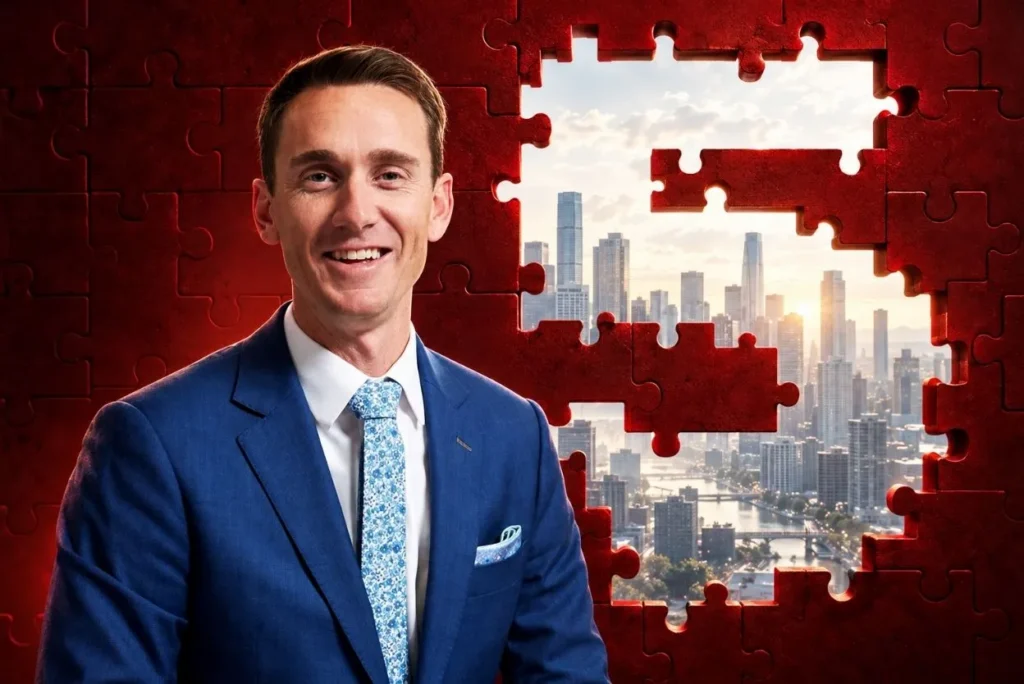


James Dwiggins, President of NextHome, hates the question “What’s the key to success?”
The question came up on this week’s episode of the Porch Swing Podcast, where Dwiggins sat down with co-hosts Justin Benson and George Laughton to discuss, among other things, the biggest lessons he learned during his toughest years as a business leader.
As he explained to Benson and Laughton, the “key to success” is not on the list.
“There isn’t a key. The question is what are you willing to give up to get there? Are you willing to give up Saturdays and Sundays? Are you willing to not have friends for a long time because you’re working 100 hours a week? Are you willing to lose a personal relationship with your spouse or your girlfriend or whatever? By the way, all of that 100% every single founder who’s ever made it in life will tell you that story.”
Dwiggins has spent 28 years building companies with his business partner. The most recent is NextHome, which eXp World Holdings (now trading as AGNT) acquired in May.
From his unique vantage point, and looking at where we are now, Dwiggins expects a rough economy ahead for the industry. Here are five lessons he learned from cash crunches, COVID, the 2022 rate spike and the commission lawsuits of 2024.

1. Plan for the Cash Crunch You Can’t Predict
Dwiggins says a business never has enough capital. He told the hosts there were times he “barely made payroll.”
People see NextHome’s $10 million in gross revenue and assume the company is flush. He says people have asked him if NextHome has a company jet. It doesn’t. The money gets reinvested in the business.
The 2024 commission lawsuits showed him how fast a surprise can drain a company. Dwiggins explained how the lawsuits caught NextHome off guard:
“You never can plan for the unexpected no matter how much you try. An example of that was 2024 when we got sued into oblivion along with everybody else. I thought I had enough reserves. The company was in a good spot and we were managing our money well. We were still growing the business. You do not know until you go through it how expensive litigation can be, especially class action litigation.”
He described $100,000 legal bills going out every month while the case dragged on.
2. Make the Hard Staffing Call Sooner
Dwiggins says the hardest part of leading a company is knowing when to make a tough call. Leaders hesitate because nobody wants to make the wrong one.
When COVID hit, he knew California was about to shut down. He brought his senior leadership team to his backyard to plan who would be laid off and when. His goal was to hold on as long as he could without putting the company’s finances at risk.
He says he got most of those calls right. Here’s how Dwiggins described the one he got wrong:
“The one where I screwed up was I didn’t lay off staff quickly enough in 2022. I think that we were all expecting rates to not go as fast as they did and that the market would absorb that better than it did. And I waited probably about four to six months longer because I just thought, ‘We can weather this.’ I love my people and I just didn’t want to let them go.”
When the time did come, NextHome helped the people it let go find new jobs. He says knowing they had somewhere to go made him feel better about the layoffs.
3. Protect Your Word When Cash Is Tight
Dwiggins calls keeping your word the number one lesson he’s learned in life. He learned it from his grandfather, who opened a real estate company in 1967 and was one of his mentors.
Here’s how the loan came about:
- His first company came up $20,000 short on payroll
- He had a signed contract that would cover the money once it came in
- His grandfather lent him the cash on a six-month repayment plan
The two met once a month over Pizza Hut and Miller Lite, and Dwiggins brought a check each time. On the final payment, he called to say an emergency meeting had come up and he’d drop off the check the next day.
Dwiggins recalled what his grandfather told him:
“That wasn’t our deal. You’ve had 30 days to make the payment. It’s due today. Tomorrow it’s late and you’ll pay interest on it if you don’t get the the check to me today.”
He explained how that lesson paid off for NextHome during COVID:
“I’ve never missed a payment since. Ever. In my company, we always pay before the bill’s due. We made it that way and I can’t tell you how much, whenever we needed to ask for help… people were willing to do that with us because they knew we were good for the money, because we’ve always come through.”
Dwiggins believes people will pay more to work with someone they trust to follow through.
4. Hire People Who Can Run It Without You
Dwiggins sees leaders make two mistakes that pull in opposite directions. The first is holding on to everything.
Here’s how he explained it:
“The problem I see with leadership in most organizations is the leader doesn’t know when to get the hell out of the way and understand that while they’re the vision… they need to understand that your job is to hire smarter people than you around the company for the company to move on if you weren’t there.”
The second mistake is checking out. He’s watched founders start making money and pull away from the business to take more vacations.
He says nobody knows a company as well as the person who built it, and he points to Steve Jobs as an example. Jobs ran a massive company and knew what was happening on the product line. He talked to customers and kept a clear vision for the business.
5. Find Your Tribe Outside the Business
Dwiggins says 2024 was the hardest stretch of his career. He spoke out about the commission lawsuits from the start, and he told the hosts why:
“I knew going into it that we were going to get sued because everyone was like, ‘Why are you so vocal about this? You’re making yourself a target for the attorneys.’ I’m like, ‘They already know who I am. Like, I’m on the list. They’re going to sue the **** out of us. What I’m not going to do is let them control the narrative.’”
Ultimately, he settled so NextHome could get back to running the business. Depositions and interrogatories, the sworn interviews and written questions lawyers use to gather evidence, made it hard to focus on anything else.
He says the fight was hard on his marriage and his friendships. The toughest part came after the settlement, when he had to find his motivation again.
He had fewer people to talk to than you might expect. Many of his senior team are friends, which made it harder to vent about what he was dealing with, so he looked for support outside real estate.
Here’s his advice for leaders going through something similar:
“Find your tribe, and I would encourage you to find people that are outside the business too who you can relate to that are on the same sort of level you are. Otherwise, you won’t want their advice. Or somebody even a higher level than you to talk to so that you can go, ‘Hey you’ve been through this. Help me through this.’ You trust and respect that person”
Leading Your Team Through the Long Winter
Dwiggins expects economic headwinds to stick around for a while. He told the hosts agents can build great careers through it.
Here’s how he put it:
“People still got to buy, sell. People still get divorced. People still get married. People still have kids. But there’s going to be a lot of noise. And it’s going to be hard, but you can still make a great career in this business. And look again, look in a history book. The best companies were built during down markets.”
Tune in for the full conversation on the Porch Swing Podcast. Dwiggins also hosts his own show, Real Estate Insiders Unfiltered, which posts two new episodes a week.