

With the 2024 election just one day away, all eyes are on the polls, especially in key swing states. These battlegrounds hold the power to tip the scales in a highly competitive race, with both candidates promising to address issues impacting millions of Americans.
One pressing issue front and center for voters: housing affordability.
As Brian McCabe, Associate Professor of Sociology at Georgetown, puts it, this is not a new issue for American voters. It’s been a major concern for decades, particularly among the lowest-income Americans renting without rental assistance or vouchers, as well as those living in public housing.
The current spotlight on housing is at least partly due to affordability issues trickling upward to more middle-class Americans whose votes are “politically really important for both parties.”

This is hitting first time homebuyers that can’t get into the housing market. This is hitting middle class renters who are spending more than 50% of their income on rent. It’s not that there’s never been an affordability crisis before, but it’s now an affordability crisis that’s hitting a much broader set of Americans.
Unfortunately, as McCabe points out, the federal government, and specifically the executive branch, has “pretty limited muscle to actually move housing supply,” especially since regulatory burdens like zoning or building codes are typically at the local level.
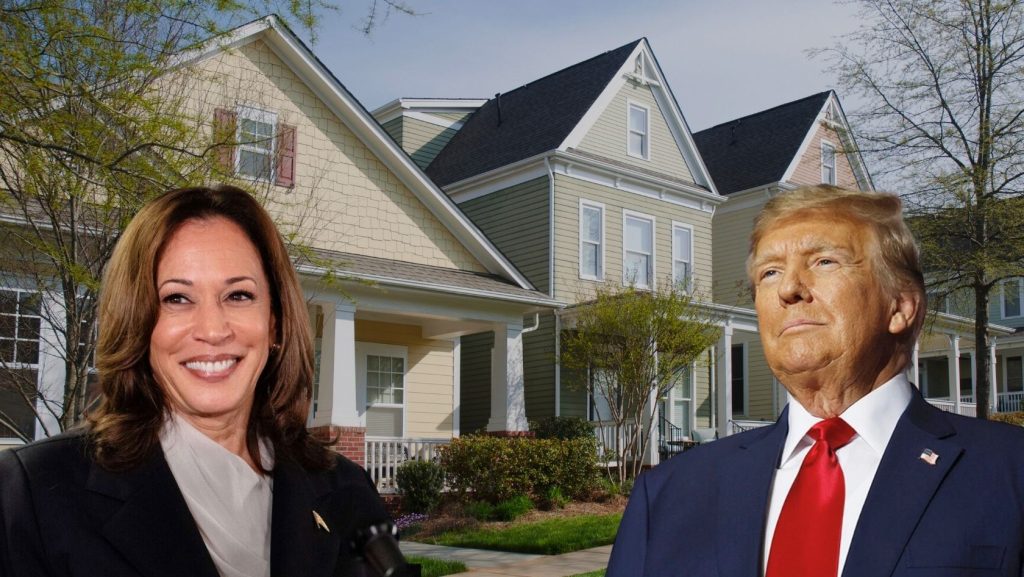
Still, Vice President Kamala Harris and former president Donald Trump have put forward ambitious plans, each with the goal of easing the burden on American homeowners and renters. Here’s a closer look at their promises and what they could mean for the future of housing.
Where Harris and Trump Agree
Harris and Trump (along with the majority of Americans) agree that the cost of housing is too high.
They also know that a key to lower housing costs is increasing the supply—and that means building more affordable homes and making it easier for developers to start new projects.
Both candidates have proposed repurposing federal land for housing, a move that could add much-needed inventory in high-demand areas. Lance Lambert, co-founder of ResiClub, highlighted this in a recent X post.
Housing affordability is so strained that both Kamala Harris and Donald Trump have suggested building more housing on federal land
It isn't unheard of: From 1990 to 2018, federal land decreased by 5%
Share of state land owned by the federal govt 👇
Map via @ResidentialClub pic.twitter.com/Tb1eHKVeVW
— Lance Lambert (@NewsLambert) November 4, 2024
Of course, not all federal land is suitable for building, as most of the 615 million acres include deserts, mountains and remote wilderness. In addition, this type of development would require bypassing some local regulations, including state and local zoning laws that can restrict new construction.
Spotlight on Housing Strategy: Kamala Harris
Vice President Kamala Harris dove right into the housing affordability issue with one of her earliest statements during the presidential debate on Tuesday, September 10th.
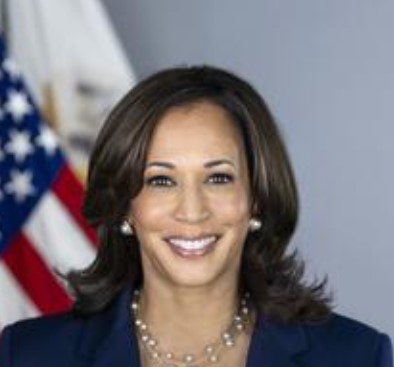
Here’s the thing: we know that we have a shortage of homes and housing. And the cost of housing is too expensive for far too many people…
Harris’s plan would expand the low-income housing tax credit (LIHTC) and provide additional tax incentives for home builders to produce more “starter homes,” as well as a $40 billion tax credit to make affordable new construction projects feasible for builders.
On the demand side, Harris’s plan includes up to $25,000 in down payment assistance for first-time homebuyers.
To recap, here’s what we know of Harris’s proposals to improve housing affordability:
- Provide up to $25,000 down payment assistance to first-time homebuyers
- Expand the low-income housing tax credit (LIHTC)
- Repurpose federal land for new housing projects
- Build 3 million new housing units over the next four years, through multiple incentives:
- A Neighborhood Homes Tax Credit to support the construction or rehabilitation of 400,000 homes—specifically in low-income neighborhoods
- $40 billion innovation fund to encourage states, local governments and private developers to explore new strategies to expand housing supply, mainly through regulatory reform
- Tax incentives to homebuilders for the construction of more “starter homes”
Harris would need congressional approval for much, if not all, of what she pledges to do, particularly with regard to the $40 billion innovation fund.
Spotlight on Housing Strategy: Donald Trump
For his part, former president Donald Trump has vowed to reduce regulatory obstacles to building new homes. During a recent speech to the Economic Club of New York, Trump promised to eliminate regulations that increase housing costs and repurpose federal land for affordable housing.

Regulation costs 30% of a new home, and we will open up portions of federal land for large-scale housing construction…These zones will be ultra-low tax and ultra-low regulations—one of the great small business job creation programs.
It’s unclear what particular types of regulations Trump wants to eliminate, but repurposing federal land could be a bipartisan solution. In July of this year, President Joe Biden called on federal agencies “to assess surplus federal land that can be repurposed to build more affordable housing across the country.”
It remains to be seen whether both parties can agree on which lands to repurpose (among other details).
Tying housing costs to one of his signature issues, Trump has also said he plans to lower housing costs through policies targeting illegal immigration, including a ban on mortgage loans to undocumented immigrants.
So, here’s what we know of Trump’s proposals to improve housing affordability:
- Reduce or eliminate regulations and zoning restrictions that increase housing costs—including environmental compliance regulations—and streamlining federal reviews to make it easier for developers to start new construction projects
- Preserving single-family zoning as opposed to promoting the construction of low-income multifamily developments in suburban areas
- Repurposing federal land for affordable housing projects
- Provide tax incentives—deductions or credits—that make homeownership more affordable for first-time buyers
Bloomberg Survey Shows Harris Slightly Ahead with Housing
A recent Bloomberg survey found that “American wealth will grow either way under Harris or Trump,” providing insight into how the election could impact the stock market, housing, gold, and Bitcoin.
Deutsche Bank AG strategists led by Jim Reid pointed out that 13 of the last 15 U.S. presidents saw annual stock returns between 10% and 17% during their terms, regardless of their party affiliations.
Stocks also tend to perform better after elections as uncertainties clear up. In the last eight elections, according to Bloomberg data, the S&P 500 rose an average of 6.6% in the six months after Election Day, compared to a 1.5% gain in the six months leading up to it.
As Megan Horneman, chief investment officer at Verdence Capital Advisors, commented, “Market performance has more to do with economic fundamentals and the earnings outlook than it does with who sits in the White House.”
That said, survey respondents did expect a slightly more positive outcome for housing with Harris in the White House. The projected median estimate for the 30-year fixed mortgage rate at the end of a Harris term was 5.5%, compared to 5.9% under Trump.
As for gold, 57% of survey participants expect the price to be even higher if Trump wins, compared with 45% who expect the same if Harris wins. A Trump victory is also expected to drive Bitcoin value to a new record of over $80,000 by the end of 2024. If Harris wins, respondents estimated a $65,000 value by year’s end—a drop from its current level around $67,000.
The MLIV Pulse Survey ran from October 21-25, collecting responses from Bloomberg News terminal and online readers worldwide who chose to participate, including portfolio managers, economists, and retail investors.
Ultimately, whether these housing policies lead to real, lasting change remains to be seen. Both candidates have laid out bold promises, but how much they can accomplish may depend on broader economic conditions and congressional support.
Tomorrow, we’ll learn who the voters decide on. From there, only time will tell if these proposals can truly make housing more affordable.