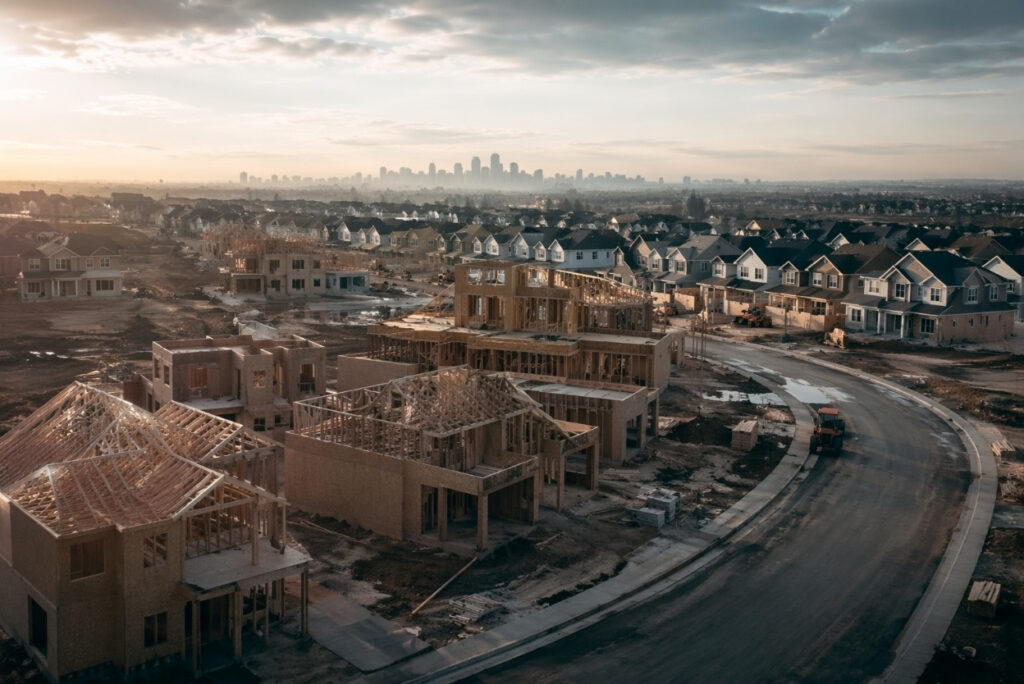


A newly released 2026 Economic Report of the President is putting a massive number on the U.S. housing debate—suggesting the country may be short 10 million homes or more.
The findings come from Chapter 6: “Protecting and Rebuilding the American Dream of Homeownership,” which outlines how housing affordability has shifted over time and what may be driving today’s supply constraints.
Here’s a breakdown of the causes and potential solutions from the report.
A Decade-long Slowdown in Building
According to report, the U.S. housing shortage sits at 10 million or more. The U.S. now has about 146.8 million homes, and that total hasn’t kept up with the number of people looking to buy or rent.
For decades, homebuilding followed a steady rhythm. Builders were adding roughly 6,000 new single-family homes per million people each year, which helped keep supply aligned with demand.
The report indicates that this pattern broke after the 2008 financial crisis, and construction never fully returned to earlier levels. The change shows up clearly in long-term growth rates:
- Pre-2008 housing stock growth of about 1.6% per year
- Post-2008 growth slowed to about 0.8% per year
More than 15 years of underbuilding created a gap that kept widening. Meanwhile, population growth continued. New households formed, but supply lagged behind.
Over time, that imbalance compounded into a nationwide shortage measured in the millions.
Why Housing Supply Hasn’t Kept Up
The report attributes much of the housing shortage to structural barriers that have made building more expensive and more complex over time.
One of the central claims is that regulatory costs play a significant role in limiting new construction. Over time, this has caused building to become more expensive and more complex.
The report estimates regulation alone adds more than $100,000 to the cost of a new home. Many projects no longer make financial sense at that level.
Here’s how those costs break down:
- Total regulatory burden equals about 42% of construction costs
- Fees, delays, and compliance account for about 13.5%
- Building code changes add about 8.6%
- Additional regulations and mandates contribute another 7.1%
Higher costs limit how many homes get built. Fewer projects move forward, and timelines stretch out. Supply continues to fall behind demand.
In addition, building codes have expanded significantly, growing from around 500 pages to more than 1,100. Each added requirement increases cost and complexity.
The result is a system where building at scale becomes harder to sustain. Supply stays constrained, and the shortage keeps growing.
How the Shortage is Shaping the Housing Market
The housing shortage shows up most clearly in prices and availability. When there aren’t enough homes, buyers compete for a limited number of options, and prices move higher as a result.
The data reflects that pressure:
- Home prices increased about 82% since 2000
- Incomes rose about 12% over the same period
- Price-to-income ratio climbed from 2.5 to 4.1
Fewer homes are available at lower price points. The share of new homes priced under $300,000 dropped from nearly half of the market in 2019 to about one-sixth by 2024.
Limited supply has also changed who can realistically enter the market. First-time buyers face tighter conditions, and the typical age of a first-time homebuyer has risen from 28 in the early 1990s to 40 in 2025.
Homeownership rates reflect the same pressure. Ownership has declined across age groups, with some of the largest drops among people in their early 30s to early 40s.
The shortage continues to shape access to housing. With fewer homes available, entry points narrow and competition stays elevated across much of the market.
Possible Solutions Proposed in the Report
The White House report focuses on one path forward: increase housing supply by making it easier and cheaper to build. The recommendations target the barriers that have slowed construction for years.
The report outlines specific actions aimed at increasing housing production, including actions already taken or underway at the federal level:
- Lower mortgage rates through economic policies that bring down Treasury bond yields, plus having Fannie Mae and Freddie Mac buy $200 billion in mortgage bonds.
- Ban institutional investors from buying single-family homes via executive order and push Congress to make it permanent.
- Reduce illegal immigration to ease demand pressure on housing.
- Roll back Biden-era green energy building mandates on federally financed housing and reduce FHA insurance premiums to their statutory minimum.
- Make Opportunity Zones permanent through the One Big Beautiful Bill Act to incentivize new construction, especially in rural areas.
“Best practices” recommendations at the state and local level were also shared:
- Unleash manufacturing innovation: Align building codes across jurisdictions with accepted national standards so modern methods like modular, prefabricated, and factory-built homes can scale up and bring costs down.
- Streamline the homebuilding process: Create a fast-track permitting system with hard deadlines (no more than 60 days to approve or deny), cap and justify fees, allow third-party inspections, and create an expedited appeals process. The report estimates this alone could remove ~$39,324 in bureaucrat tax per home.
- Protect consumer choice and property rights: Eliminate rent control, remove mandates unrelated to health and safety (aesthetic requirements, green energy mandates, discriminatory labor rules), end affordable housing set-asides, growth moratoria, and urban containment boundaries.
If regulations were meaningfully reduced nationwide, the report estimates about 13.2 million additional homes could be built, adding $4 trillion to GDP over a decade, creating 2 million construction and manufacturing jobs, and lowering home prices by roughly 13%.
The report suggests the housing shortage can be corrected, but only if the way homes are built and approved starts to change.
If those barriers stay in place, affordability will likely stay out of reach for many.