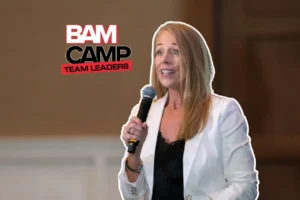


Yesterday, Alyssa Curnutt joined The Broke Agent to host her first Hyperlocal Content Lab in BAMx. (Great news for members: she’ll be hosting one of these every month.)
This week’s topic: “How to Choose Your Hyperlocal Niche”
Alyssa laid it all out, from why it pays to get more specific (and why it doesn’t limit your business), how she created her own audience avatar, questions you can ask to get clearer on who you’re creating content for, and how to apply your avatar filter.
Alyssa’s hyperlocal content has led to 51 closed transactions from Instagram, all sourced from that one specific avatar rather than an entire city’s worth of buyers and sellers.
Read on for the highlights from Alyssa’s answer to the question: Why do I need a niche for my real estate content, and how do I create one?
2 Key Benefits of Specificity
Alyssa named two key benefits to getting more specific with your content focus:
- Specificity targets the right people.
- Specificity makes creating content easier.
“When you’re able to call out exactly who your ideal audience member is, it’s helping them feel like, ‘My gosh, he or she is talking exactly to me. They understand like my community. They know what’s going on in my area,’ and they really feel seen.”
Creating an audience avatar helps you get specific on the person you have in your mind’s eye when you’re creating content.
Alyssa also addressed a fear agents have about getting specific with their niche. First of all, your avatar doesn’t have to be so specific as to exclude all but a tiny minority of people.
Look at Alyssa’s avatar, for example: women with children ages 2-14 living in Spokane.
Thing is, even though she speaks to that demographic in her posts and brainstorms content with them in mind, plenty of people who are not women or who don’t have young kids also care about the content Alyssa is creating.
So, there it is: getting specific with your content won’t limit your real estate business. It won’t mean you’ll ONLY work with the kind of person that matches your audience avatar.
It just means you’re far more likely to attract the attention of the people matching your avatar. And in doing so, you’ll also get in front of the people surrounding them.
How to Figure Out Your Person
Figuring out your own audience avatar begins with asking the right questions.
Alyssa provided these as a starting point:
- Who have you loved working with?
- Who do you naturally connect with?
- Who do you want more of (as clients/connections)?
- What (content) do you enjoy?
The best thing about this strategy: in getting clarity on your audience, you make it much easier to create content with appeal that goes beyond the specific audience you have in mind.
It also makes content creation a lot more fun, which also makes consistent posting easier:
“When I’m creating content about places that I care about, that I get excited about, that I would take my girls to, it makes it easier to create the content. So I would encourage you, that whatever you do end up doing, make sure it’s something that you would enjoy doing yourself.”
So, weirdly enough, getting more specific about your “person” is excellent at removing the “What do I post?” obstacle, partly because you’ve got fewer options to choose from.
And because those fewer options speak to you as well as to your audience. You know what this audience cares about. And it’s not everything to do with your local market.
Welcome to the paradox of content strategy. If you try to speak to everyone, you’re lucky to attract a few (and likely to get bored with it). If you try to speak to a smaller, specific audience, you attract them and more besides.
Once you have a specific avatar in mind, the next step is to describe them in clear, simple terms that give you a frame of reference for every piece of content you create.
Building Your Audience Avatar
Once you have a sense of who you’ve loved working with and what you enjoy creating content about, the next step is putting that person into words.
Alyssa shared two fill-in-the-blank prompts to help with that:
- My content is primarily for ___ who live in ____ and care about ____.
- The person I picture when I create content is a ____ who _____ and cares about _____.
Fill in the blanks for one (or both) of these, and you’ve got a clear idea of your target audience.
Some examples:
- My content is primarily for neurodivergent people who live in Oregon’s Pacific Northwest and care about family, good coffee, good books, and autism-friendly everything.
- The person I picture when I create content is a divorced/single woman in her 40s and up who is fine with staying single and cares about being there for their older kids, helping their community, and creating a good life.
Alyssa explained why this level of detail pays off:
“The ultimate goal is to get specific enough so that all the decisions you make about your content become so much easier. And then ultimately it’s seen by the right people, by the people who you want to ultimately be your clients.”
Applying the Avatar Filter
Once an agent has an avatar in mind, Alyssa said every content idea gets run through the same short filter before it makes the cut:
- Would they care about it?
- Would they save it or share it?
- Would they want to come back to it?
Finding ideas is its own skill. Alyssa said she pulls most of hers from unglamorous sources:
- The local paper, behind a paid digital subscription, since most of her audience never looks there
- The regional business journal
- Public permit portals, where she plugs in a parcel number to find out what’s being built before anyone else has an answer
If you’re asking, “What if I live in a big city?” getting clear on your niche will still help you get clarity on who you’re talking to, as Alyssa found out living in Spokane:
“Spokane can be overwhelming (as) a place that has a population of 600,000 people. There are so many ideas and also simultaneously, it feels like I don’t know what to post because it’s so overwhelming. (A niche) makes it easier because when you can put on the hat of like, Here’s who I’m creating content for and immediately figure out, would they care about this restaurant? Have they seen this construction while they’re driving to work?”
Living in a small town doesn’t limit you, either, because, as Alyssa explained, you don’t have to limit your content to what’s happening in your immediate area. A small town could be an easy drive to a larger hub.
The main question to ask when you’re looking for content ideas is “Would my audience avatar care about this?”
Instagram itself can also be a source of inspiration. Alyssa said she counted seven DMs in one 24-hour span asking about a new building going up in Indian Trail, in North Spokane, after people started seeing her as the person who tracks that neighborhood.
View this post on Instagram
Alyssa’s IG Stories work differently from her feed content. She doesn’t script them or plan them out ahead of time. She just talks, the way she would to a friend, about whatever she’s doing that day, whether that’s a stop at the driving range or a signing at the closing table.
People she’s met, who’ve seen her Stories, have noticed:
“I meet people, they’re like, my gosh, you’re literally the same person online as you are in real life.”
If you’re ready to try this, Alyssa’s advice is to start rough. Write down who you’ve loved working with and who you want more of. Then add what you’d enjoy covering.
It doesn’t have to be perfect on the first try (and psst, it won’t be). If your audience cares about what you’re saying, that goes a lot further than a more polished post on something they don’t.
Tune in next month for Alyssa’s next Hyperlocal Content Lab! BAMx members can jump in right from the BAMx Calendar. Sign up here to get full access.