
Sound off. Thumb in scrolling mode. Three seconds to decide.
This is the reality every video you post is up against. Your audio track pairing could be the envy of content creators across the globe. You could be an Oscar-worthy actor performing a skit that had your family and video team rolling.
If you can’t hook your viewers without the sounds they’re not hearing, your content is invisible, at least to those not already familiar with your brand.
Enter the on-screen text-based hook.
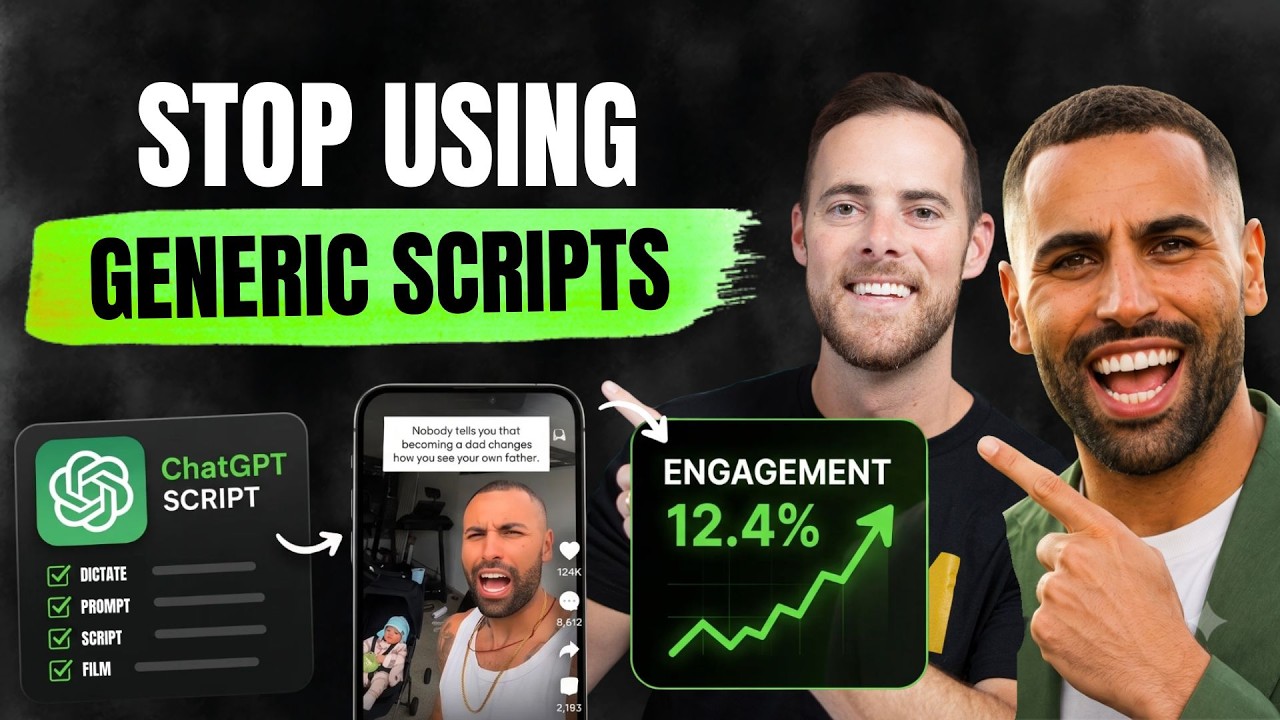
Last week on The Broke Agent Podcast, Krys Benyamein shared the text-based hook formula that gets more eyes on his Instagram reels, with or without audio. People see the hook, and it gets them curious enough to stop scrolling.
Here’s what you need to know to start growing your audience today.
What a Text-Based Hook Is
What we mean by “text-based hook” is a block of text placed above your head on screen that tells viewers what the video covers before they hit play.
Done well, visual hooks (what’s happening on the screen) get viewers to pause. But they don’t tell the viewer what they’re about to see or why they should stick around to see it.
Without text, the viewer has to watch several seconds before they understand the point, which may not even be possible in silent mode. Most will scroll on.
The text-based hook tells the viewer exactly what they’re getting before they commit any time at all. Built for silent scrolling, the text-based hook is how you keep your audience’s attention long enough to deliver on the promise of your post.
Here’s how Krys explained his process for creating Instagram reels with text-based hooks:
“The text-based hook, for anybody that doesn’t know, and this is very trendy right now, is you’ll leave a little gap above your head when you’re shooting it. So that way you can put a block of text above your head so that people can read immediately what the video is going to be about.”
Clarity Beats Cleverness
Krys acknowledged the instinct to be clever or cheeky in these text-based books, or to play to your audience’s curiosity (get them thinking, “What on earth is THIS about?”).
But for a lot of creators, including Krys, following that instinct has backfired.
Agents often go with curiosity-based hooks because they want to protect the “big reveal” in the video, but these hooks often just read as unclear. Or worse, misleading.
Krys’s personal approach: state plainly and clearly what the viewer is about to get.
“The strong advice that I would give is anytime I try to get cheeky, ambiguous, too creative, too flowery, the worse it is… I seem to do better giving it more clarity as far as what they’re about to get.”
Krys tested this himself across a high volume of posts and found clarity consistently outperformed cleverness, even though clever felt more creative.
Here’s one example of a carousel with a clear text-based hook on the first slide, followed by the reel on the second:
View this post on Instagram
When a hook is too vague, viewers assume the video isn’t for them, and they keep scrolling instead of stopping to figure it out.
This is what happens when you’re focused on how people perceive you through your content rather than putting yourself in their shoes.
Test this for yourself. Write two versions of a hook, one clear and one clever. See which one you’d actually stop scrolling for.
Or post them both and let your audience vote with their views.
The Carousel Fix for a Flopped Video
Sometimes, the video itself is strong, but it still doesn’t perform because the hook never gave people a reason to stop scrolling.
In these cases, Krys recommends posting the same video as a carousel to give you a second shot at a strong hook.
Here’s what that carousel looks like:
- The first slide carries the text-based hook on its own (no competing motion or sound to distract from it).
- A swipe takes the viewer straight into the video.
This format works especially well for scripted or informational videos, like market updates or listing walkthroughs where the original hook fell flat.
Krys used this exact fix after one of his videos flopped, and the carousel turned into one of his better-performing posts.
“I love coming up with the text-based hook because it makes a difference. I’ve posted stuff before without it, and it’s flopped, and then I’ve said, ‘You know what, let’s put a carousel post in front of it and have a good text-based hook and then swipe to the video,’ and then it’s a complete game changer.”
You can apply this to anything sitting in your camera roll that got low views the first time. Before you write it off as a fail, repost it as a carousel with a stronger text-based hook.
Build a Hook Library From What Already Works
Every time a post performs well, that hook has already proven it works. Reusing what’s proven beats guessing at something new every time.
This is why Krys keeps screenshots of his own top-performing text-based hooks and pulls them up before writing new ones. He includes the analytics alongside the screenshot when he’s referencing a past hook, so there’s proof behind why it worked.
“When I’m focused on the text-based hook, I’m just sharing screenshots of older videos that have text-based hooks and say this was high performing, this was high performing, and I’ll give them the analytics like this is how it was high performing.”
It doesn’t take years of content to start doing this, either. Even five or six posts is enough to spot a pattern in what got attention and what didn’t.
Start by saving screenshots of your own top performers in one folder. Before writing your next hook, look back at what already worked and build from there instead of starting blank.
BAMx members get this kind of hook and caption review built in through monthly Content Audits with the BAM team, so you’re not doing this pattern spotting alone.

BAMx members also have access to Krys Benyamein’s Listing Marketing Masterclass every month. Sign up for a 7-day free trial and join us for the next one on July 8.