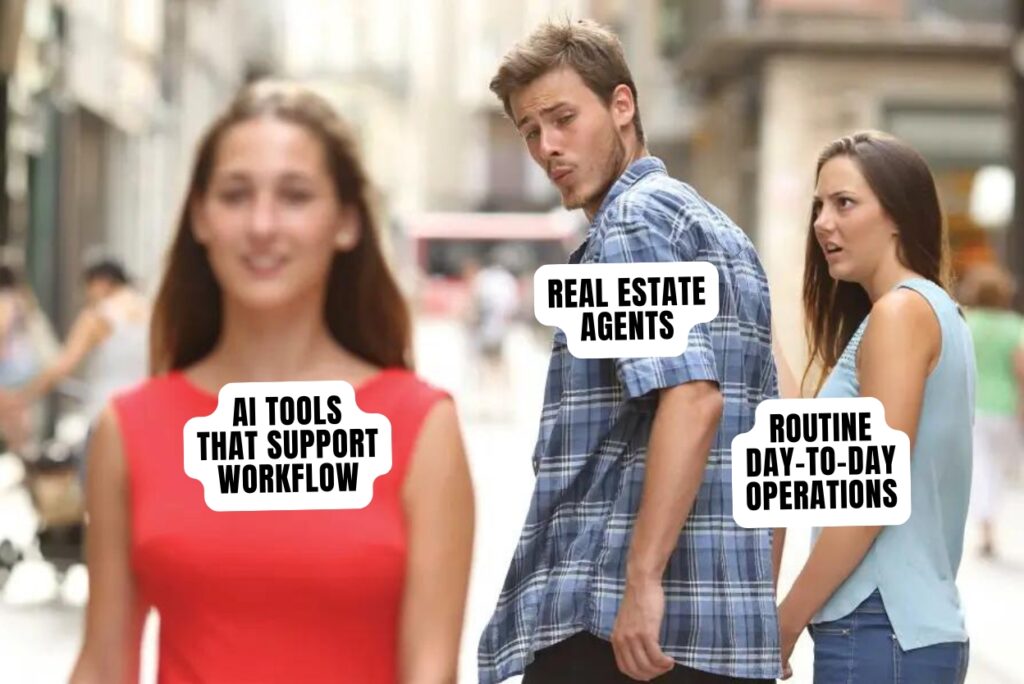

Data shows AI is already a present reality across real estate workflows.
What’s changing is how carefully AI tools are now being chosen.
That’s the clearest signal from the Rechat 2026 State of AI & Real Estate Marketing Report, released in January. Instead of chasing novelty, the industry is settling into a more disciplined relationship with technology.
The numbers back that up, and they point to a phase shift that deserves a closer look.
The report shows 70% of respondents adopted at least one new technology tool in the past year. At the same time, 41% are already actively using AI-powered tools, a sign AI has moved beyond experimentation and into everyday operations.
Adoption Is Up, But the Bar Is Higher
The 70% adoption figure comes with context. Respondents made it clear that technology is being evaluated through a practical lens.
Adoption decisions are increasingly driven by whether a tool can:
- Support everyday workflows without adding friction
- Save time rather than shift work elsewhere
- Improve the client experience in visible ways
This signals a more mature approach to technology. The appetite for shiny objects has faded. What remains is a focus on utility, reliability, and fit.
AI Has Become Infrastructure, Not an Experiment
The report shows that 41% of respondents are actively using AI-powered tools. That figure reflects a shift from curiosity to reliance.
Rechat CEO Shayan Hamidi explains how that mindset has changed. He frames the data as evidence that AI is no longer treated as optional or speculative:
“The data reflects a clear shift in how the industry views technology. AI is no longer perceived as experimental or optional. It is being evaluated through a practical lens with how it helps professionals work smarter, reduce complexity, and deliver a better experience for their clients.”
AI is now judged by whether it shows up reliably, reduces mental load, and helps maintain consistency when volume or pressure increases.
Why Integration Matters More Than Features
As adoption has increased, so has awareness of what doesn’t work. The report repeatedly points to the cost of fragmented technology stacks. Disconnected systems create friction that compounds over time.
Respondents cited specific challenges tied to fragmented tools, including duplicated work across platforms, inconsistent or conflicting data, and reduced productivity from constant context switching.
As a result, integrated systems are increasingly favored over standalone solutions. The priority is no longer feature depth in isolation, but how seamlessly a tool fits into the broader workflow.
Rechat Vice President of Strategic Growth and Communications Audie Chamberlain reinforces this shift in expectations. He connects long-term trust to usability rather than novelty:
“Real estate professionals are no longer impressed by novelty. What this report shows is a clear shift toward disciplined adoption. The technology that earns long-term trust is the technology that fits naturally into daily workflows and helps agents and brokerages operate with more confidence, clarity, and consistency.”
The Throughline Is Client Experience
Across all roles surveyed, client experience emerged as a consistent priority. Technology adoption was most often tied to improvements that clients can feel, not just back-end efficiency.
According to the report, adoption is closely linked to gains in:
- Responsiveness during active transactions
- Accuracy in information and communication
- Transparency across the entire process
Those using AI-driven and integrated systems are better positioned to manage higher volumes, respond faster, and maintain consistency during periods of market pressure.
The technology supports judgment and relationship-building by removing unnecessary drag.
What This Signals for 2026
Rechat’s 2026 report shows an industry that’s grown more selective in its technology choices. Adoption is still high, but there’s far less tolerance for disconnected tools and unnecessary complexity.
For many real estate teams, AI is no longer a future concept. With 41% already using it and 70% continuing to add new tools, the focus has shifted from experimenting to building smarter, more integrated workflows that actually support day-to-day work.