
Federal Reserve Chair Jerome Powell just gave his latest take on the U.S. housing market in yesterday’s FOMC press conference. And the outlook is a mixed bag.
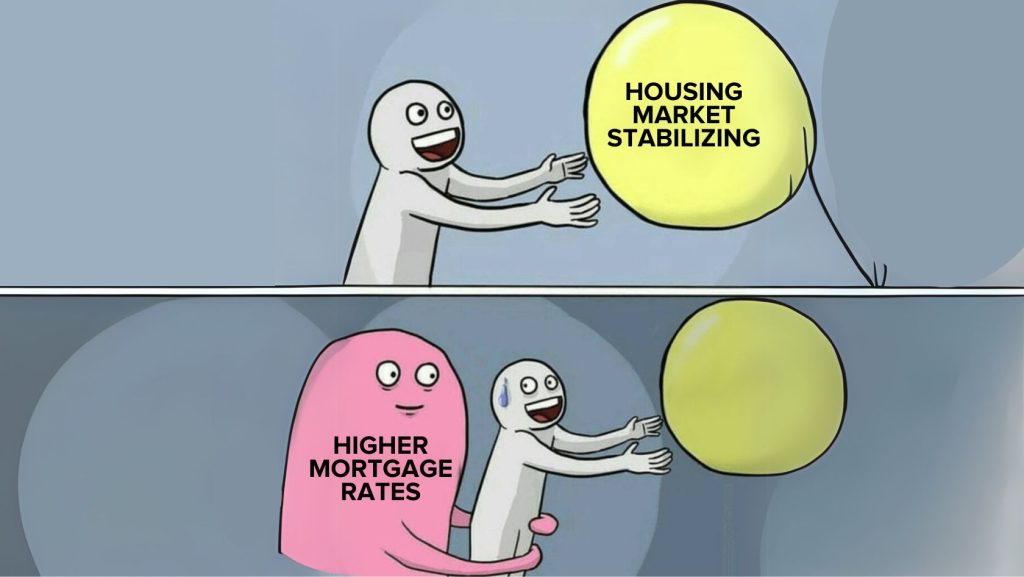
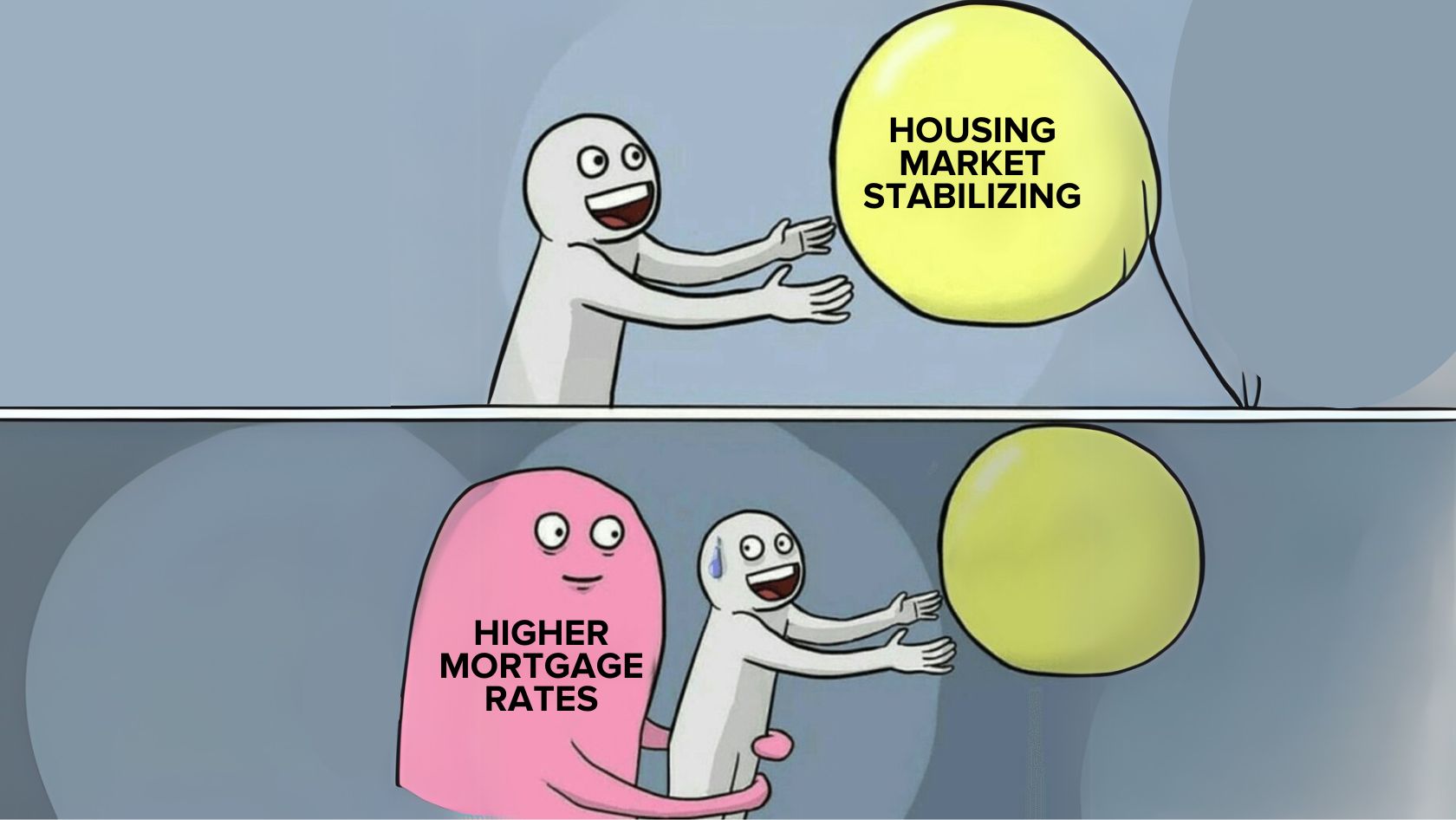
The good news? Powell says the market has “stabilized” after a rough patch. But he also acknowledged that persistently high mortgage rates—currently above 7%—could limit future activity.
While the Fed kept its policy rate unchanged, Powell pointed out that long-term rates are rising for reasons “unrelated” to their actions.
So, real estate professionals are left wondering: Will stabilization hold—and will rates start trending significantly downward? Or are we in for another slowdown?
Read on for Powell’s comments related to housing and mortgage rates. And don’t miss Byron Lazine’s full breakdown on today’s Hot Sheet!

Housing-Related Comments from Powell’s Initial Statement
In his opening statement at the FOMC press conference, Powell mentioned housing only once, with one sentence dedicated to activity in the housing sector.
(02:22) – “Following weakness in the middle of last year, activity in the housing sector seems to have stabilized.”
Housing-Related Comments from the Q&A Segment of the FOMC Press Conference
Here we’re highlighting Powell’s answers to any housing-related questions posed by reporters. Click on any of the timestamps to watch the conversation on YouTube.
(08:19) Question from NICK TIMIRAOS, Wall Street Journal:
“Chair Powell, you and several of your colleagues said around the time of the last meeting that your policy stance was meaningfully restrictive. Given economic and financial market development since then, how has your confidence changed in an assessment that says interest rates are meaningfully restrictive?”
Powell’s response (08:40):
“I don’t think my assessment really has changed. I mean a couple of things have happened. We’ve gotten more strong data, but we’ve also seen rates move up at the long end, which could represent a tightening in financial conditions.
“I think if we look back over the past year or so, we can see that policy is restrictive. If you look at the effect of high rates on interest sensitive spending—for example in housing—and if you look at the achievement of our goal variables, we’re seeing the economy move toward 2% inflation and [it] has moved largely to maximum employment. So, we really look at the movement toward the goal variables to make that assessment.
“Now, policy is meaningfully less restrictive than it was before we began to cut; it’s 100 basis points less restrictive. And for that reason, you know, we’re going to be focusing on seeing real progress on inflation—or alternatively some weakness in the labor market before we consider making adjustments.”
(19:47) – Question from CATARINA SARAIVA, Bloomberg News:
“Last month you talked about a future rate cut as being pretty significantly predicated on more progress in inflation. With the characterization of the labor market in the statement today, would you say that that’s even more so the case now?”
Powell’s response [20:10]:
“I’d say it’s the same. You know we want to see further progress on inflation and the story is there; we’re just going to have to see the data. At the end of the day, it comes down to 12-month inflation because that takes out the seasonality issues that may exist. And we’re just going to need to see that. We think we see the pathway for that to happen.
“One example—a key example—is that you now do see owner equivalent rent and Housing Services, the way it’s calculated for PCE, you see that coming down pretty steadily now. And that’s the place where most of the remaining gap is. In addition, a big part of the overrun, as you will know, was from non-market Services, which don’t tend to send much signal.
“So, you can look through all that and think, ‘Okay, then, we seem to be set up for further progress,’ but seeming to be set up for it is one thing. Having it is another. So, we’re going to want to see further progress on inflation. Remember…our goal is 2% and we do mean to get back sustainably to 2%.”
(34:11) – Question from SIMON RABINOVITCH, The Economist:
“You mentioned in your remarks that activity in the housing sector seems to have stabilized. At the same time, since your first rate cut in September, long-term mortgage rates have gone up by a full percentage point back above 7%. I’m wondering, kind of looking forward, are you confident that activity will remain stable given how elevated mortgage rates are? How does it fit into your broader thinking about the economy?”
Powell’s response (34:37):
“So, as you know, as we’ve reduced our policy rate 100 basis points, longer rates have gone up—not principally because of expectations about our policy or about inflation. It’s more a term premium story. And you know it’s long rates that matter for housing, so I think these higher rates probably hold back housing activity to some extent if they’re persistent; we’ll have to see how long they persist.
“So, you know, we control an overnight rate. Generally it propagates through the whole family of asset prices, including interest rates, but in this particular case it’s all happened at a time when, for reasons unrelated to our policy, longer rates have moved up.”
(43:29) – Question from EVAN RISER, Market News International:
“Chair Powell, is a March cut still on the table? And then, additionally, are you looking to see better than expected data on inflation to cut, or are you looking for inflation data that roughly aligns with current forecasts?”
Powell’s response (43:43):
“So, as I mentioned, the economy is strong, the labor market’s solid, downside risks to the labor market appear to have abated. And we think disinflation continues on a slow and sometimes bumpy path. That tells me and the other members of the committee—the broad sense of the committee, actually, is that we don’t need to be in a hurry to adjust our policy stance.
“[As to] your second question…you know it’s one of those things we’ll know it when we see it. But the expectation is that we will make continued progress, and that’s what we want. We’ll know it when we see it. It’s going to have to be something that isn’t just idiosyncratic; you’re going to want to see continued progress with Housing Services inflation, you’re going to want to see inflation behaving in a way that builds confidence that we are really making progress. That’s what it’s going to be. And I mean, is that better than our expectations? We expect to see that, it’s just a question of when.”