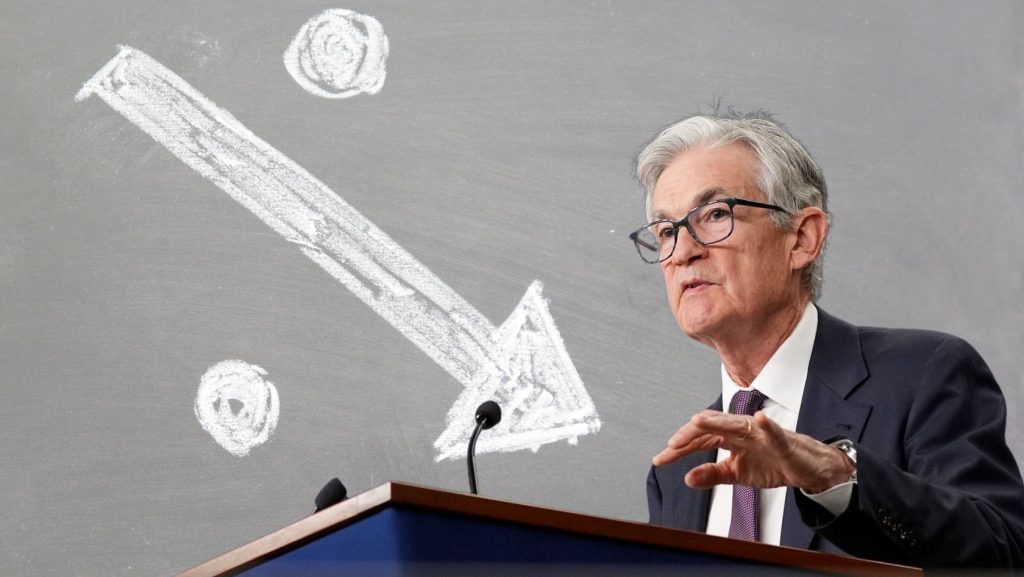
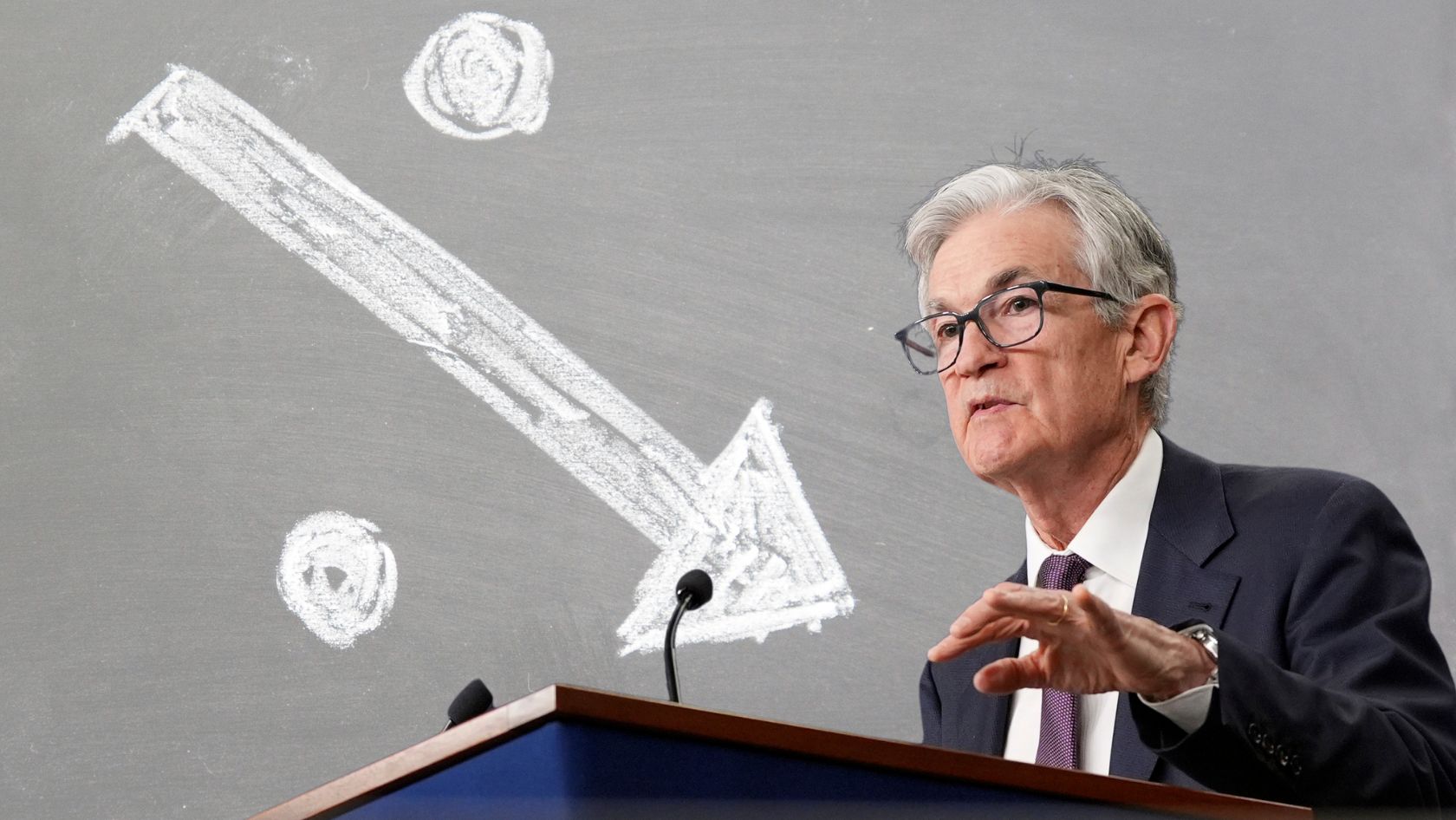

With its latest rate cut of 25 basis points, the Federal Reserve signaled a new phase in its economic strategy: slow, cautious, and calculated. Fed Chair Jerome Powell described the move as a “closer call,” but one deemed necessary by FOMC participants.
The Fed also indicated it would probably only lower the rate twice more in 2025, with two more rate cuts in 2026 and another in 2027.
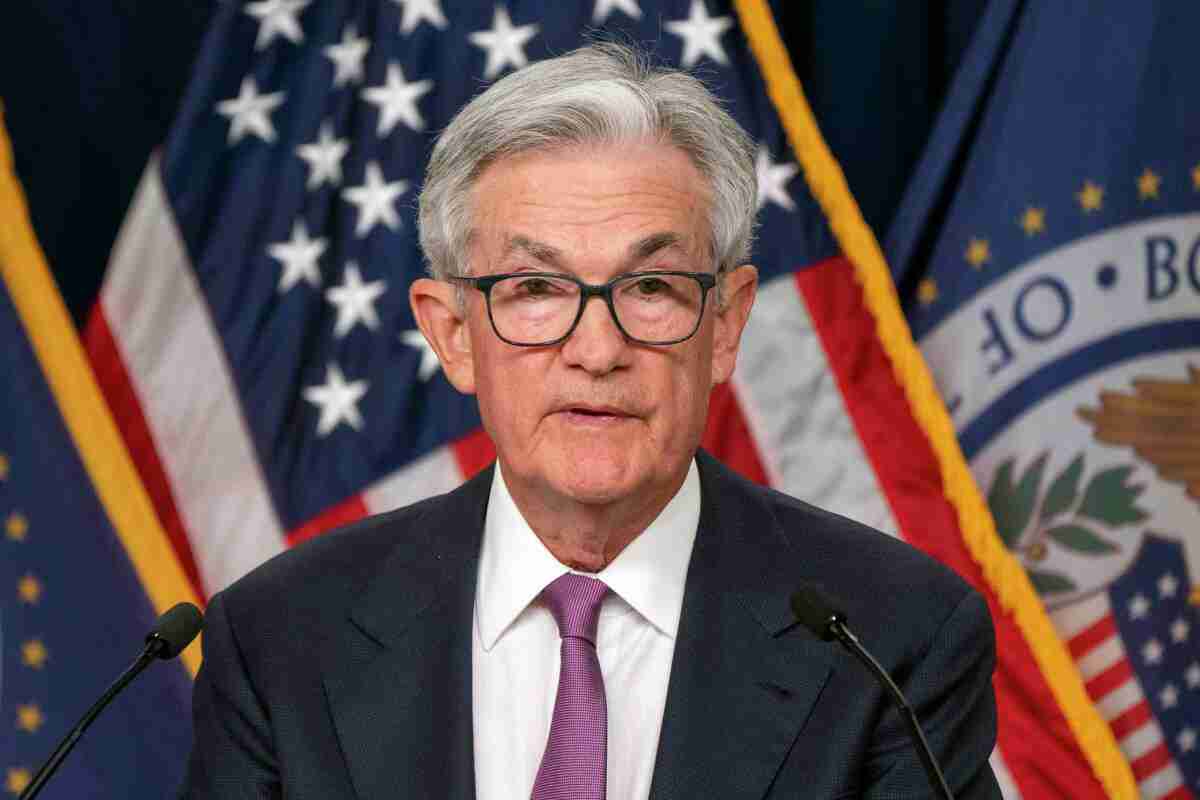
With today’s action, we have lowered our policy rate by a full percentage point from its peak, and our policy stance is now significantly less restrictive. We can therefore be more cautious as we consider further adjustments to our policy rate.
As the dust settles, markets are left parsing what this means for growth, inflation, and the long-term outlook for interest rates.
Don’t miss Byron Lazine’s full breakdown on today’s Hot Sheet.
Housing-Related Comments from Powell’s Initial Statement
In his opening statement at the FOMC press conference, Powell spoke briefly on activity in the housing sector and housing services inflation. Here are the two key quotes with some context:
(01:45) – “Recent indicators suggest that economic activity has continued to expand at a solid pace. GDP rose at an annual rate of 2.8% in the third quarter—about the same pace as in the second quarter. Growth of consumer spending has remained resilient, and investment in equipment and intangibles has strengthened. In contrast, activity in the housing sector has been weak.”
(09:35) – “Inflation, we see that story as still broadly on track and I’ll tell you why. We’ve made a great deal of progress; 12-month core inflation, as I mentioned, through November is estimated at 2.8% down from a high of 5.6%. But 12-month inflation has actually been moving sideways as we are lapping the very low readings of late last year. Housing Services inflation actually is steadily coming down now albeit at a slower pace than we might like. But it has now come down substantially and it is making progress—slower than hoped.”
Housing-Related Comments from the Q&A Segment of the FOMC Press Conference
Here we’re highlighting Powell’s answers to any housing-related questions posed by reporters, as well as some questions that provide additional context.
Click on any of the timestamps to watch the conversation on YouTube.
(23:12) Question from MICHAEL MCKEE, Bloomberg TV & Radio:
“Even though you’ve cut rates by a hundred basis points this year, we haven’t seen much change in mortgages, auto loan rates or credit card rates. You say you’re significantly restrictive. Are you running a risk that the markets are fighting against you and the economy could be more at risk of a slowdown than you anticipate?”
Powell’s response (23:34)
“So the rates that you talked about are really longer-run rates, and they’re affected to some extent by fed policy, but they’re also affected by many other things. And longer rates have actually gone up quite a bit since September, as you well know. And those are the things that drive, for example, mortgage rates more than short-term rates do.
“So we look at that, but we look at all financial conditions, and then we look at what’s happening in the economy. So what we see happening in the economy again is, most forecasters have been calling for a slowdown in growth for a very long time, and it keeps not happening. So we are now well into another year of growth that looks like it might be two and a half percent, third and second and third quarters we’re right about at the same level. So the US economy is just performing very, very well, substantially better than our global peer group, and there’s no reason to think a downturn is any more likely than it usually is.
“So the outlook is pretty bright for our economy. We have to stay on task, though, and continue to have restrictive policy so that we can get inflation down to 2%. We’re also going to be looking out for the labor market. We want to keep the labor market pretty close to where it is. We’re pretty close to estimates of the natural rate of unemployment. Job creation is a little below the level that would keep it there, but nonetheless close. And so that’s what our policy is trying to achieve.”
(25:06) Follow up Question from MICHAEL MCKEE, Bloomberg TV & Radio:
“If I could follow up by asking about your formulation for beginning rate cuts included the phrase ‘we need to have confidence’ that inflation is moving down towards our target. Given the fact that you’ve raised your forecast for next year, do you have confidence, or are you uncertain about the path of inflation going forward?”
Powell’s response (25:26):
“So confidence was our test for raising rates and…look at the broader sweep. We’ve made just a great deal of progress. We’re well into the twos in core inflation and around two and a half or even lower than that, we have been for headline inflation. So I would say I’m confident that inflation has come down a great deal and I’m confident in the story about why it’s come down and why that portends well. And I’ll tell you why.
“Again, you do see with housing services inflation, which is one that we’ve really worried about, it really has come down now quite steadily at a slower pace than we thought two years ago, but it’s nonetheless steadily coming down as market rents…start to equilibrate better with new leases that turn over, not new tenants but new leases. Market rents is new leases. So that’s happening. That process is ongoing pretty much as we expect.
“Goods inflation, which is another big piece of it, has returned right to the range where it was before the pandemic just for some months this year. It kind of moved up in a bumpy way because of used cars and things like that. But we think overall that should generally be in the range…that leaves non-housing services and market-based non-housing services are in good shape. It’s non-market services and those are services that are imputed rather than measured directly. And we think they don’t really tell us much about the tightness in the economy. They don’t really reflect that. I mean, a good example is financial services, which is really done off of asset prices and that’s how that inflation works.
“So the overall picture, the story of why inflation should be coming down, is still intact—in particular, the labor market. Look at the labor market. It is cooler by so many measures now, modestly cooler than it was in 2019, a year when inflation was well under 2%. So it’s not a source of inflationary pressures. Not to say there aren’t regional and particular professions where labor is tight, but overall you’re not getting inflationary impulses of any significance from the labor market.
“So what’s the story? The story is still just we’re unwinding from these large shocks that the economy got in 2021 and 22 in, for example, housing services and now also in insurance in particular where costs went up, and those are now being reflected later in housing insurance. It’s real inflation, but it doesn’t portend persistently high inflation. So we and most other forecasters still feel that we’re on track to get down to 2%. It might take another year or two from here, but I’m confident that that’s the path we’re on, and our policy will do everything it can to assure that that is the case.”
(32:00) Follow-up Question from STEVE LIESMAN, CNBC:
“I wonder if I could follow up and ask you how much you or the committee are looking through some of the high numbers we’ve had in the recent inflation numbers. For example, cars being up maybe because of the hurricanes, eggs because of the avian flu, that kind of stuff. And then looking forward perhaps to housing inflation coming down as it did in the recent report.”
Powell’s response (32:22):
“We always try to be careful about not throwing out the numbers we don’t like. It is just an occupational hazard to look, oh, those high months are wrong. What about the low months? We have a very low month potentially in November. It’s estimated by many to be in the mid-teens for core PCE, so that could be idiosyncratically low.
“We try to look at just a couple or three months. Our position shouldn’t change based on two or three months of good or bad data. We have a long string now of inflation coming down gradually over time. As I mentioned, I think 12-month headlines 2.5, 12-month core is 2.8. That’s way better than we were. We still have some work to do, though, is how we’re looking at it, and we need policy to remain restrictive to get that work done, we think.”
(33:55) Question from NEIL IRWIN, Axios Financial:
“Financial markets have been very buoyant really all year. Is the committee comfortable with where financial conditions are, or do you see a risk that looseness in financial conditions could undermine progress on your inflation target?”
Powell’s response (34:09):
“So we do look carefully at financial conditions. Of course, that’s part of what we do. But what we really look carefully at is the performance of our goal variables and how are we affecting the economy. So, what we’ve seen over the course of—just take the last year, we’ve seen inflation over the last couple of years come down a lot. We’ve seen the labor market cool off quite a bit. That suggests that our policy is restrictive.
“We can also look more directly at the parts of the economy that are affected, that are interest sensitive, like particularly housing. Housing activity is very low and that’s partly significantly because of our policy. So we think our policy is working, it’s transmitting and it’s having the effects on our goal variables that we would want. A lot of things move financial conditions around, as you know, and we don’t really control those, but I’d say we see the effects we’re hoping to see on the goal variables and the places where we’d expect to see it.”
(39:44) Question from ELIZABETH SCHULZE, ABC News:
“As you’ve noted, the Fed is now forecasting higher inflation next year. High prices are still a burden for so many households right now. Why do you think it is that inflation is proving to be more stubborn than you’d expected?”
Powell’s response (40:02):
“It breaks down into a long answer if you want, but it just has been a little bit more stubborn. I think if you go back two or three years, many people were saying that to get this far down, we would’ve had to have had a deep recession and high unemployment by now. Well, that has not been the case. So, the path down has actually been much better than many predicted. We’ve managed to have the unemployment rate remain essentially at its longer-run natural rate, while inflation has come down from core PCE of inflation has come down from 5.6% to 2.8% on a 12-month basis. So that’s a pretty good outcome. Why hasn’t it come down? One reason is just a technical issue around the way we calculate housing services, and that process has been slower—market rents are showing up more slowly in that measure—than we might’ve thought two years ago. So that’s part of it.
“I think there are other parts of the story, but what I think people are feeling right now is the effect of high prices—not high inflation. So, we understand very well that prices went up by a great deal and people really feel that. And it’s prices of food and transportation and heating your home and things like that. So there’s tremendous pain in that burst of inflation that was very global. This was everywhere in all the advanced economies at the same time. So, now we have inflation itself is way down, but people are still feeling high prices, and that is really what people are feeling. The best we can do for them—and that’s who we work for—is to get inflation back down to its target and keep it there so that people are earning big, real wage increases, so that their wages are going up, their compensation is going up faster than inflation year upon year upon year. And that’s what will restore people’s good feeling about the economy. That’s what it will take, and that’s what we’re aiming for.”
(50:18) Follow-up question from KELLY O’GRADY, CBS News:
“And just one follow up, let’s look more long-term. You previously predicted hitting the 2% inflation target in 2026. It’s now been pushed out to 2027. You said you’re focused on enabling further progress on inflation. That’s not necessarily progress in the right direction. Are you confident that target isn’t going to move further out?”
Powell’s response (50:39):
“We’re talking about when you’re projecting the economy, when three years out, two years out, you’re talking about high uncertainty, very high uncertainty. At that point, it’s not possible to confidently predict where the economy is going to be in three years. So what we’re doing is we’re looking at what’s happening now. We’re kind of projecting that the same kinds of things are happening, so we keep a strong labor market, housing services inflation comes down, goods inflation settles down, and non-market services return to their prior level. All of those things should happen over time, and those pieces come together. There’s every reason to think that they will.
“The timing of it is highly uncertain. But you’re not wrong, though, that it’s been a bit frustrating. Because while we’ve made progress, it has been slower than we had hoped. Nonetheless, we’re still on track, and I think if two years ago you’d said we were at 4.2% unemployment and 2.8% inflation, people would say, I’ll take that. I mean, that’s a pretty good interim place to be. Job’s not done, but I think we’re feeling good about where we are and where we’re headed.”