

Robert Reffkin says the U.S. housing market has already hit bottom.
The Compass CEO recently pointed to existing-home sales as evidence in a recent appearance on Fox Business:
“I think I can definitively say that last year was the bottom. Last year we sold 4 million homes, existing homes, and this year we’re on track to hit 4.2 million, and given how much of the market is in the first half of the year, a lot of negativity would have to happen to get below that 4 million number.”
So, can agents finally say the worst is behind us?
Byron Lazine broke down Reffkin’s claim on the Hot Sheet, comparing this year’s housing data with last year’s and examining what would need to happen for the market to meaningfully improve.
Byron’s biggest takeaway:
“The bigger takeaway isn’t whether he’s right or wrong. It’s that today’s market looks remarkably similar to this time last year.”
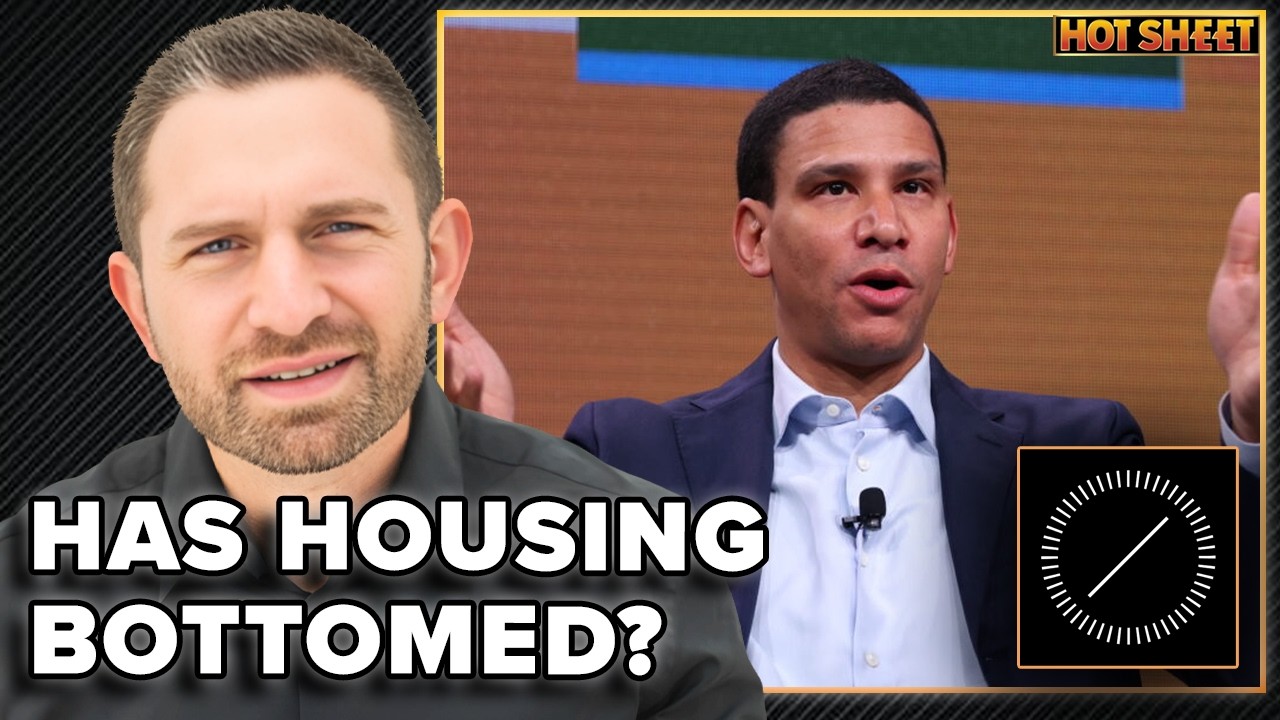
Today’s Housing Market Looks a Lot Like Last Year’s
Agents were quick to question Reffkin’s declaration when BAM shared it on Instagram and Facebook. That skepticism is understandable, especially because Reffkin made a similar bottom call in 2023.
Byron acknowledged that history, but gave Reffkin credit for grounding his latest argument in sales data.
“It’s a lot more relevant and data-backed than the doomers all over the internet who’ve been calling for 50% house price drops.”
Still, Reffkin is making the call in the middle of the year, with plenty of uncertainty remaining. Byron explained:
“If this is a golf course, there are seven holes left in this round. A lot can happen. Things can go in the drink quite easily. I’m not trying to be pessimistic. I’m just being realistic.”
Byron compared current conditions with the same point last year and found striking similarities:
- The 30-year fixed mortgage rate is sitting around 6.8%, nearly identical to last year.
- Single-family inventory is roughly flat.
- New listings are entering the market at a similar pace.
- Pending home sales are running at approximately the same level.
So far, this looks less like a decisive turning point and more like another version of last year’s market.
Is the 4.2 Million Sales Forecast Too Optimistic?
Reffkin’s argument rests heavily on the expectation that existing-home sales will reach 4.2 million this year.
However, Realtor.com’s mid-year forecast is closer to 4.1 million.
Byron still sees value in that progress.
“It’s a slight uptick. We’ll take it. We need some of these small steps up if we’re going to get back to 4.5 to 5 million existing-home sales.”
The market may be moving in the right direction. It simply hasn’t moved far enough to make the bottom call definitive.
Byron does side with Reffkin on one piece of this. Affordability is genuinely improving, and that’s showing up in more than one place.
“He was right on the money. Affordability is better. That’s only going to help. Wage growth has helped, and some of the price stability on housing, new construction being down, that’s helping affordability.”
Mortgage Rates Will Decide What Happens Next
Whether Reffkin’s higher number gets there depends largely on rates. Realtor.com chief economist Danielle Hale projects the 30-year fixed averaging 6.3% for 2026 and sitting there at year end.
Rates are currently about half a percentage point higher.
Reffkin connected the recent increase to rising oil prices and renewed inflation concerns. When markets expect higher inflation, mortgage rates tend to rise along with those expectations.
Byron believes that also creates room for rates to reverse relatively quickly if oil prices ease and inflation concerns fade.
“This half point is really the oil inflation issue that we’re dealing with, if we get that resolved.”
A drop toward 6.3% would not solve every affordability problem, but it could create enough movement to bring more buyers and sellers back into the market and make a modest increase in annual sales more achievable.
If rates remain closer to 6.8%, the market may continue looking much like it did last year.
Don’t Call It Yet
Byron’s closing point is one you can carry into your client conversations. Call the bottom too early, and three years from now the numbers might tell a different story than the one being sold today: wage growth ticked up a little, and the 30-year fixed and sales volume are similar to the year before.
That’s the value of tracking this week to week instead of taking any single headline at face value. Byron does exactly that every Monday on the Hot Sheet, walking through the data agents need before they talk to a client about where the market stands.
Your BAM Podcast Lineup
Catch the full breakdown of this episode, and get the rundown every Monday going forward. And if you want a well-rounded weekly playbook, here’s the new BAM podcast line-up:
Monday: Hot Sheet
When: Mondays at 9:30 am ET
Watch: BAM YouTube
Tuesday: The Real Word
When: Tuesdays at 2:00 pm ET
Watch: BAM YouTube
Wednesday: Agent Strategy with Byron Lazine
When: Wednesdays at 2:00 pm ET
Watch: Byron Lazine YouTube
Thursday: Your Marketing Playbook with The Broke Agent
When: Thursdays at 2:00 pm ET
Watch: The Broke Agent YouTube
Friday: Knowledge Brokers Podcast
When: Fridays at 2:00 pm ET