

Key Details:
- NAR’s Executive Committee finalized the trade association’s decision to rescind the no-commingling rule.
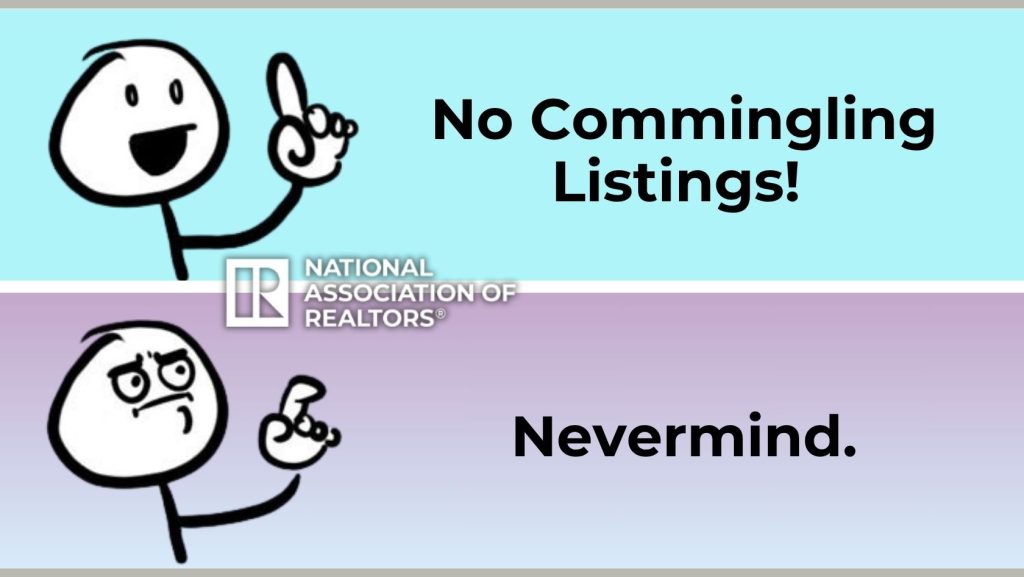
- NAR’s MLS committee voted to rescind the optional “no-commingling” rule, which currently limits brokers from displaying MLS and non-MLS listings on the same search results page.
- Only 29% of Realtor-affiliated MLSs had adopted the rule, and its removal is expected to simplify IDX and VOW display standards across markets.
The National Association of REALTORS® (NAR) has officially eliminated its “no-commingling” rule, an optional policy that allowed Multiple Listing Services (MLSs) to limit how brokers display property listings online.
On Tuesday, June 3, NAR’s Multiple Listing Issues and Policies (MLIP) Committee voted to rescind the rule at the trade organization’s annual midyear conference in Washington, D.C.
Less than 24 hours later, NAR’s Executive Committee finalized the decision. Due to changes in NAR’s governance structure, the vote did not require approval from the full board of directors.
Now that the rule change is official, here’s what agents need to know.
What the ‘No-Commingling’ Rule Actually Does
The rule, technically outlined in Section 18.3.11 and Section 19.23 of NAR’s MLS policy handbook, allowed MLSs to prohibit brokers from displaying listings from REALTOR®-affiliated MLSs alongside listings from other sources (like non-MLS brokers or different MLSs) on the same search results page.
This matters most for IDX (Internet Data Exchange) and VOW (Virtual Office Website) platforms, which power the home search tools consumers use on brokerage websites.
Why It Was Scrapped
According to NAR’s own advisory board, the rule is “outdated” and no longer aligned with how brokers market listings today.
From NAR’s official statement:
“The National Association of Realtors Executive Committee repealed the optional non-commingling rule from the MLS Policy Handbook. This decision was based on feedback about the rule’s declining usage and relevance in local marketplaces.”
But more importantly, it’s under federal scrutiny.
Here’s the context:
- The rule was a central issue in the now-closed antitrust lawsuit brought by REX against NAR and Zillow.
- NAR and Zillow won the case, but a key point in their defense was that the rule is optional, not mandatory.
- Zillow, which had previously complied with the rule, quietly reversed course earlier this spring, allowing non-MLS listings to appear alongside MLS listings on its platform.
- According to court documents, only 29% of Realtor-affiliated MLSs actually adopted the policy, exposing inconsistencies across markets.
What This Means for Brokers and MLSs
With the policy now repealed, brokers and MLSs can expect a simpler, more streamlined approach to listing display, especially across markets with multiple MLSs.
Here’s why that matters:
- Brokers will no longer be forced to separate MLS and non-MLS listings on their IDX or VOW platforms, as long as they continue to follow standard IDX rules.
- MLSs that previously enforced the rule would need to update their own local policies.
- Brokers working across multiple MLSs will face fewer conflicting rules, making it easier to maintain consistent website experiences and marketing strategies.
Key Takeaways for Agents
- This change is official: NAR’s Executive Committee has voted to eliminate the policy—no further approval is needed.
- Expect changes in IDX and VOW display rules, especially if your MLS previously enforced the no-commingling policy.
- Talk to your broker or MLS about how this affects your website and marketing strategy. If you’ve had to display listings separately, that may no longer be necessary.
- Federal regulators are still watching. This move signals NAR’s effort to stay ahead of antitrust scrutiny. More policy shifts could follow.
We’ll continue covering updates as the news unfolds.