


As of today, we are officially more than halfway through the year. I just addressed this in our July Content Ideas blog and a post on BAM, but it’s worth repeating:
Summer, especially when things slow down around the 4th, is one of the best times to audit your content strategy and your business.
Why? Because you’ve been posting for half the year and now have a solid bank of data to look at. You can actually see what’s been working and what hasn’t.
How To Audit Your Content
Start with where you post the most. Let’s use Instagram as the example.
If you have a business or creator account, go to your Professional Dashboard. Click Views, then set the range to the last 90 days (or even better, the last 6 months).
This will sort your content by what got the most views.
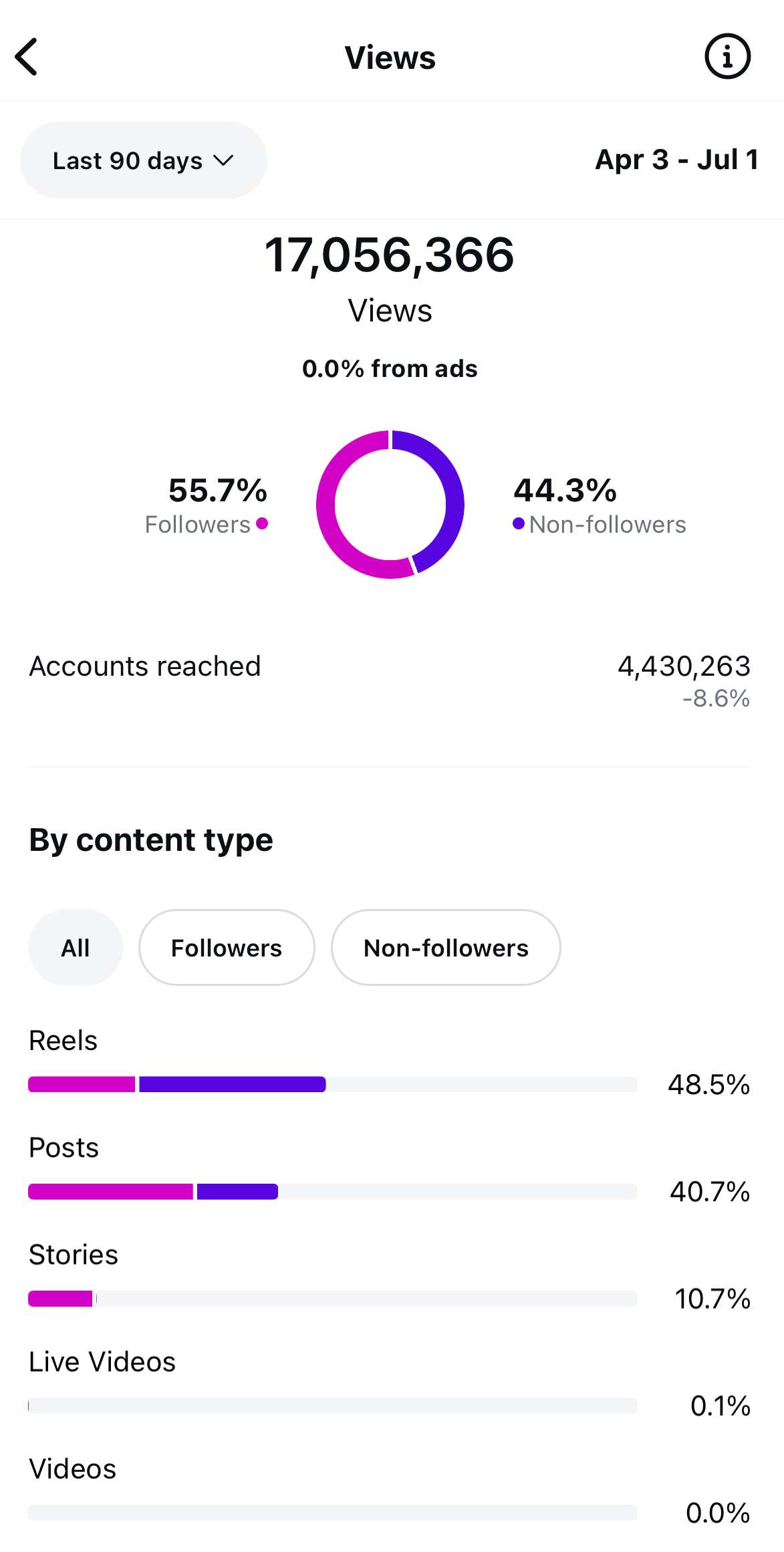
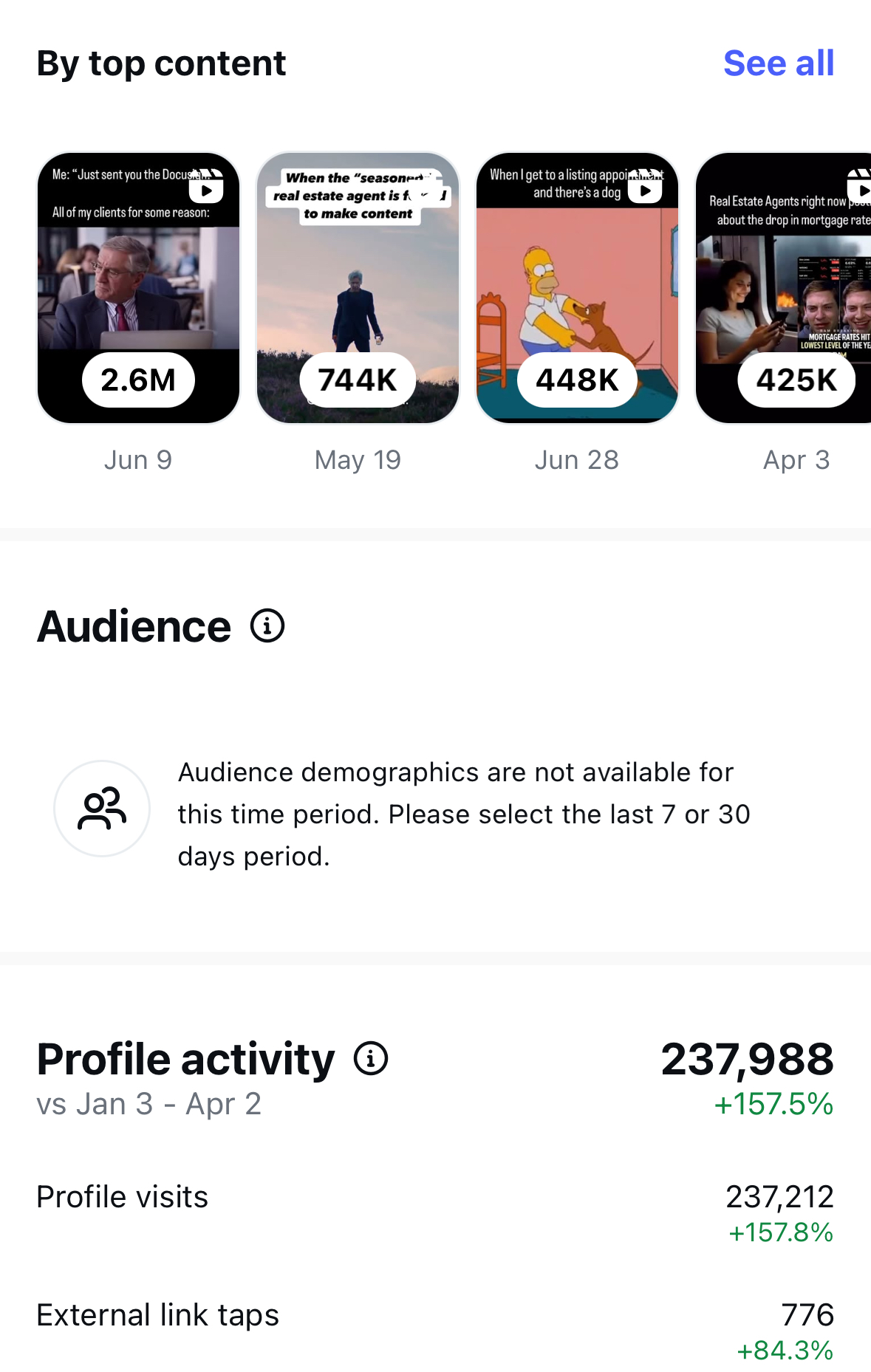
Look at:
- What was the hook?
- What was the concept? (News, hyper-local, humor, listing, personal, etc.)
- Was it a Reel, carousel, or photo?
- How many shares did it get?
- What was in the caption?
- How long was the video?
- What was the CTA?
- Was it a collab?
- What was the view rate past 3 seconds?
- How long did people watch?
- Did you use trending audio or original sound?
Do this with your best posts and figure out how to replicate them in the second half of the year. Whether it’s the hook, the post style, or just an actual repost of the video itself, if it connected once, it’ll likely connect again.
Build your second-half strategy around what performed well.
Also take note of what flopped. Scroll through and find the content that had the worst engagement. Then ask yourself why.
- Did the hook fall flat?
- Was there any real value?
- Was the audio bad?
- Was it too long?
- Was the info hard to follow?
- Was it a generic graphic no one cared about?
- Was it timely?
- Were you reading a script?
- Did it take too long to get to the point?
- Would you watch it?
Write down what didn’t work and dump it. Don’t keep posting stuff that doesn’t hit.
Newsletter + YouTube Audit
Do the same kind of exercise with your newsletter and YouTube, if you’re using either.
For your newsletter:
- Check analytics for your top 5–10 subject lines with the highest open and clickthrough rates.
- Were they short or long?
- Did they use all caps or emojis?
- What was the topic?
- Was it a market update? Something hyper-local?
Also look at the subject lines that didn’t work. And stop using that format.
For YouTube:
- What titles got the most views?
- Which thumbnails worked?
- What had the best watch time or clickthrough rate?
- What brought in the most subscribers?
- What got the most comments?
Once you know what worked, copy and paste those subject lines or titles into ChatGPT and ask it to give you 20 more “like this” to help batch future content.
If you don’t audit your content, you’re wasting your time, and your audience’s time, just throwing up posts and emails that don’t convert.
The name of the game isn’t quantity anymore. It’s quality.
Gone are the days when just posting something was enough to “stay relevant.” Social platforms will not show your content if it isn’t good. Algorithms are smart now. They know what to feed people and what to ignore.
So take a couple of days. Write down what worked. Replicate it.
Now, onto the business audit, which I know nothing about. Letting Tom Toole take over here.
Business Audit
Tom Toole’s advice in his mid-year audit blog still hits just as hard today: “You’re either ahead, behind, or on pace.” There is no fourth bucket. But to even know where you stand, you have to be tracking the right numbers.
By June 30, you should typically have 60% of your year’s business under contract or closed. If you’re not tracking your pendings, closings, and income goals, you’re flying blind.
Once you know where you are, here’s what to do next:
If You’re Ahead of Goal
You’re executing. Now the question is, can you stretch a little?
Set some short-term challenges to build on your momentum:
- Close one extra deal this month
- Take three new listings over the next 90 days
- Double down on the lead sources that have already proven to work
Whatever you do, don’t pull a 180 and try a totally new strategy just because you’re riding high. Stick to what’s working. Run the same plays, just more of them.
If You’re On Pace
Nice work. But don’t get too comfortable.
Before you celebrate being “on track,” ask yourself:
- Did you account for seasonality in your projections?
- Is your current pace sustainable, or do you need to push harder over the next quarter?
Now’s the time to fine-tune. Increase conversations, schedule one extra appointment a week, and tighten up your tracking so you can spot small issues before they become big ones.
If You’re Behind
Here’s the good news: you’ve still got six months.
But “catching up” isn’t a strategy. You need a plan.
Start by getting specific with your goal for the rest of the year. Then:
- Break it down by month.
- Break it down further by week.
- Identify how many conversations, appointments, and offers you need.
- Track your listing sign rate and offer acceptance rate.
- Adjust weekly if you fall short.
For example, if you want to sell two homes this month:
- How many new appointments do you need to go on?
- How many conversations will it take to get those appointments?
- How many offers do you need to write to close two deals?
Once you’ve answered those, reverse-engineer your daily plan. Then execute. Because without a plan, you’re just guessing.
Final Thoughts
Whether you’re auditing your business numbers or your content stats, the goal is the same: clarity. Use this mid-year checkpoint to cut the fluff, sharpen your focus, and build the kind of momentum that carries through Q4.
And remember, this isn’t a one-and-done. The agents who win year after year are the ones who build regular audits into their business. They’re not surprised by results. They’re creating them.