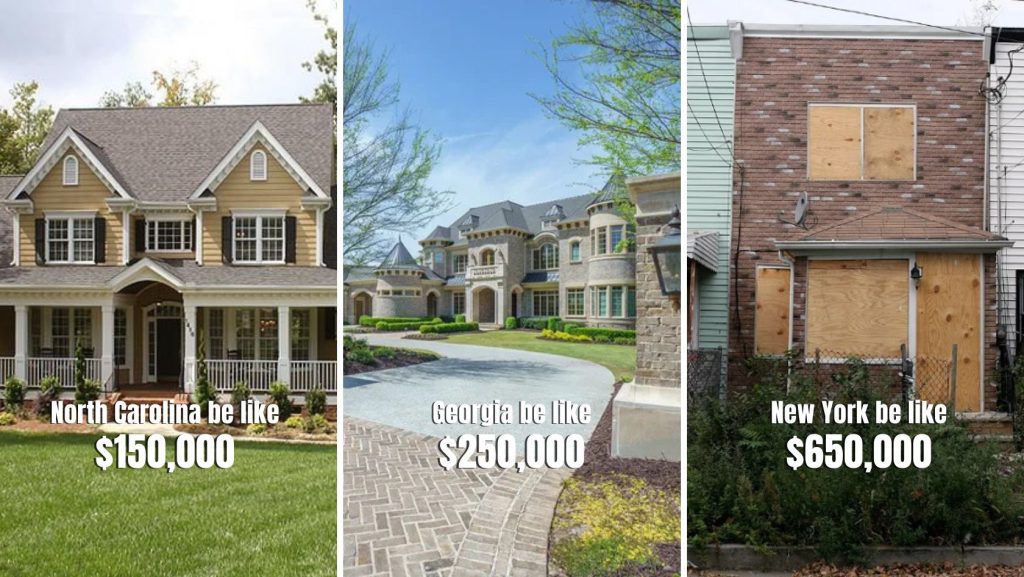
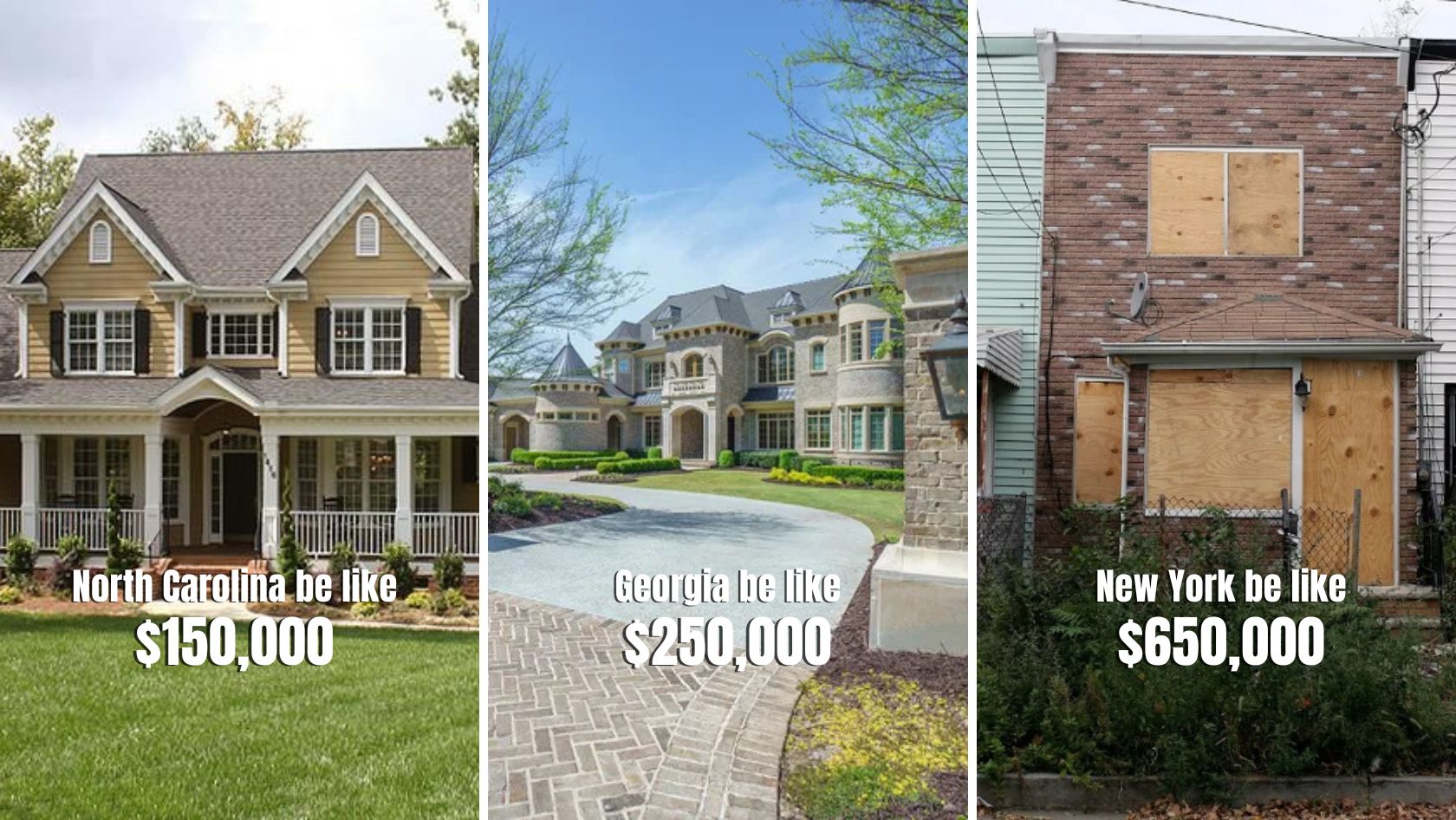

Luxury real estate isn’t just about marble floors and infinity pools—it’s about location, exclusivity, and, of course, price.
But how much do you actually need to earn to own a luxury home in different states?
The latest data from Realtor.com reveals eye-popping differences across the U.S., showing where deep pockets are a must and where luxury might be more within reach.
Do you know where your state ranks?
The Price Tag on Luxury Homes in 2025
For this analysis, Realtor.com looked at the most expensive 5% of homes for sale in each state and found the average price. Then, they calculated how much income you’d need to afford a mortgage on one of those homes, assuming a 20% down payment, a 6.89% interest rate, and that no more than 30% of your income goes to housing costs.
Let’s take a look at what luxury housing costs in each state.
Top 10 Most Expensive States for Luxury Homes
If you’re shopping in these states, even entry-level luxury homebuying requires a seven-figure—or high six-figure—income.
- New York – Avg. luxury home price: $5.49M | Income needed: $1.16M/year
- Hawaii – $5.26M | $1.1M/year
- Wyoming – $4.21M | $887,000/year
- Massachusetts – $4.10M | $863,000/year
- California – $4.05M | $852,000/year
- Connecticut – $3.61M | $
- Montana – $3.54M | $746,000/year
- Colorado – $3.34M | $703,000/year
- Rhode Island – $3.00M | $631,000/year
- Utah – $2.92 | $615,000/year
Top 10 Least Expensive States for Luxury Homes
For those looking to stretch their dollars while still living in luxury, these states offer the best deals for buyers with a minimum annual income of $158K to $204K.
- West Virginia – Luxury threshold: $750,000 | Income needed: $158,000/year
- Iowa – $750,000 | $158,000/year
- Indiana – $776,000 | $163,000/year
- Mississippi – $795,000 | $167,000/year
- Kentucky – $850,000 | $179,000/year
- Ohio – $848,000 | $200,000/year
- Nebraska – $975,000 | $204,000/year
- Louisiana – $895,000 | $188,000/year
- Kansas – $950,000 | $199,000/year
- Missouri – $925,000 | $194,000/year
The Middle 30
As for the other 30 states, here’s what buyers can expect to pay at the luxury threshold (i.e., 95th percentile), from the most expensive states to the least:
- Florida (FL): $2,665,456
- Vermont (VT): $2,660,625
- New Jersey (NJ): $2,593,534
- Idaho (ID): $2,503,317
- Arizona (AZ): $2,096,414
- Nevada (NV): $2,387,824
- Washington (WA): $1,982,245
- Oregon (OR): $1,782,536
- Maine (ME): $1,799,813
- New Hampshire (NH): $1,700,453
- Virginia (VA): $1,579,387
- Tennessee (TN): $1,499,997
- New Mexico (NM): $1,484,889
- South Carolina (SC): $1,453,195
- North Carolina (NC): $1,472,359
- Georgia (GA): $1,348,572
- Maryland (MD): $1,299,121
- Minnesota (MN): $1,295,648
- South Dakota (SD): $1,292,525
- Delaware (DE): $1,278,526
- Texas (TX): $1,249,942
- Illinois (IL): $1,221,721
- Alaska (AK): $1,149,838
- Pennsylvania (PA): $1,142,884
- Wisconsin (WI): $1,093,312
- Michigan (MI): $1,041,721
- Alabama (AL): $1,000,265
- Arkansas (AR): $965,022
- Oklahoma (OK): $949,154
- North Dakota (ND): $929,250
The Luxury Market: What’s Behind the Price Differences?
So why the massive gap? Location plays a major role, but other factors include:
- Demand and supply dynamics – High demand in coastal states keeps prices elevated.
- Tax structures – Some states offer tax benefits that attract high-net-worth buyers.
- Amenities and lifestyle – Exclusive communities, waterfront access, and entertainment hubs drive luxury pricing.
What This Means for Real Estate Agents
Luxury buyers are savvier than ever, and the market is shifting. Agents working in high-cost states need to justify the premium price tags with market insights and strong negotiation skills.
Meanwhile, agents in more affordable luxury markets have a golden opportunity to position their listings as value-driven investments.
Regardless of where you work, understanding the numbers behind the luxury market gives you an edge. Stay informed, stay strategic, and keep delivering value to your clients.
Where do you see the biggest opportunities in the luxury market right now?