

It’s happened. Despite the best efforts of the U.S. government to keep AI-related chips out of China’s reach, a Chinese AI newcomer by the name of DeepSeek just did a cannonball in the American AI pool.
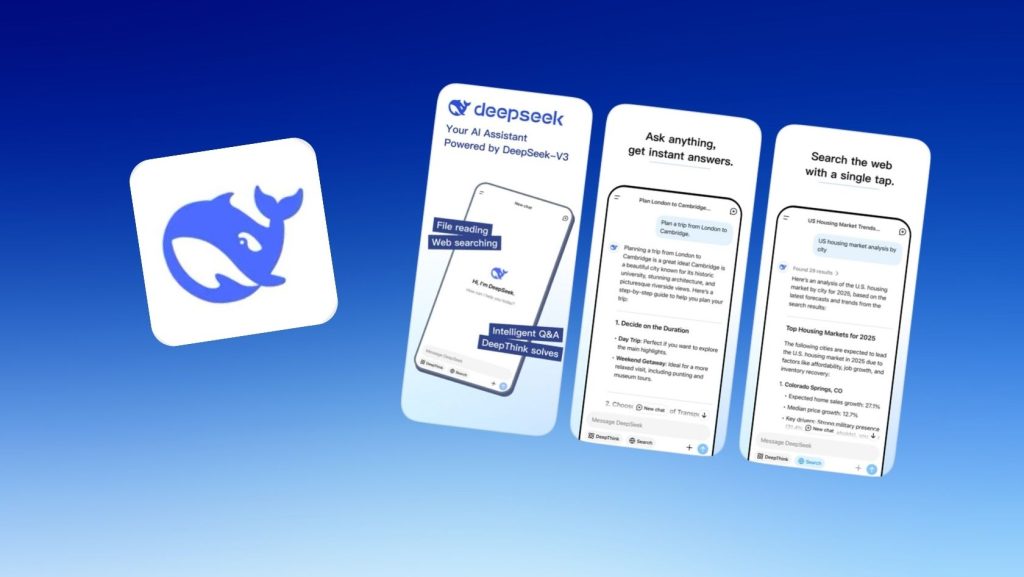
On Monday, Chinese startup DeepSeek skyrocketed to the top of Apple’s App Store in the U.S., dethroning OpenAI’s chatbot, ChatGPT, as the most downloaded free app.
The AI race isn’t just about chatbots; it’s about reshaping industries, including real estate. U.S. tech companies are pouring billions into AI infrastructure. Real estate agents should continue to keep an eye on how these advancements filter down to industry-specific innovations—like predictive pricing models, hyper-targeted marketing tools, and virtual transaction management.
This week, DeepSeek is sending shockwaves through the AI industry, raising big questions about the future of tech dominance, open-source models, and U.S.-China competition.
Here’s what you need to know.
DeepSeek’s Meteoric Rise
Founded in 2023 by Liang Wenfeng, co-founder of the AI-focused hedge fund High-Flyer, DeepSeek has quickly become a global sensation. What started as an internal research project has evolved into a company pushing the boundaries of artificial general intelligence (AGI).
What makes DeepSeek’s AI stand out?
- Open-Source Model: DeepSeek’s reasoning model, R1, is fully open-source, giving developers worldwide access to its cutting-edge technology.
- Low Development Cost: R1’s training cost was estimated at just $5.6M—less than 10% of the cost of Meta’s Llama model.
- User Praise: R1 has received accolades for its reasoning capabilities, with many calling it a game-changer.
Despite U.S. export restrictions on AI-related chips, DeepSeek has managed to achieve all this with remarkable efficiency, signaling a shift in the balance of AI power.
The Global Impact of DeepSeek
DeepSeek’s success has triggered ripples across the tech landscape. Here’s how:
Market Turbulence
- Nvidia: Shares fell nearly 16% on Monday.
- ASML: Dropped 7% in the same period.
- Nasdaq: Declined by over 3%, as analysts grappled with what DeepSeek’s rise means for the broader AI industry.
Open-Source vs. Proprietary Debate
DeepSeek’s open-source approach has reignited the conversation about the future of AI development:
- Meta’s Chief AI Scientist, Yann LeCun, praised the model for leveraging open-source technology, arguing that the entire industry benefits from this approach.
- Analysts are questioning whether billion-dollar investments in proprietary models are sustainable—or even necessary—in the face of such cost-efficient alternatives.
U.S.-China AI Arms Race
DeepSeek’s advancements have turned up the heat in the ongoing tech rivalry between the U.S. and China:
- Alexandr Wang, CEO of Scale AI, called DeepSeek’s R1 “earth-shattering” and described the competition as an “AI war.”
- U.S. companies like Meta and Microsoft are scrambling to respond, with Meta reportedly forming four “war rooms” dedicated to countering DeepSeek.
What’s unsettling for these U.S. tech giants is DeepSeek’s chatbot was reportedly built for a fraction of what its rivals spent, sparking fresh questions about the future of U.S. AI dominance and the massive investments American firms are rolling out to keep up.
Just last week, OpenAI and a group of tech heavyweights pledged a staggering $500 billion to bolster U.S. AI infrastructure.
President Donald Trump, in one of his first major announcements since returning to office, called it “the largest AI infrastructure project in history” and a crucial move to keep “the future of technology” firmly in American hands.
So, here’s this week’s reminder (or one of them) that the White House can only do so much.
Takeaway #2? Sometimes, throwing money at a problem blinds you to what you already have at your disposal. I guess we’ll see in the weeks (or months, etc.) ahead what all the scrambling in those “war rooms” will lead to.
What’s Next for AI?
The rise of DeepSeek is more than just a headline—it’s a wake-up call for the entire AI sector. Here are the key takeaways:
- Investing in Infrastructure: The U.S. government is doubling down on AI with the Stargate Project, a $100 billion joint venture involving OpenAI, Oracle, and other tech giants. This figure could rise to $500 billion over the next four years.
- AI Agents Evolving: The race isn’t just about chatbots anymore. Companies like Anthropic and OpenAI are rolling out “agentic” AI tools capable of completing complex, multi-step tasks—from vacation planning to real-time internet browsing.
- The Open-Source Question: DeepSeek’s success challenges the dominance of proprietary models and suggests that the future of AI might be more collaborative than competitive.
As DeepSeek continues to climb, the questions it raises are becoming impossible to ignore: Is open-source the way forward? Are U.S. export restrictions effective (which, at this point, sounds rhetorical)? And how will the AI landscape evolve as global players up the stakes?
One thing we know: The AI arms race just got a whole lot more interesting.