


The Trump administration wasted no time in signing executive orders yesterday—with one providing emergency price relief “defeating the cost-of-living crisis.” This includes relief for housing. On Monday evening, January 20th, the newly-inaugurated president issued a memorandum on his order tackling inflation and housing costs.
From the White House memorandum:
“I hereby order the heads of all executive departments and agencies to deliver emergency price relief, consistent with applicable law, to the American people and increase the prosperity of the American worker. This shall include pursuing appropriate actions to: lower the cost of housing and expand housing supply; eliminate unnecessary administrative expenses and rent-seeking practices that increase healthcare costs; eliminate counterproductive requirements that raise the costs of home appliances; create employment opportunities for American workers, including drawing discouraged workers into the labor force; and eliminate harmful, coercive “climate” policies that increase the costs of food and fuel.”
Byron Lazine broke it down on today’s Hot Sheet.
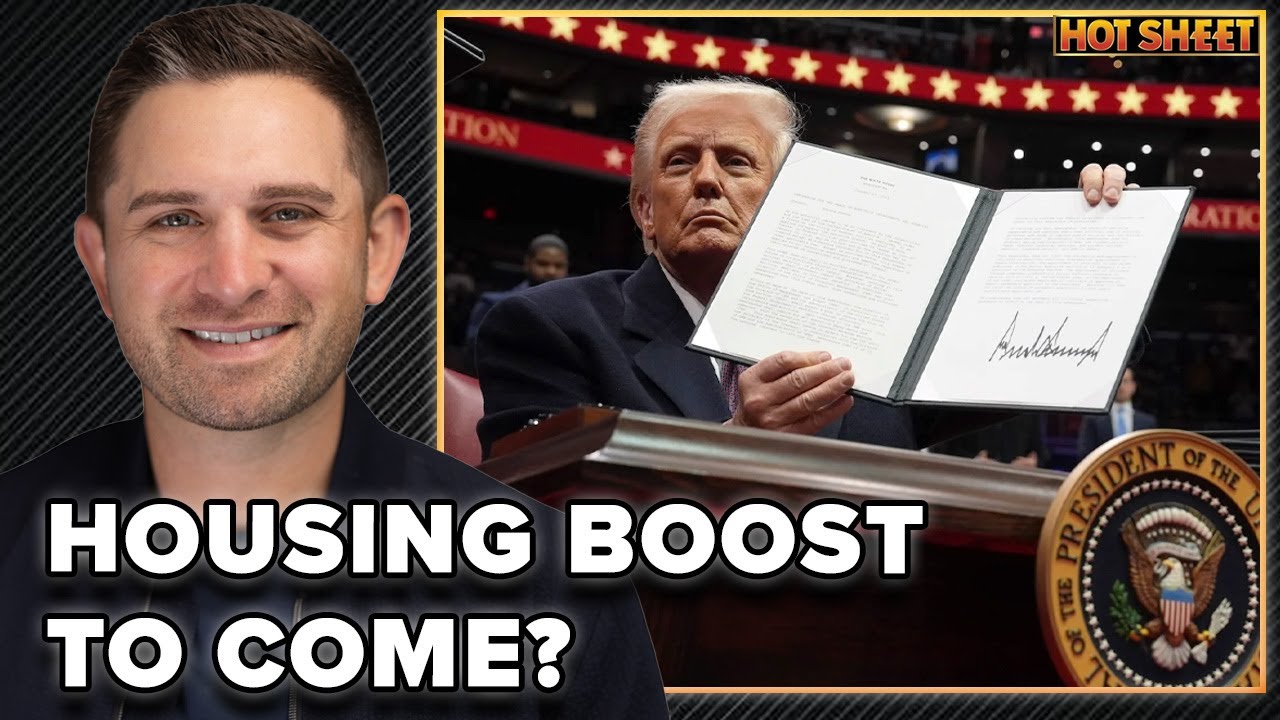
Read on for the highlights.
Emergency Housing Relief: What’s in the Executive Order?
The executive order outlines several key actions designed to combat rising costs and expand housing opportunities for Americans. Here are the highlights:
- Reducing Regulatory Burdens: Regulatory requirements currently account for 25% of the cost of constructing a new home. Trump’s order directs agencies to eliminate these inefficiencies.
- Restoring Purchasing Power: According to the new administration, the Biden administration’s regulatory policies added nearly $50,000 in costs per household. In contrast, Trump’s first-term agenda cut these costs by $11,000 per household.
- Expanding Housing Supply: The order prioritizes increasing housing availability while reducing administrative expenses and other rent-seeking practices.
Trump’s move isn’t just about homes. It also targets broader cost drivers, such as food, fuel, and home appliances, while promising to create new job opportunities by bringing discouraged workers back into the labor force.
At this point, it’s not clear how he proposes to do that, but as the game plan unfolds, we’ll share the latest developments.
HousingWire reported on what is known about Trump’s plan as it relates to housing—we break it down below.
Trump’s Approach: Regulatory Cuts and the Housing Market
If one thing is clear, it’s that Trump is doubling down on his anti-regulation stance. Here’s what’s in the works:
- Creation of the Department on Government Efficiency (DOGE): Led by Elon Musk, DOGE will oversee a top-down review of federal agencies to eliminate inefficiencies.
- Freeze on Regulations: Trump signed an order to prevent the creation of any new federal regulations, signaling a hard reset for housing-related policies.
- HUD Overhaul: HUD is in Trump’s crosshairs for a “massive reset,” as proposed in the Project 2025 transition plan. Newly confirmed HUD Secretary Scott Turner will focus on maximizing the department’s budget and reversing what the administration calls “corrosive progressive ideologies.” Turner brings experience overseeing $50 billion in private investment in opportunity zones during Trump’s first term.
FHFA and CFPB: Key Appointments and Their Impact
Trump’s picks for key housing agencies signal major shifts in policy that could directly affect housing costs and adjacent expenses like energy and building materials:
Federal Housing Finance Agency (FHFA)
Trump’s nominee, Bill Pulte, brings a homebuilding pedigree as the grandson of William Pulte, founder of PulteGroup. Pulte’s background in construction investments suggests a pro-industry stance that could streamline housing finance policies.
The FHFA oversees Fannie Mae, Freddie Mac, and Federal Home Loan Banks, which are crucial to housing liquidity. Pulte’s leadership is expected to focus on ensuring these entities support housing affordability while driving efficiency in financing.
Consumer Financial Protection Bureau (CFPB)
Trump’s administration has long targeted the CFPB, with Elon Musk openly advocating for the bureau to be “deleted.” This rhetoric has made finding a replacement for Rohit Chopra’s role challenging, as potential candidates appear reluctant.
After all, why put your name in for a position that might not survive the first quarter?
During his first term, Trump’s CFPB director, Kathy Kraninger, reduced regulations, earning praise from the mortgage industry. A similar approach this term could lower compliance costs for lenders, potentially reducing borrowing costs for homebuyers.
Tariffs and Their Role in Housing Costs
Trump’s trade policies remain a wildcard for the housing market. On Monday, he issued an order to study potential tariffs, with plans to enact 25% tariffs on Canadian and Mexican goods starting February 1. Here’s how this could play out:
- Building Materials: Canadian softwood lumber has historically been hit hard by tariffs, with 2018 duties adding nearly $9,000 to the cost of building a single-family home.
- Energy Costs: Broader tariffs on imports could increase the cost of fuel, impacting transportation and construction expenses.
HousingWire Lead Analyst Logan Mohtashami noted that Trump’s approach to tariffs tends to be tactical, with an eye on achieving trade leverage rather than sparking a full-scale trade war.
That said, the immediate effect on building costs could still ripple through the market.
What Does This Mean for Housing Professionals?
For those in real estate, mortgage, and homebuilding, this executive order signals both opportunities and challenges. Here are the potential impacts:
- Lower Construction Costs: With regulatory costs under scrutiny, homebuilders could see relief from the 25% markup tied to compliance.
- Increased Housing Supply: A streamlined approval process and reduced administrative expenses may accelerate housing development.
On the flipside, Trump’s plans for 25% tariffs on Canadian and Mexican goods starting February 1 could increase costs for imported materials, offsetting the savings from reduced regulatory costs.
The Big Picture: What’s Next?
Trump’s housing priorities align with his broader vision of slashing regulations, restoring “America First” policies, and tackling inflation. With 100 executive orders already promised—including major moves on immigration, energy, and trade—the housing market is bracing for a significant shakeup.
From regulatory freezes to leadership changes at HUD, FHFA, and CFPB, the coming weeks will determine whether these policies deliver meaningful relief or spark new challenges. It’s unclear at this point whether Trump intends to privatize Fannie Mae and Freddie Mac, but a thorough audit may be on the agenda.
One thing’s for certain: Housing professionals will need to stay sharp as these changes roll out. Stay with us as we learn more.