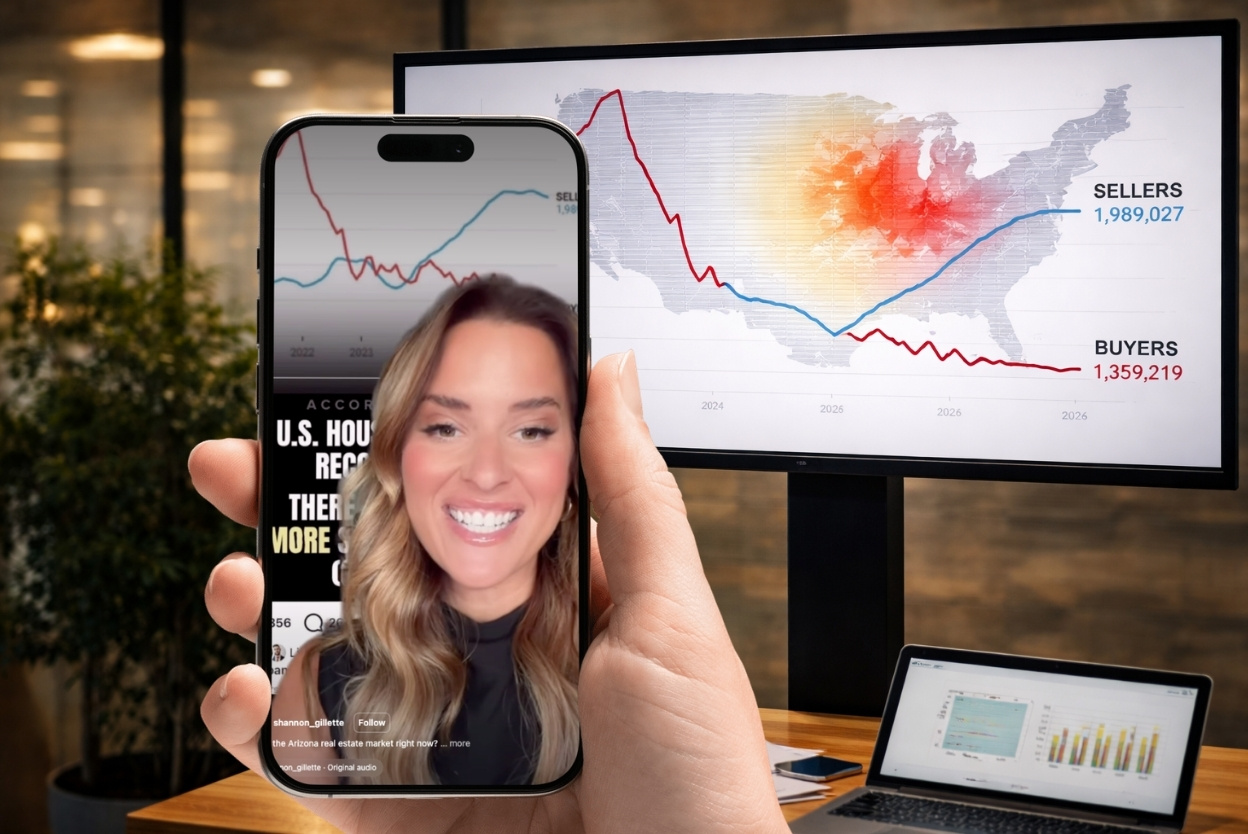

That stat about there being more sellers than buyers is everywhere right now, but most people still don’t know what to do with it.
Shannon Gillette turned that same data point into a reel that actually explains what’s going on in her local market.
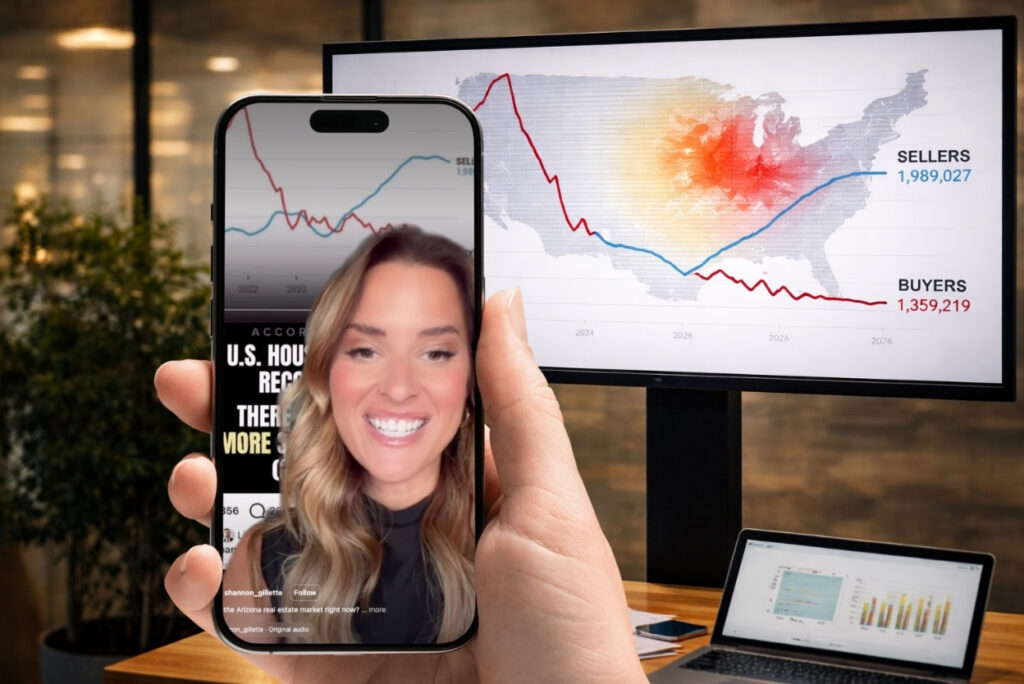
Standing in front of the graphic, she answers the question every client is asking right now, “How is the real estate market?”
Then she takes a national number and turns it into guidance sellers can actually use.
The reel centers on a single point pulled from the BAM post: there are 46.3% more sellers than buyers. She walks through what that means in plain language, specifically for sellers.
It shows how to turn a national market update into local, client-facing content that feels relevant the second someone watches it.
View this post on Instagram
Why This Format Works on Instagram
Shannon doesn’t try to cover the entire market. She builds the reel around one impactful data point and stays there. That alone makes the content easier to follow and easier to remember.
She opens by framing the exact question people are already asking:
“Everybody wants to know: how is the real estate market?”
Then she anchors the answer to something visual and credible:
“Well, this post by BAM Media sums it up perfectly. Because …”
From there, she brings the viewer into the data:
“Look at this. 46.3% more sellers than buyers right now.”
What happens next is where the reel really earns attention. She translates that stat into real-world implications for sellers, setting expectations without overcomplicating it.
Here’s what she does that most agents miss:
#1: Connects the data to a real decision sellers have to make.
“So, what does that mean for you? If you are selling a home, well, it means you have to be strategic who you hire to sell your property: an experienced agent, a strong marketing plan.”
#2: Addresses timing in a way that feels grounded and honest.
“And you have to have patience because the average home is taking sixty to ninety days to sell. Homes are still closing and selling every single day. Totally normal for it to take some time to sell.”
#3: Weaves in a real-life moment that feels human.
At one point, you hear a dog barking in the background, interrupting Shannon, who reacts with a sigh, pauses the video, and then jumps back in.
“Okay, I’m back. Apparently, my dogs wanted to say something about the housing market as well.”
By the time she closes, the audience understands the market, what it means for them, and who to reach out to next:
“And let me know if the Gillette Group can help you with any of your Arizona real estate needs.”
Everything in the reel builds in a straight line from awareness to action.
How Agents Can Replicate This Strategy
If you want to use this format, keep it tight and intentional. The strength of Shannon’s reel comes from how clearly each piece builds on the last.
Start with a stat people are already seeing.
From there, focus on interpretation. Your job is to explain what it means for someone making a real decision in your market.
Keep your delivery natural. You don’t need perfect lighting or a polished script. The moment with her dogs staying in the reel works in her favor because it feels real.
Here’s a simple way to structure your own version:
- Open by framing the question your audience is already asking
- Put the stat on screen so people can see it while you talk
- Break down what the number means in plain language
- Connect it to a decision point, pricing, timing, or strategy
- Set expectations so clients aren’t surprised later
- Close with a clear invitation to reach out
You don’t need to stack multiple data points or try to sound like an economist.
One stat is enough when you explain it well in a way that leaves your audience feeling smarter.
How to Replicate what National Stats Don’t Match What’s Happening Locally
If the national headlines are not lining up with what you are seeing in your market, you don’t have to skip the content. In fact, it can actually make the post even stronger.
Use the national stat as the setup, then go the reverse angle and use this formula to say, “This is NOT what’s happening in [Your Market],” and go from there. That gives you a way to join the bigger conversation while still bringing it back to what your audience actually cares about most: what things look like where they live.
This is a format you can reuse every week. Find a strong national stat, put it on screen, and turn it into something your local audience can actually use.