Key Details:
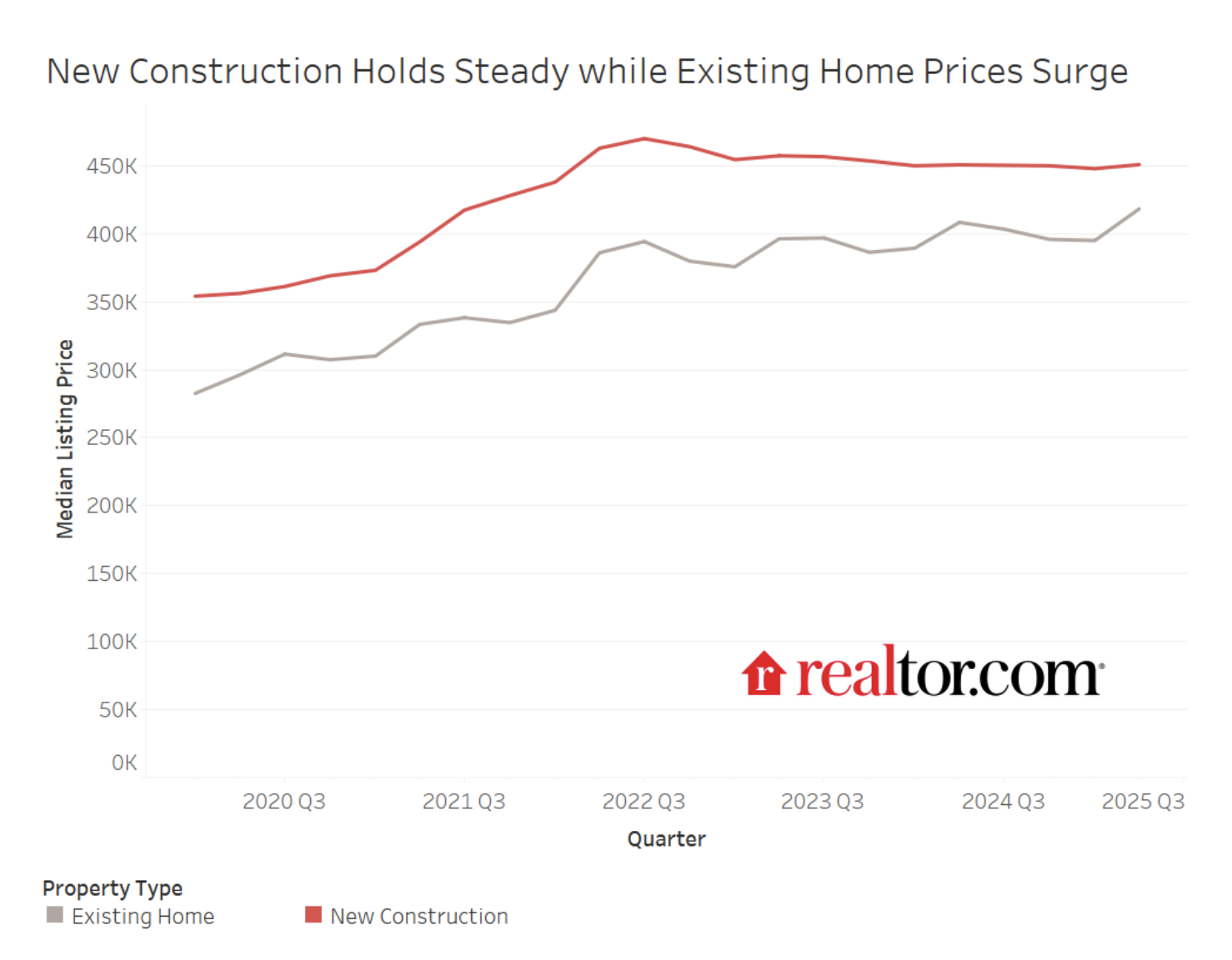
- New reports from NAHB and Realtor.com show existing homes outpriced new construction by $18,600 in Q2 2025, the largest gap on record favoring resale homes.
- New home prices fell 0.9% year over year, while resale prices rose 1.7%.
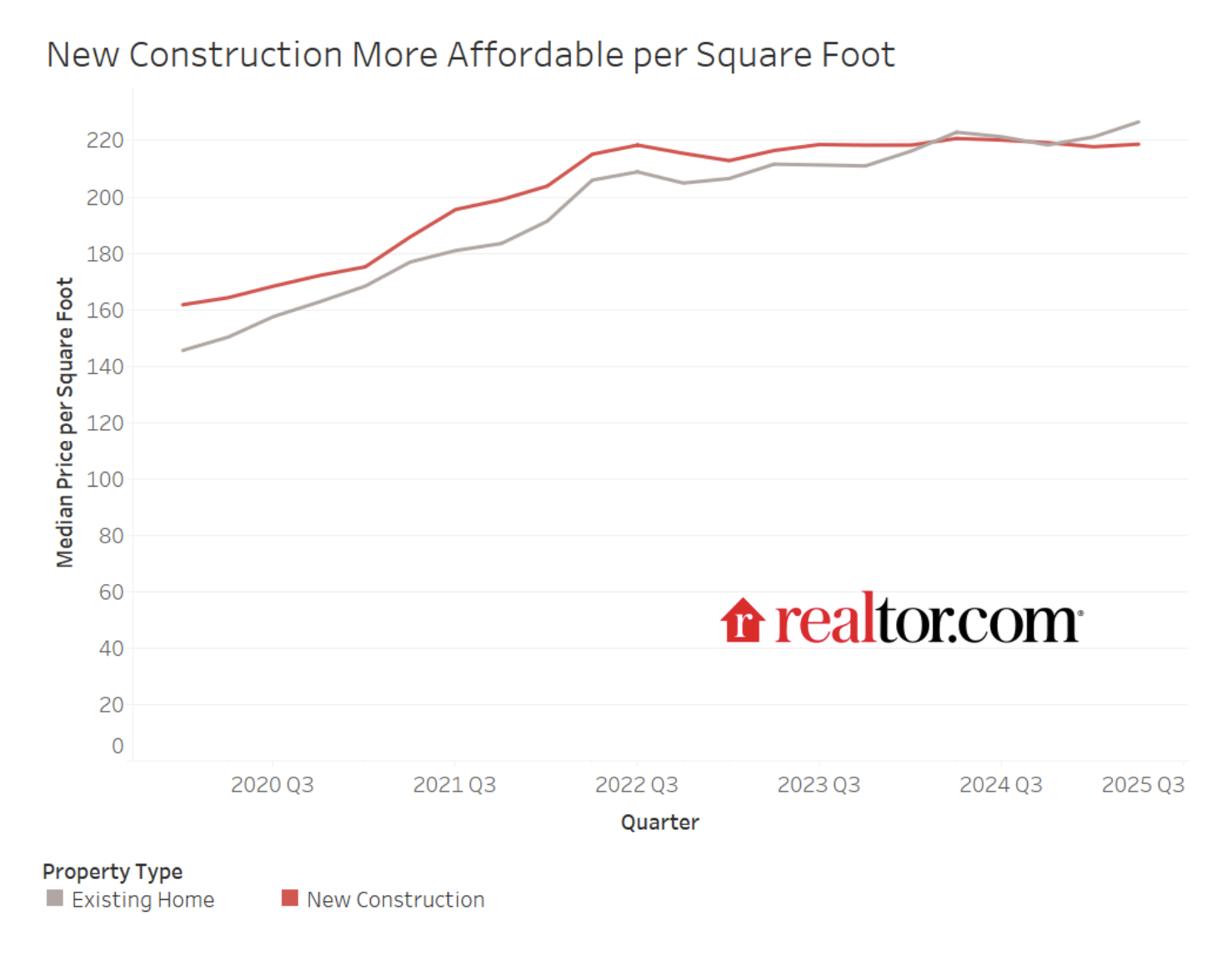
- On a per-square-foot basis, new builds averaged $218.66 compared to $226.56 for existing homes.
- In the South, existing homes sold for $115,000 more than new construction, while new-construction listings surged 37.3% since Q1 2020.
It’s not the first time existing homes have been more expensive than new construction, but it is the widest gap on record, with existing home prices in the lead.
In the second quarter of 2025, the median price of an existing home reached $429,400. That’s $18,600 more than the median price of a new single-family home, which dropped to $410,800.
According to new data from the National Association of Home Builders (NAHB), this gap marks the largest on record where resale homes have outpriced new construction.
At the same time, Realtor.com reports that the price premium on new construction has dropped to just 7.8%, the lowest in their data history.
This shift, which first appeared in 2024, represents more than just a pricing anomaly. It reflects a realignment of buyer behavior, seller expectations, and builder strategy.
Agents working with buyers, sellers, and investors should be ready to explain what’s driving the trend and what it means moving forward.
What’s Driving the Pricing Flip?
Historically, new construction came with a built-in premium. From 2010 to 2019, new homes averaged $66,000 more than resale. That gap narrowed over the past five years to about $24,800.
But by mid-2024, the relationship flipped, and now that pricing gap favors buyers shopping new.
A few factors are behind this trend:
- Tight resale inventory is pushing up existing-home prices. Many homeowners locked into ultra-low mortgage rates are staying put, limiting supply and keeping prices elevated.
- Builders are adapting to affordability challenges. They’re shrinking lot sizes and square footage, ramping up incentives, and targeting lower-cost regions, especially in the South and West.
- New-home pricing is more flexible. Builders can adjust more quickly than individual sellers. In Q2 2025, NAHB reported a 0.9% year-over-year decline in the median price of new single-family homes. That marked the ninth straight quarter of annual price drops.
- Existing homes are trending up. Resale prices have increased 1.7% year over year, with eight consecutive quarters of gains.
While resale homes are commanding higher prices, especially in supply-constrained markets, builders are actively working to meet buyer demand at more competitive price points.
Where the Gap Is Growing Fastest
Regionally, the pricing flip plays out differently. According to NAHB, the South saw the biggest gap, with existing homes selling for $115,000 more than new builds. In the West, resale homes outpriced new ones by $4,200.
But in the Northeast, the more traditional pattern still holds. New homes there sold for $269,500 more than existing homes in Q2.
Realtor.com adds more context to this divide. In the South, new-construction prices are dropping the fastest. Among the top metros with the largest annual declines in new-build pricing:
- Little Rock, AR: down 15.6%
- Austin, TX: down 8.5%
- Jacksonville, FL: down 7.8%
- Cape Coral, FL: down 7.4%
These declines reflect a combination of increased builder competition, slowing buyer demand, and an influx of resale listings entering the market.
The Per-Square-Foot Advantage
Realtor.com also highlights a key detail often missed in top-line price comparisons: new construction offers a price advantage on a per-square-foot basis. Nationally, new homes averaged $218.66 per square foot, compared to $226.56 for existing homes.
This metric is especially important for first-time buyers or cost-conscious shoppers comparing their options. New builds are generally larger, newer, and more energy-efficient, and the lower per-foot price gives them a strong value argument.
Still, this price advantage isn’t consistent across the country. Only 31 of the 100 largest metros showed a per-square-foot discount for new construction. Most of those markets are located in the South and West, where new-home inventory is more abundant.
Inventory Shifts Are Fueling the Trend
New-construction listings have increased 37.3% since Q1 2020. Resale listings, by comparison, are up 15.4%, with most of that growth happening in just the past quarter. This recent wave of existing-home inventory is helping explain why the share of new homes for sale fell to 16.4%, even though the absolute number of new listings continues to rise.
According to Realtor.com, the South remains the only region where new construction accounts for a larger share of listings than resale. Builders in that region have kept activity high, and their pricing strategies reflect strong competition and abundant inventory.
In contrast, the Northeast remains the most inventory-constrained region in both new and existing homes. That’s also where the pricing premium for new builds remains highest.
What Agents Should Know
This market flip is a conversation starter, not just a statistic. It changes how agents advise buyers weighing new builds versus resale, and how they guide sellers who assume their home’s price will be higher simply because it already exists.
Here are a few takeaways for agents across the board:
- Buyers may find better deals in new construction, especially in the South or Midwest, and especially when builder incentives are on the table.
- Sellers need a reality check if they’re pricing based on last year’s comps or assuming buyers will pay more for older homes with fewer perks.
- Investors should pay close attention to regional trends. In some markets, buying new may offer better long-term value than picking up existing inventory.
The pricing flip between new and existing homes is not a temporary blip. It’s a reflection of how the market is evolving, and why local context matters more than ever.