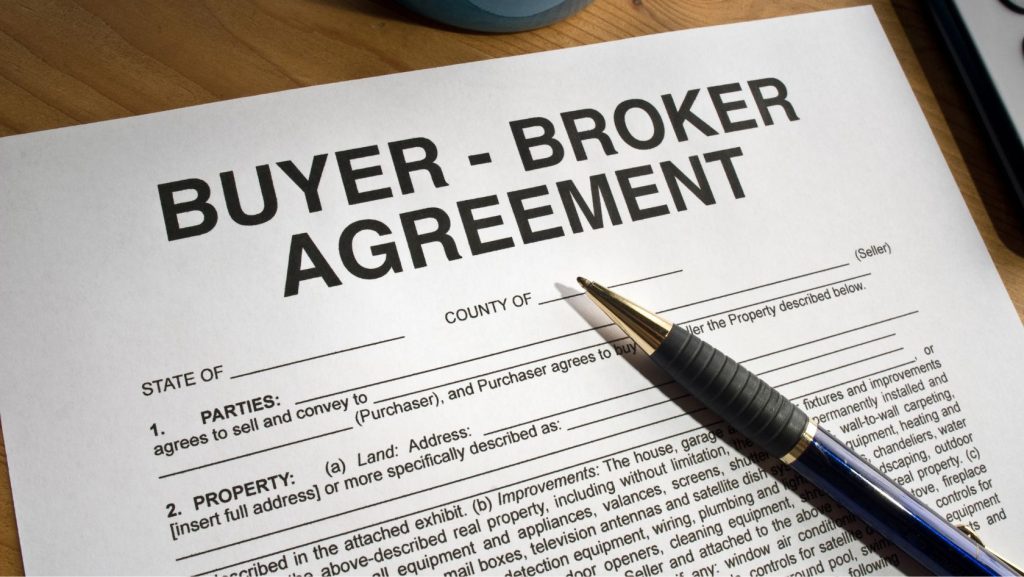


Key Details:
- A new report by contract law professor Tanya Monestier, author of recent CFA reports, highlights her key concerns with buyer agreements circulating post-NAR settlement.
- The report details various concerns Monestier has with the new buyer agreements, based on her analyses of documents from at least 18 different Realtor associations.
A new report by law professor Tanya Monestier lays out her concerns about buyer representation agreements circulating post-NAR settlement.
Monestier is the same author of reports shared by the Consumer Federation of America (CFA), detailing the flaws in both the listing agreement and buyer representation agreement issued by the California Association of Realtors (C.A.R.).
From the executive summary:
“In the wake of the National Association of Realtors’ settlement, state and local realtor organizations and private brokerages have revamped their forms—in particular, their buyer representation agreements and seller listing agreements—to reflect the changes effected by the settlement.
“I have reviewed several dozen of these new forms. By and large, they are all very complicated and will not be understood by the average buyer and seller. Many of these contain terms that would come as a surprise to a buyer or seller, and terms that signal how realtors plan to circumvent the NAR Settlement.
“This report is intended to shine light on some of the terms in buyer representation agreements that buyers should be aware of, or that warrant additional scrutiny in light of the NAR Settlement.”
Monestier’s report serves as a critical examination of real estate business practices following the NAR settlement, highlighting terms buyers need to be aware of to protect themselves. The objective is to help new homebuyers avoid the potential pitfalls in many new buyer agreements.
Read on for an overview of Monestier’s major concerns explained in the report.
Sources for the new critical report
Michael Ketchmark, lead attorney for plaintiffs in the Sitzer/Burnett case, isn’t the only lawyer closely analyzing the industry’s new forms.
For her new report, Monestier reviewed all the buyer representation forms she was able to access due to their being publicly available, made accessible online through videos, or sent to her privately.
These include forms drafted or promulgated by the following Realtor associations:
- California Association of Realtors
- Texas Realtors
- Florida Realtors
- NC Realtors (North Carolina)
- New Mexico Association of Realtors
- Northwest Multiple Listing Service (NWMLS)
- Colorado Association of Realtors
- Tennessee Association of Realtors
- Western New York REIS
- Georgia Association of Realtors
- Oklahoma Association of Realtors
- Pennsylvania Association of Realtors
- Minnesota Realtors
- Oregon Real Estate Forms
- Northern Virginia Association of Realtors
- Rhode Island Association of Realtors
- Massachusetts Association of Realtors
- Utah Association of Realtors
- South Carolina Realtors
Most of the buyer representation agreements issued by Realtor associations are not available for casual viewing. And Monestier makes it clear she’s not assuming every buyer agreement form out there is like the ones she analyzed for this report—only that these have allowed her to identify certain patterns that can put consumers at a disadvantage.
One of those patterns echoes an observation she made in her report on the CAR forms:
“Leaving aside the substance of the forms for a moment, it is important to make the same observation I made with respect to the California Association of Realtors’ (CAR) forms earlier this summer: most of these forms are not understandable to the average home buyer or seller. You should not need to hire a lawyer to understand a listing agreement or buyer representation agreement.”
Concerns with new buyer representation forms
Aside from the complexities of the agreements, Monestier notes several provisions—pulled from various buyer representation agreements—that concern her. Depending on how these provisions are filled out, she believes several could potentially violate the NAR settlement agreement.
These include:
- Commission Owed Even If Transaction Does Not Close: Many agreements reviewed by Monestier require the buyer to pay full commission if the transaction does not close due to the buyer’s breach. This is often in fine print and may come as a surprise to buyers, potentially leading to significant financial consequences if the deal falls through.
- Modification to Increase Buyer Agent Compensation: Some contracts allow the buyer’s representation agreement to be modified to increase the buyer’s agent’s compensation after the agreement has been signed. Monestier argues that this practice is not permitted under the NAR Settlement and places undue pressure on buyers.
- Bonuses from Sellers: Certain agreements allow agents to collect bonuses from sellers, which could incentivize agents to steer buyers towards specific properties. Monestier suggests that this practice may violate the NAR Settlement and can be detrimental to buyers’ interests.
- Extra Fee for FSBO (For Sale By Owner) Transactions: Some agreements include provisions that could allow the agent to charge a different fee if the seller is unrepresented. If the fee is higher than for represented sellers, it could discourage buyers from purchasing FSBO properties and result in higher costs for the buyer.
- Potential Double Commission: Certain contracts contain provisions that could result in the buyer’s agent collecting full commission from the buyer, in addition to receiving compensation from the seller.
- Confusing Holdover Provisions: Many buyer agreements include complex holdover provisions, making it difficult for buyers to understand when they are still obligated to pay their former agent after the agreement ends.
- Guaranteed Minimum to Maximum Compensation: Some agreements include a provision that guarantees a minimum level of compensation to the agent, with the potential for the agent to earn more if the seller offers additional compensation.
- Ambiguous Compensation Provisions: One contract she reviewed seems to allow the buyer’s agent to collect whatever amount is being offered by the seller’s agent, which could potentially exceed the agreed fee in the buyer representation agreement.
- Scary Warnings: Some agreements include warnings in bold and all caps that might scare buyers into certain actions, such as always being accompanied by their agent at open houses, which may not be entirely accurate.
- Lack of Disclosure About Referral Compensation: Monestier points out that these forms often do not disclose whether the agent may receive compensation for referrals to third-party service providers, which could influence the agent’s recommendations.
Read the full report for more information, including screenshots of buyer agent forms that showcase her concerns.