
Nearly half of the people planning to buy a home this year say they’ll use AI tools during the process, according to NerdWallet’s 2026 Home Buyer Report.
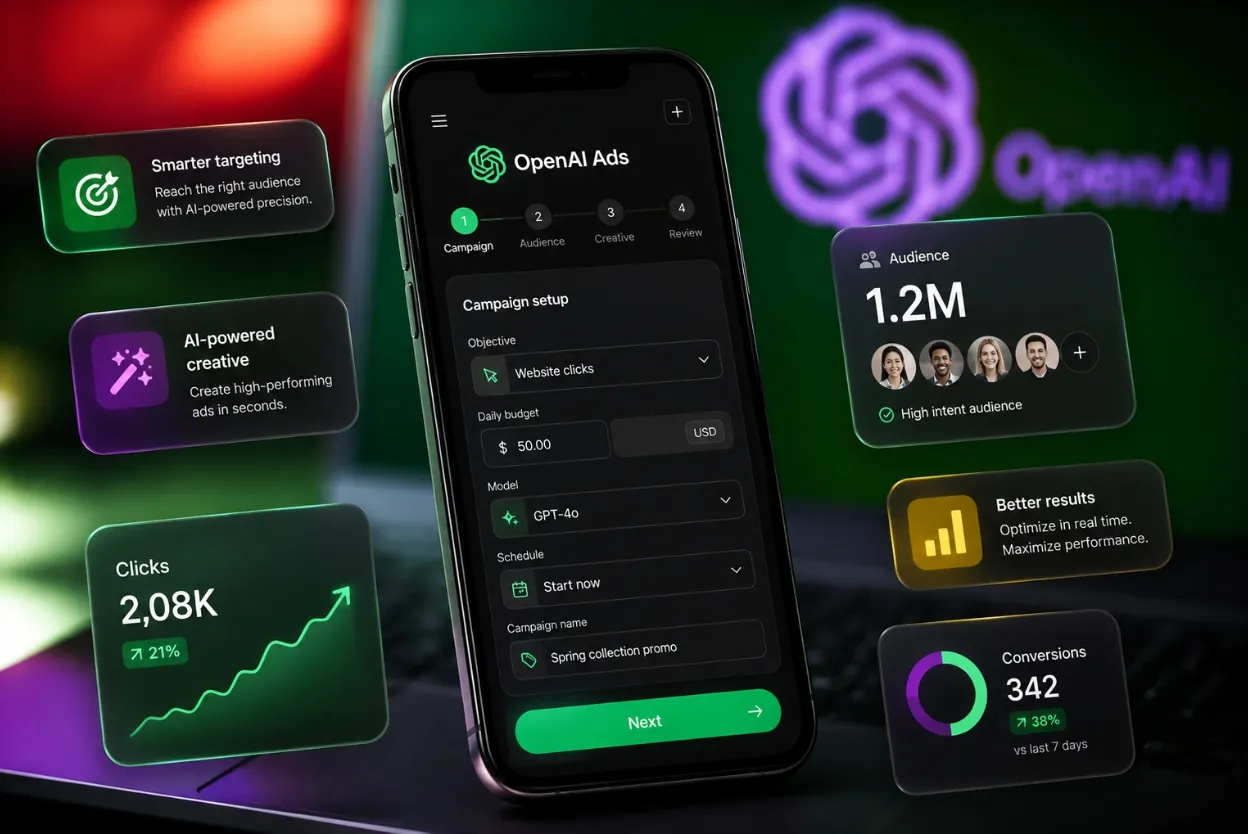
On May 5, OpenAI launched a self-serve Ads Manager, putting you in front of those buyers mid-search.
This is the same early-mover window that existed with Google AdWords in 2005 and Facebook Ads in 2010. It’s cheaper and less competitive right now, and that won’t last.
Here’s what you need to know before you get started.
What ChatGPT Ads Are
ChatGPT already has hundreds of millions of users. A significant chunk of them are on the Free and Go tiers, which is where ads are shown. These are people in the middle of active research sessions, asking detailed questions and reading detailed answers. That’s the environment your ad shows up in.
When an ad appears, it sits in a clearly labeled, visually distinct sponsored section separate from ChatGPT’s organic response. OpenAI has been explicit about this: ads don’t influence what ChatGPT actually tells the user. The answer stays objective and your ad sits alongside it.
The targeting works differently than anything you’re used to on Google or Meta. Instead of bidding on keywords, you’re matching to conversational intent.
The system reads the full context of what a user is trying to accomplish and serves your ad accordingly. Someone asking detailed questions about buying a home in a specific city doesn’t need to type “find me a real estate agent” for your ad to be relevant to them.
A few key details on how the platform is set up:
- Ads appear to logged-in adult users on the Free tier and Go tier ($8/month)
- Pro tier ($20/month and up) users do not see ads
- Ads are always clearly labeled as sponsored and visually separated from the AI’s answer
- Advertisers only receive aggregate performance data (views and clicks), not individual user information
- Ads won’t appear near sensitive topics like health, mental health, or politics
Where Buyers and Sellers Are Doing Their Research
Real estate buyers often spend months researching before they ever contact an agent. That entire research window used to be scattered across Google, Zillow, YouTube, and Reddit.
ChatGPT is pulling a significant portion of that behavior into a single conversational interface. Today, 48% of prospective buyers plan to use AI during their home search, and about 75% of them expect it to be part of the process.
Seller intent is in there, too. Homeowners considering listing are asking ChatGPT things like how to know if it’s a good time to sell, what to fix before listing, and how to find a reputable agent in their area.
Seller leads have historically been underserved in digital advertising, and these conversations can put you forward as the best agent to call first when they’re ready to get the ball rolling.
Here’s the cost picture right now:
- Estimated $3-5 per click
- No minimum spend requirement
- No waitlist to get started
When Google AdWords launched, early advertisers built durable advantages before the market got crowded and costs climbed. Facebook Ads followed the same pattern.
ChatGPT Ads are at that same early stage.
What You Can Target
This is where ChatGPT Ads get interesting for real estate. Because the targeting is based on conversational intent rather than keywords, you’re reaching people based on what they’re actually trying to figure out, not just the specific words they typed into a search bar.
For real estate, that means you can put your ad in front of someone who’s deep in a conversation about buying or selling, even if they haven’t explicitly searched for an agent yet. The platform reads the context and matches your ad accordingly.
The intent signals most relevant to real estate agents:
- Neighborhood research queries (signals active buyer intent in a specific market)
- Home valuation questions (signals potential seller intent)
- Mortgage and financing questions (signals early-stage buyer)
- Agent selection and vetting questions (signals a buyer or seller who’s close to making a move)
Geographic targeting at the city or neighborhood level isn’t fully built out yet, but it’s on OpenAI’s roadmap. For now, the intent-based targeting alone puts you in front of a more qualified audience than most of what’s available on traditional ad platforms.
How to Get Started
The self-serve Ads Manager is live at ads.openai.com. Ad creative for ChatGPT needs to be written differently than what you’d run on Google or Meta. Users are in a conversational, text-based environment and they have high expectations for authenticity. An ad that feels like a hard sell in that context will get an eye-roll. At most.
Lead with value instead. “Get a free home valuation for [your city]” will outperform “Call us, we’re the #1 team in [your city].” Keep your call to action low-friction and hyper-local.
Your landing page needs the same treatment. ChatGPT traffic arrives more informed than typical search traffic.
Someone clicking your ad has likely already had a detailed conversation about their real estate situation, so a generic homepage won’t do you any favors.
Build a page that speaks directly to what they were researching. If you’re targeting buyer intent, speak to buyers in your specific market. If you’re targeting seller intent, offer something immediate and useful like a free CMA or a local market snapshot.
A few practical setup notes:
- Sign up at ads.openai.com
- Add UTM parameters to every ad URL so you can track performance in your analytics platform or CRM
- Use a 12-month attribution window to account for the length of a real estate sales cycle
- Track lead quality by intent type, not just volume
This Is the Early Window
The self-serve Ads Manager has been live for less than a month. Additional features, including more granular geographic targeting and deeper audience tools, are still rolling out. The platform is early, which means costs are low and competition is thin.
That changes as more advertisers figure it out. Getting in now means building platform knowledge and performance history before the market gets crowded.