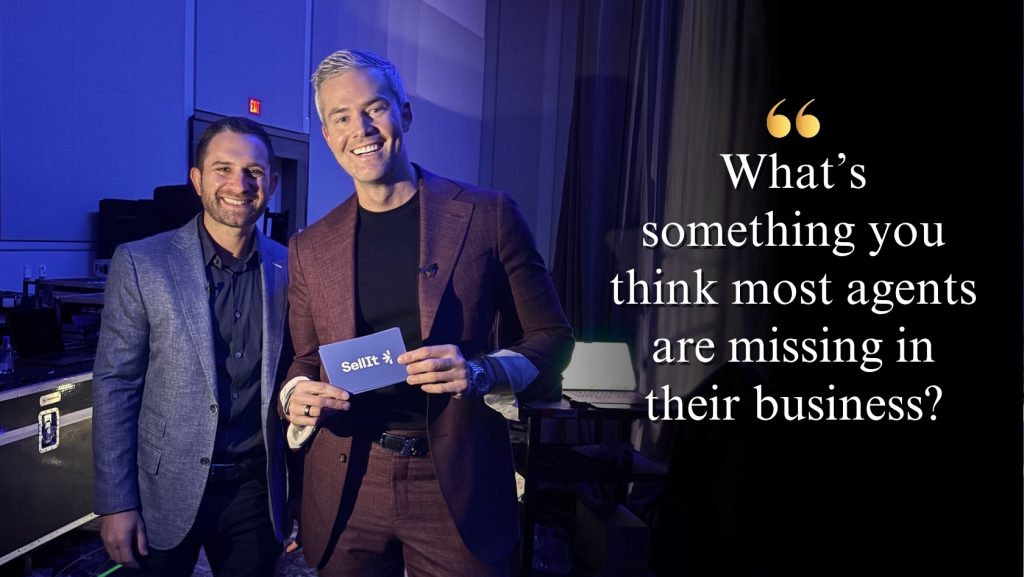
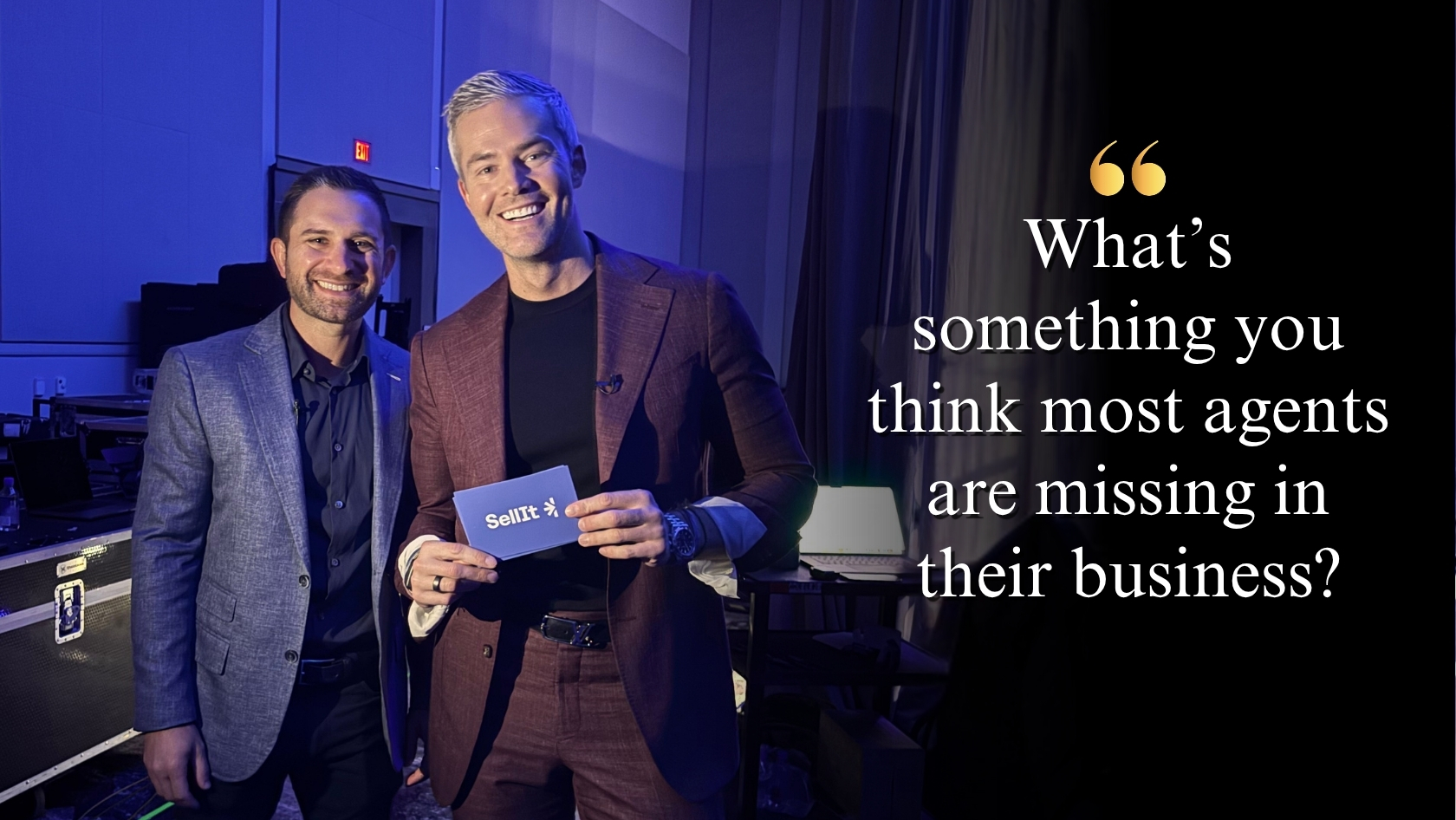

When Ryan Serhant and I sat down for a fireside chat at the SERHANT. Sell It 2025 event in Orlando, he asked me a simple question:
“What’s something you think most agents are missing in their business?”
His answer and mine came down to the same thing: too many people in this business have no idea what’s actually working for them.
They’re playing the game, but they’re not keeping score.
If you want to build a business that lasts, you need to know where every deal comes from, what it costs you to get it, and how to do it better next time.
Here are five blind spots agents have that I see over and over again, and what I would do differently if I were starting over.
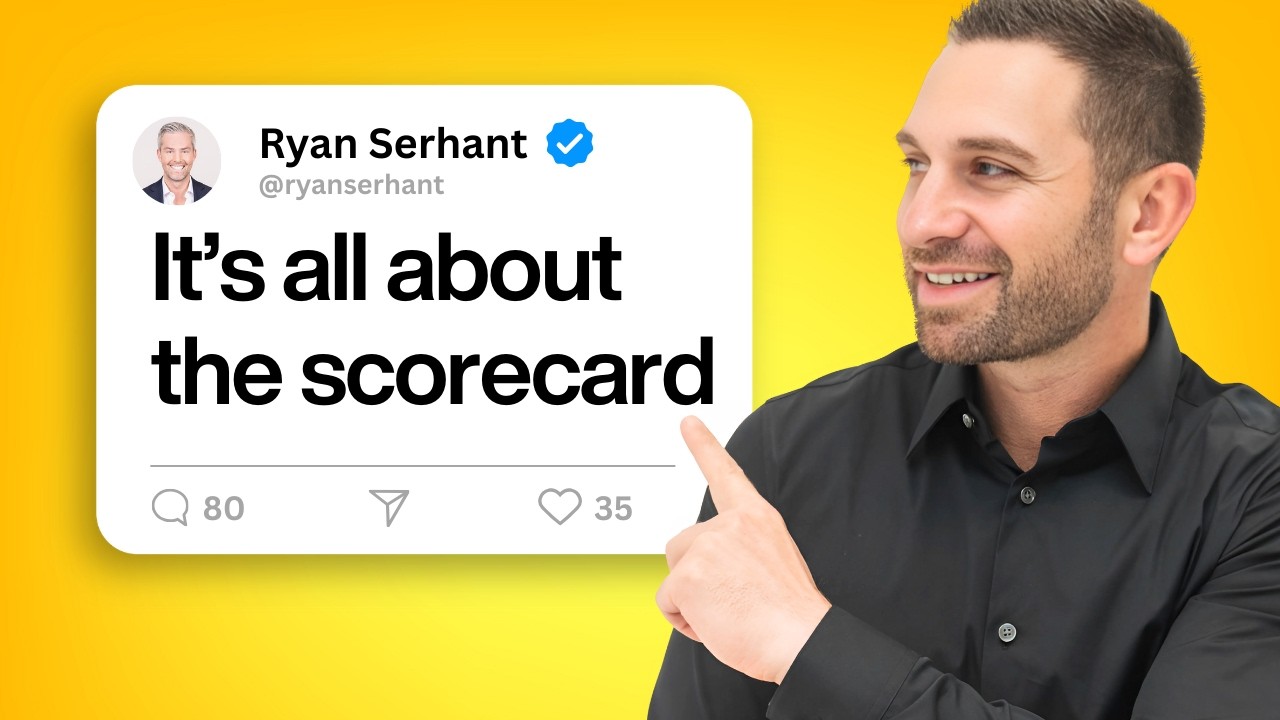
Blind Spot #1: No Scorecard
Most people say they’re “tracking their numbers,” but when you ask to see the sheet, there isn’t one.
The truth is, you can’t fix what you don’t measure. Without a scorecard, your business becomes a guessing game. You have no idea which activities are profitable and which are just keeping you busy.
So, how do you fix that? Start simple.
I like a 90-day plan, but if that feels like too much, start smaller. Track one week. Write down where every lead comes from, how it found you, and whether it turned into a conversation, appointment, or closing.
Patterns show up fast once you start measuring.
You wouldn’t play golf without keeping score. You need to know when to press and when to play it safe, and you can’t do that if you’re not tracking the game. Business is no different.
Blind Spot #2: Emotional Decisions
The next blind spot is letting emotions drive business decisions.
Some agents say, “I’ll never pay for leads,” or “I only work referrals,” or “I don’t split with anyone.” Those are emotional positions, not business strategies.
If something produces a margin, it deserves a seat at the table. When you treat every source like a test instead of a statement of identity, you take emotion out of the equation. You make decisions based on ROI, not ego.
I believe in building a brand you own. It is a strong long-term strategy. But when you do the math on what it costs to acquire customers through content that actually works, you still land near the same place, investing around 30%.
Once you see the true cost, you can compare it to other channels without emotion.
Blind Spot #3: One-Dimensional Lead Generation
Relying on one channel for all your business is the fastest way to flatline.
Platforms change. Algorithms shift. Competitors show up and outspend you. If you only work one lane, your results get squeezed over time. Someone else will eventually outspend you or outmarket you.
A healthy business has multiple streams of opportunity working together.
You do not need every shiny object. But you do need a mix. Build a system where three to four dependable sources feed the pipeline.
Agents who insist they only get business from one source are usually already on the decline, because everyone else eventually markets to that same source.
Blind Spot #4: Comfort Over Opportunity
If I could go back and start my career all over again, I’d choose my market strategically, not emotionally.
Most of us start where we live or where we grew up. That’s natural, but it’s not always the best move if you want to grow fast. Some markets have built-in ceilings. Others have room to scale and create wealth over time.
If you’re starting fresh, pick a market with upside. And if you’re brand new, don’t do it alone. Join a team that’s doing real volume and take a smaller split if you have to. The goal isn’t control, it’s experience.
Serhant framed it in simple terms that address three foundational questions:
“Market, Idea, Team. … How big is [your] market?… What’s your idea that separates you?… And then what’s that team you can either assemble around you or be a part of?”
Blind Spot #5: Confusing Busy with Business
Too many people mistake movement for progress. They spend time thinking about the business instead of working in it.
You don’t get paid to plan. You get paid to execute.
Look at what you’ve done over the last 90 days. Where are your clients actually coming from? Where are you spending time that isn’t producing?
When you get serious about those answers, everything changes. You stop guessing. You stop plateauing. You start running your business like a business.
Every deal, every hour, and every expense starts telling you a story. The agents who listen to that story are the ones who keep growing.
When you strip away the noise, the formula is simple:
- Track everything.
- Make decisions with your head, not your ego.
- Pick your market intentionally.
- Surround yourself with people who are ahead of you.
- And never confuse being busy with building a business.
In the end, success isn’t complicated. It’s the consistency to measure, adjust, and keep pressing forward when everyone else stops paying attention.