

BAM Key Details:
- Realtor.com forecasts Hartford to lead 2026 combined growth at 17.1%, with Rochester at 15.5% and Worcester at 15.0%.
- Inventory in top metros remains up to 74% below pre-pandemic levels and new construction premiums run double the national average.
- Buyers in the top 10 average a 742 FICO score and a 15.7% down payment, positioning these markets for strong price and sales gains.
Some markets will enter 2026 with an undeniable edge.
Buyers who still want affordability, stability, and more space for their dollar are shifting their attention away from high-cost coastal hubs. And according to the newest Realtor.com forecast, the metros expected to see the strongest combined price and sales growth next year are almost all in the Northeast and Midwest.
As Danielle Hale, chief economist at Realtor.com, explains:
“We expect a more balanced housing market in 2026, leaning slightly in buyers’ favor compared with 2025, as modest improvements in affordability, driven by mortgage rate relief and slower home price growth, give incomes a bit more room to catch up.”
Even so, strong demand from value-seeking shoppers will keep competition high in the markets poised for growth.
Byron Lazine broke down the data in Realtor.com’s report on today’s Hot Sheet.

Read on to see where momentum is building.
The Top 10 Markets for 2026
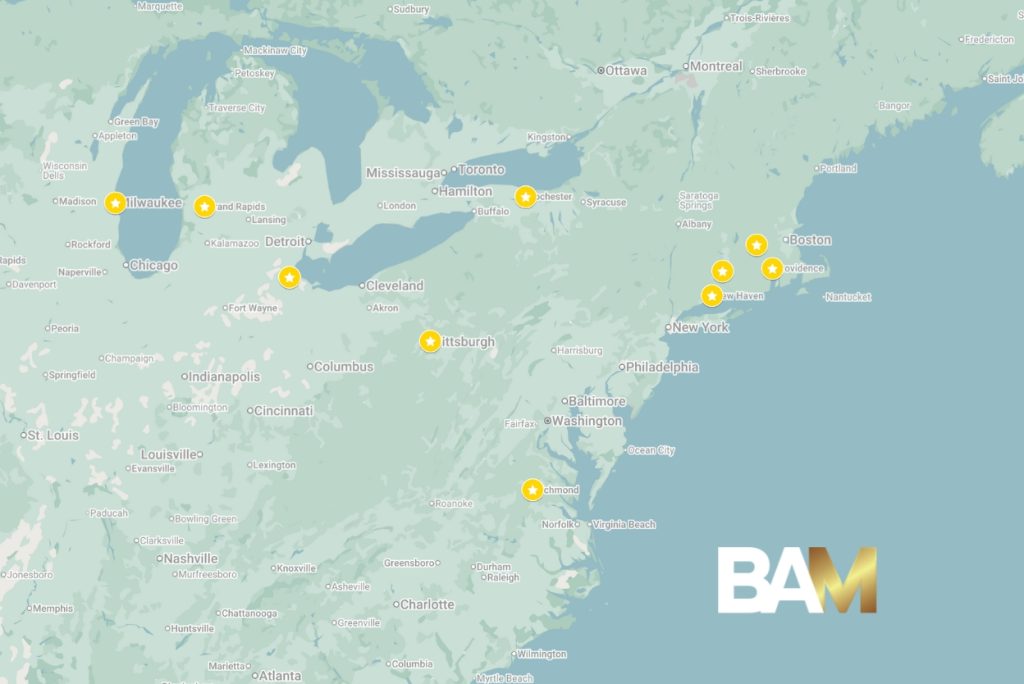
Realtor.com ranked the largest U.S. metros by forecasted price and sales gains. These are the ones expected to grow the most next year:
- Hartford, CT. (Existing home sales: +7.6%, median sale price: +9.5%, combined growth: +17.1%)
- Rochester, NY (+5.3%, +10.3%,+15.5%)
- Worcester, MA (+12.6%, +2.4%, +15.0%)
- Toledo, OH (-1.2%, 13.1%, +11.9%)
- Providence, RI (+7.1%, +4.1%, +11.2%)
- Richmond, VA (3.6%, +6.9%, +10.6%*)
- Grand Rapids, MI (+6.9%, +3.7%, +10.6%)
- Milwaukee, WI (+3.5%, +7.0%, +10.5%)
- New Haven-Milford, CT (+2.3% +7.7%, +10.0%)
- Pittsburgh, PA (+4.0%, +5.7%, +9.7%)
Last year, Southern and Western metros led the way. In 2026, the Northeast and Midwest take over.
*Note: the 10.6 result for Richmond could be due to original figures for sales and median sale prices having two digits after the decimal point (3.65% + 6.95%).
Affordability Drives Buyer Demand and Price Momentum
Buyers are chasing value. The median list price across the top 10 is $384,000 compared with $415,000 nationally. That lower buy-in, combined with more space for the price, keeps these metros front and center in buyer searches.
Cross-market interest has accelerated over time:
- Early 2022: 31% of listing views came from outside the metro
- Mid 2023: 47%
- Q3 2025: 40%, slightly above other metros
And demand is translating into faster price gains:
- National list prices since 2022: down 0.2%
- Top 10 average gains: up 16.3%
- Range: 10.6% in Grand Rapids to 33.4% in Toledo
These smaller metros offer buyers a way to stretch their dollars without losing quality of life.
Persistent Supply Shortages Keep Competition High
Inventory hasn’t recovered the way buyers hoped. Many of these markets were already tight heading into the pandemic. Now they’re even more restrictive.
- Hartford listings are down 74% compared with pre-pandemic levels
- Worcester and New Haven are similarly constrained
- Richmond and Pittsburgh remain 31% below historic supply
- National recovery gap: 11.7%
New construction is not making up the difference. In 9 of the top 10 markets, new-build listings trail the national average, and when they do appear, premiums are at least double the national average of 10.2%.
Less supply means faster market pace and strong upward pressure on prices.
Lower Lock-In Pressure Supports More Mobility
Mortgage lock-in has frozen many homeowners in place nationwide. But buyers and sellers in these markets have more flexibility. The monthly payment jump for new buyers compared with existing mortgage holders is meaningfully lower than the national norm.
- Pittsburgh: 32.5% increase
- Toledo: 43.9% increase
- Rochester: 56.4% increase
- National average: 73.2% increase
Rochester, Toledo, Pittsburgh, and Grand Rapids also have high shares of outright homeowners. No low-rate mortgage to cling to means more people able to move when they want to.
Strong Buyer Profiles Build Stability
Buyers in these metros tend to be financially stronger. That stability supports sales even in a higher rate environment.
- FICO scores: 742 vs. 737 nationally
- Down payments: 15.7% vs. 14.6%
- Conforming loans: 74.2% vs. 57.9%
Standout markets include Milwaukee (749 FICO), Grand Rapids (747), and Hartford (746). Hartford also has the highest down payment share at 18.7%.
These conditions boost resilience even in a higher-rate environment.
Older Homes, Older Households, Limited Turnover
These metros skew older in both people and properties, which keeps inventory tight.
The median age of residents in most of the top 10 falls into the mid 50s, compared to the 40s for the national median age.
Homes in these metros have been around for a long time, and many of the people living in them have been there just as long. Pittsburgh is a standout example, with 20.8% of homeowners having moved into their properties before 1989.
Across the board, the housing stock skews old too. While the national median home was built in 1981, 8 of the top 10 markets have a median year built in the 1960s or earlier, which means the typical home there is already well past the 60-year mark.
Homes tend to be smaller too. Toledo and Pittsburgh remain below 1,600 sq. ft. while the national median sits at 1,834 sq. ft.
As Hale put it when breaking down the patterns behind the rankings:
“Our 2026 top housing markets offer better value than nearby high-cost hubs, yet steady demand and persistent inventory shortages keep prices moving upward.”
What This Means for You
If you work in or near these metros, you’re likely to see more demand from relocating buyers and renters aging into homeownership. Get ahead of the conversation. Talk to buyers about where their dollars work harder and where their equity can grow faster.
Stay tuned. These markets will be ones to watch.