
Business planning isn’t a “set it and forget it” task you tackle once a year and then shelve. It’s a disciplined, ongoing process that demands weekly and monthly attention. High-achieving agents understand this, and they build their success on consistent tracking, measuring, and prioritizing income-producing activities.
But here’s the problem: many agents don’t know what they should be tracking or where they need to be at any point in the year. This lack of clarity leads to paralysis—an aimless approach that keeps agents from taking action and hitting their goals.
I’m going to walk you through the exact metrics you should be hitting by the end of each month in the first quarter of 2025. By tracking these benchmarks, you’ll have a clear roadmap to stay on pace with your annual goals and avoid the guesswork that derails so many agents.

Why Weekly and Monthly Business Planning Matters
Think about this: at the start of every year, pending sales roll over from the previous year. Those early deals can account for 7% to 10% of your annual goal. If you’re aiming to sell 30 homes in 2025, that means you should have 2–3 homes under contract carried over from 2024.
This is why planning by units and income is critical. While one big sale might skew your numbers in a given month, your overall success depends on consistent production and planning around both metrics.
Business planning isn’t just about setting a goal for the year; it’s about staying accountable every month. If you’re not tracking these numbers, you’re leaving your business to chance.
Key Planning Metrics for 2025
Here’s the breakdown of where your business should be trending by the end of each month in the first quarter of 2025.
Year-End Rollovers:
- Sales executed in 2024 that close in 2025 should account for 7–10% of your annual goal.
January Targets:
- 11.5–16.5% of your annual income and units should be under contract or closed by month-end.
- Example: If your goal is $100,000 in income, that’s $11,500–$16,500 booked or pending.
February Targets:
- 15.5–23% of your goal should be on the books by the end of February.
March Targets:
- By the end of Q1, your business should be trending between 22.5–32.5% of your annual goal.
This seasonal ramp-up reflects the natural flow of real estate transactions, where effort put in today leads to closings in 60–90 days.
Setting Yourself Up for Success
The targets above aren’t just numbers; they’re guideposts for your daily actions. If you know where you need to be by March, you can map out exactly what needs to happen each week to stay on track.
Start with these two strategies:
- High-Volume Conversations and Appointments:
January is the perfect time to ramp up conversations and book as many appointments as possible. These efforts will pay off in the months ahead, as contracts signed now will lead to closings in February and March. - The 4-1-1 Plan:
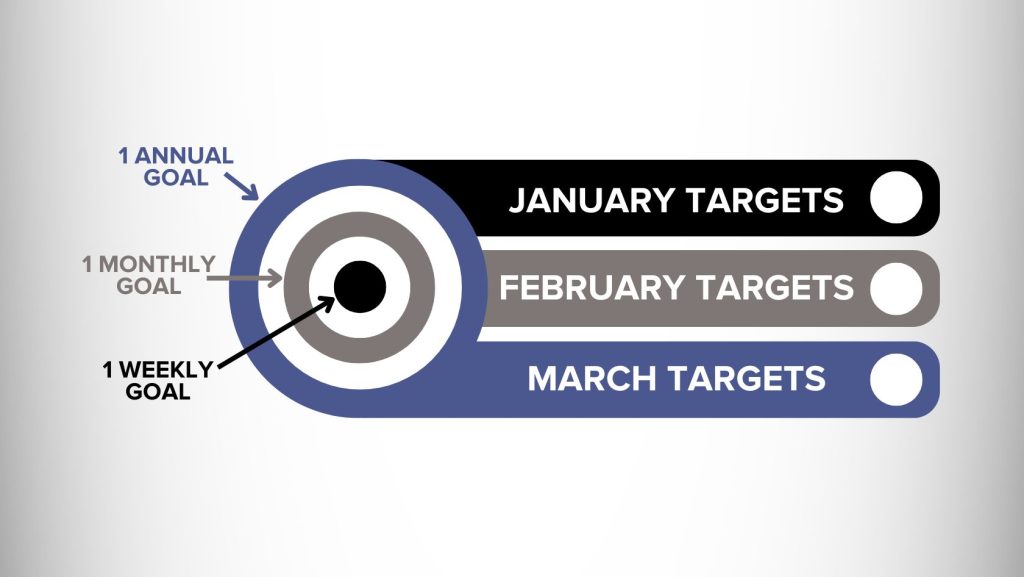
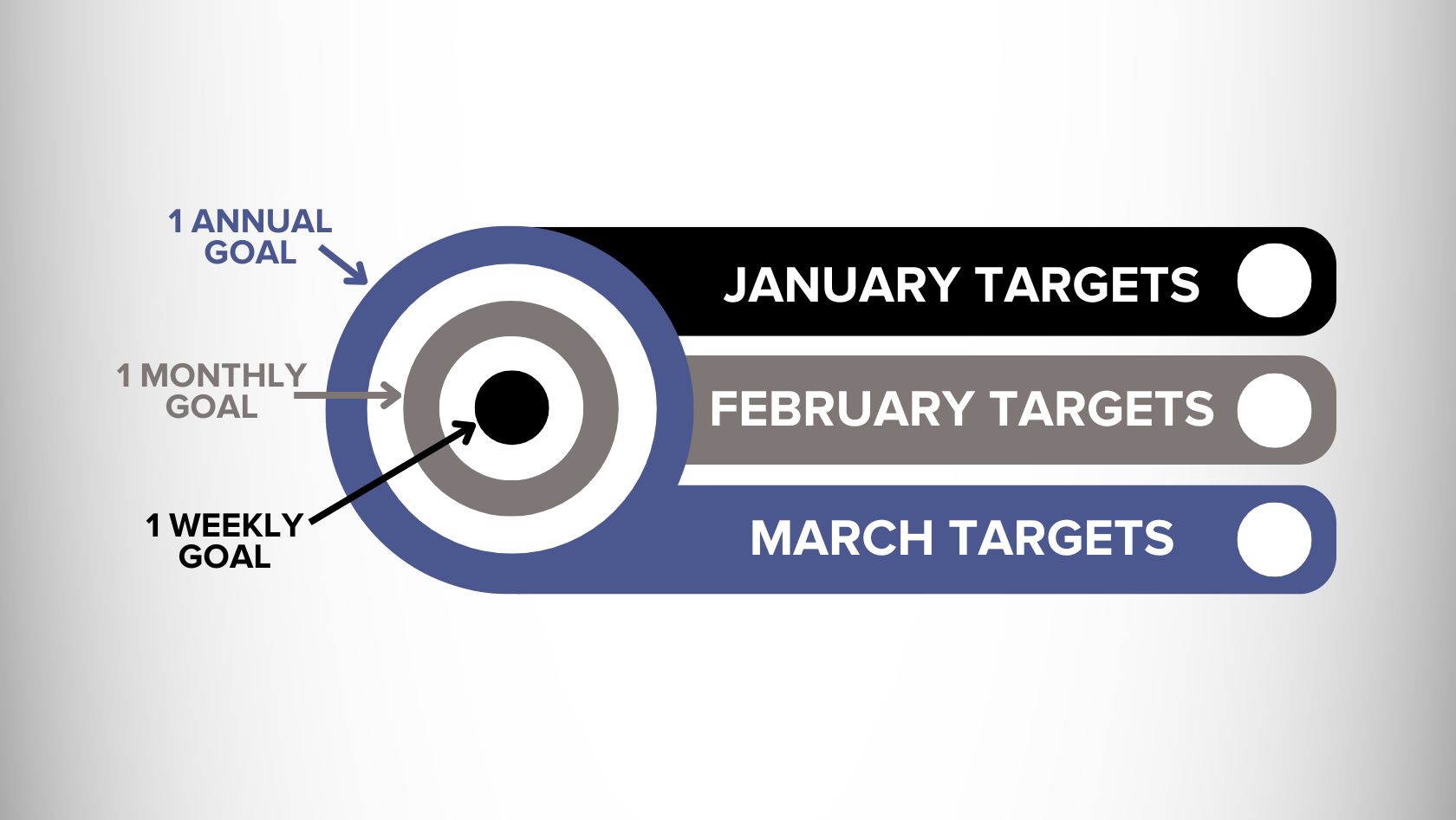
This tool is a game-changer for breaking down annual goals into actionable steps: - 1 Annual Goal: Set a clear objective for the year (e.g., sell 30 homes).
- 1 Monthly Goal: Determine how many homes you need to sell this month to stay on track.
- 1 Weekly Goal: Focus on the conversations and appointments needed to hit your monthly target.
If your monthly goal is four sales and you haven’t secured any deals by Week 2, it’s time to double down in Weeks 3 and 4. The 4-1-1 plan keeps you laser-focused and eliminates the guesswork.
The Power of Historical Data
Every market has its own seasonal trends, so use your historical data to fine-tune these benchmarks for your business. Look at your past performance and adjust based on your market’s flow.
If you’re not doing this, you’re making uninformed decisions. Guessing isn’t a strategy—it’s a recipe for missed opportunities.
Final Thoughts
Effective business planning isn’t just about hitting big-picture goals; it’s about chunking those goals down into manageable, actionable steps. By focusing on where you need to be each month, you’ll build a clear roadmap for your success.
Remember, the work you do today will impact your results 60–90 days from now. Start tracking, start planning, and start executing. With these benchmarks as your guide, you’ll stay ahead of the curve and crush your 2025 goals.