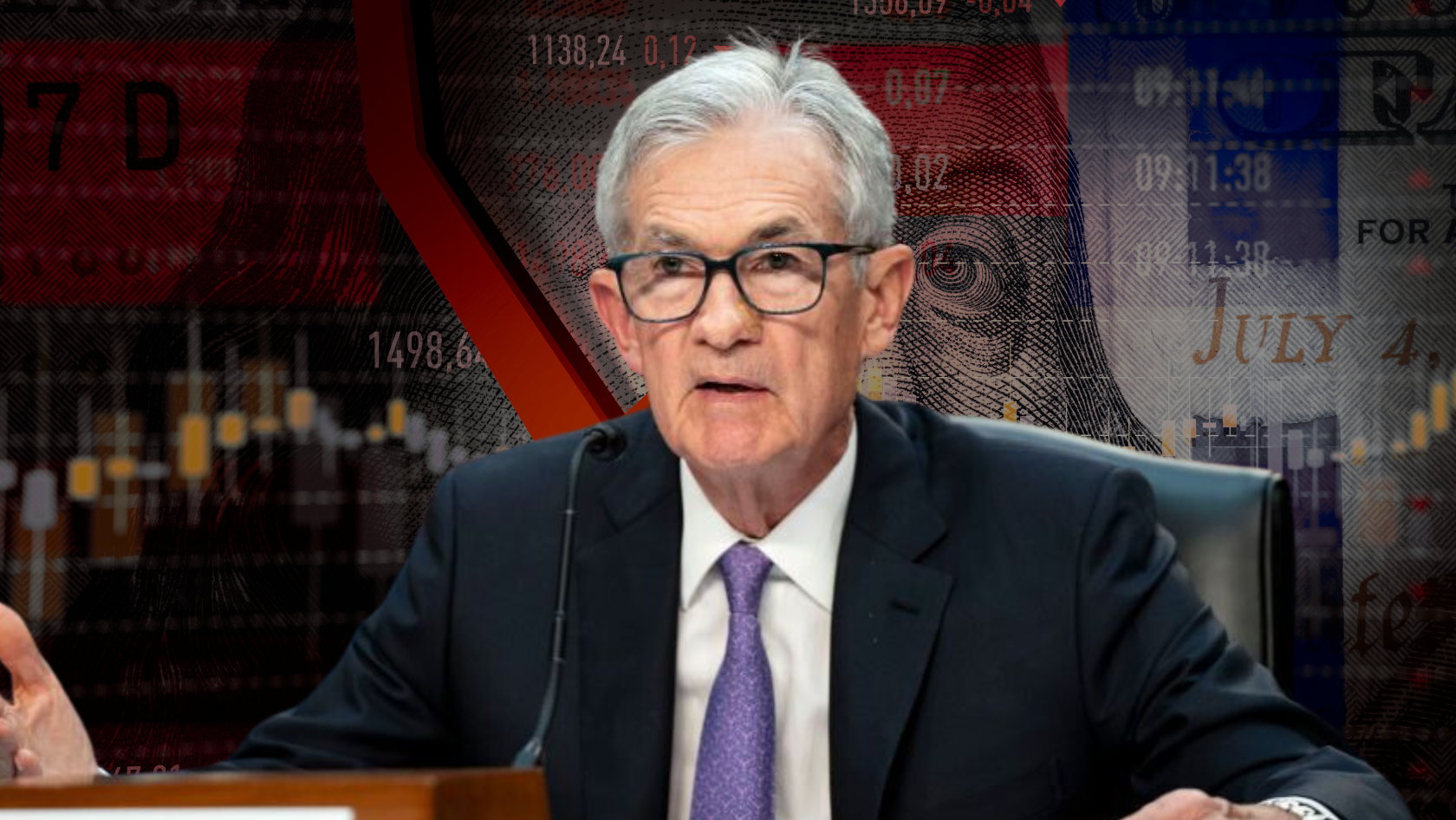

The Federal Reserve didn’t make a move at its June 17–18 meeting, but they made it clear that change is coming.
Despite holding the federal funds rate steady at 4.25%–4.50% (where it’s been since December), the Fed stuck to its projection of two rate cuts by the end of 2025, signaling a potential pivot later this year if inflation trends cooperate.
Meanwhile, the Fed’s closely watched “dot plot” revealed a growing divide inside the Committee. Seven of the 19 participants now see no cuts this year, up from four in March.
Still, the policy statement passed unanimously. So, while the internal debate is intensifying, the strategy remains unified (for now).
Aside from a few peripheral mentions of housing during the press conference, the big topics of the day included:
- President Trump’s tariffs and how they could still drive up inflation
- “Cracks in the labor market,” including a slowdown in hiring and rising long-term unemployment
- Several challenges to the Committee’s decision not to cut rates
Byron Lazine broke down the latest policy decision and what it means for the housing market on today’s Hot Sheet:

In Byron’s words, “it’s all about the tariffs.” Read on to see why.
Economic Outlook & the Potential for Tariff-Induced Inflation
The Fed noted that uncertainty about the economic outlook has lessened but still remains elevated. That uncertainty includes geopolitical risk (specifically in regards to the current conflict between Israel and Iran) as well as domestic policy shifts that could impact inflation.
With that in view, the Fed revised its 2025 economic forecast with a slightly dimmer view: GDP growth was lowered to 1.4%, core inflation ticked up to 3.1%, and unemployment is now expected to reach 4.5%, a full 0.3 points higher than the current rate.
The committee’s language changed little, calling current economic growth “solid,” unemployment “low,” and inflation “somewhat elevated.” Still, signs of a slowdown are growing:
- Retail sales dropped nearly 1% in May.
- Long-term unemployment is ticking up.
- Housing starts have fallen to their lowest level in five years.
While not mentioned in the official statement, President Trump’s renewed tariff agenda popped up more than once during Powell’s press conference.
Fed officials are reportedly watching closely for signs that these policies could reignite price pressures. So far, price data hasn’t shown much impact, but with long-term unemployment rising, retail sales falling nearly 1% in May, and housing starts at a five-year low, the economic terrain is shifting.
Remarks from Powell’s Q&A Segment
During the Q&A segment, Powell briefly touched on housing a few times, mostly to reiterate that inflation in that segment has been coming down, which he noted as an encouraging sign. He also emphasized that the Committee’s decision is rooted in what they believe will be best for the housing market and for American households in general.
(10:00) – Question from Colby Smith, New York Times:
“To what extent has the more limited impact from tariffs at this stage on inflation changed your view on what the ultimate economic fallout will be from these policies and the timing of when they will materialize in the data?”
Powell’s Response (10:13):
“We’ve had three months of favorable inflation readings since the high readings of January and February, and that’s, of course, highly welcome news. Part of that just is that services, core services, both housing services and non-housing services, have really been grinding down toward levels that are consistent with 2% inflation. So that’s the good news.
“We’ve had goods inflation just moving up a bit. And of course… we do expect to see more of that over the course of the summer. It takes some time for tariffs to work their way through the chain of distribution to the end consumer. A good example of that would be goods being sold at retailers today that may have been imported several months ago before tariffs were imposed. So we’re beginning to see some effects, and we do expect to see more of them over coming months.
“We do also see price increases in some of the relevant categories, like personal computers and audio visual equipment, and things like that that are attributable to tariff increases. In addition, we look at surveys of businesses and there are many of those and you do see a range of things, but many, many companies do expect to put all or some or all of the effective tariffs through to the next person in the chain and ultimately to the consumer Today, the amount of the tariff effects, the size of the tariff effects, their duration and the time it will take are all highly uncertain.
“So that is why we think the appropriate thing to do is to hold where we are as we learn more and think our policy stance is in a good place, where we’re well-positioned to react to incoming developments.”
(15:23) – Question from Chris Rugaber, Associated Press:
“There is an argument out there in favor of cutting rates more immediately. Inflation has continued to cool and is back at roughly 2%, despite the tariffs. And I guess I also wanted to ask about cracks in the job market, with gross hiring slowing, concentrated in just a few industries. We’ve seen some housing data, including this morning, that have been pretty weak. Do you see any concerns that, you know, the economy is weakening and that is a reason to cut rates going forward?”
Powell’s Response (15:58):
“So, we do, of course, monitor all those things. I think if you look at the overall picture, you know, what you’re seeing is 4.2% unemployment and an economy that’s growing at a rate hard to know given the unusual flows in the first quarter, but it appears to be 1.5–2%, maybe a little better than that. Sentiment has come up off of its very low levels; it’s still depressed, so you know, you can point to things.
“The housing market is a longer run problem and also a short run problem… Basically, the situation is we have a longer run shortage of housing. And we also have high rates right now. I think the best thing we can do for the housing market is to restore price stability in a sustainable way and create a strong labor market, and that’s the best thing we can do for the housing market.
“You asked about the job market. Again, look at labor force participation, look at wages, look at job creation: they’re all at healthy levels now. I would say you can see perhaps a very, very slow continued cooling, but nothing that’s troubling at this time. But you know we watch it; we watch it very, very carefully. So, overall, again, the current stance of monetary policy leaves us well-positioned to respond in a timely way to economic developments, for now. And we’ll be watching the data carefully.”
(23:46) – Follow-up Question from Nick Timiraos, Wall Street Journal:
“If I could follow up, you’ve said the policy is in a good place and that it’s modestly restrictive. Given all the uncertainty you just talked about—tariff levels, uncertainty around the pass through, is it price increases versus margin compression, some of the softness that Chris talked about in labor and housing—why wouldn’t it be better to have rates at a more neutral setting as the economy heads into this period of very high uncertainty?”
Powell’s Response (24:08):
“So if you just look backward at the data, that’s what you would say. But that’s not—we have to be forward-looking. And the thing that every forecaster, every outside forecaster, and the Fed is saying is that we expect a meaningful amount of inflation to arrive in the coming months, and we have to take that into account.
“So, I think a backward-looking look would lead you to a neutral stance, but we—we can’t—we have to look at that. And because the economy is still solid, we can take the time to actually see what’s going to happen.
“You know, there’s a range of possibilities on how large the inflation effects and the other effects are going to be. So we’ll make smarter and better decisions if we just wait a couple of months—or however long it takes—to get a sense of really what is going to be the pass-through of inflation, and what’s going to be the effects on spending and on hiring and all those things.”
(29:24) — Question from Kelly O’Grady, CBS News:
“You’re famously known as the guy that makes decision based on data instead of speculation. You’ve said today in the inflation data is in a good place. We don’t know how tariffs are going to impact prices going forward—that’s uncertain—but I’ve got to go back to the last time that you cut rates in December, and there was still the what-if of tariffs. So, what made you feel comfortable cutting then, when inflation was higher than where it is today, and you didn’t cut today?”
Powell’s Response (29:55):
“Well, the forecast for inflation in December was 2.5%. Core PCE for 2025, the forecast was 2.5%, which was a good inflation forecast. I think what we’ve learned is that—and this was long before we had any idea of what the actual policies would be—we’ve learned the tariffs are going to be substantially larger than forecasters generally thought.
“And, you know, our forecasts are generally not particularly different from those of other well-resourced forecasting operations. So what we learned, and particularly in April, was that very substantially larger tariffs were coming—and that that would mean higher inflation. That’s what happened.
“And so now, you saw 2.5% forecast in December, you saw 2.8% in March, and you see 3.1% now. So it’s six tenths higher inflation for 2025—and that’s a big part of the change. And that’s due to the effects of the tariffs that are—you know, we don’t know where they’re going to land, but it’s pretty apparent they’re going to land higher than outside forecasters were really guessing at the end of last year.”
(31:07) – Follow-up Question from Kelly O’Grady, CBS News:
“My follow-up to that: I think consumers were looking for relief on rates when it comes to mortgages, car loans, small businesses, want to take out more manageable loans. When you look at the cumulative inflation over the past 5 years, prices have risen over 20%. It’s been a rough road. So, what is the tipping point then for the wait and see approach in terms of how much it’s going to help versus when it hurts the American consumer?”
Powell’s Response (31:32):
“Well, I mean, we’re trying to restore price. The best thing we can do for the public that we serve is restore price stability…And we will restore store price stability, meaning 2% inflation on a durable, sustainable basis. That, and also maximum employment. If we restore those things, that’s the best thing, and that is our goal. The best thing we can do for the American people, for households and businesses—that is the ultimate thing that we can deliver. And they can make their decisions without having to think about inflation all the time.
“So, in the meantime, we have to keep rates high to get inflation all the way down. They’re not very high, let’s be honest. I would say policy is modestly…restrictive. If you look at the economy, it’s not performing as though it were performing under very restrictive monetary policy. So, I would say probably modestly restrictive. And so what it will take is confidence that inflation is coming down.
“Now, I would say, without tariffs, that confidence would be building. Because if you see what’s happening with non-housing services and housing services—which are the other two big pieces other than goods—those are coming down really nicely now.
“So, I think we have to learn a little more about tariffs. I don’t know what the right way for us to react will be. I think it’s hard to know with any confidence how we should react until we see, really, the size of the effects. Then we can start to make a better judgment.
“So, that’s what we’re doing. And I think we can take the time to do that because unemployment is 4.2%, wages are moving up, real wages are moving up at a healthy clip now, and inflation is, you know, 2.3% headline inflation over a 12-month basis. So it’s a good economy and a solid economy with decent growth.”
(33:22) — Question from Edward Lawrence, FOX Business:
“You’re saying that uncertainty has come down, the economy is moving at a solid pace, inflation has come down over the past three months, and this is all moving in the right direction. So, are you indicating here that Americans should expect some sort of economic pain in the second half of the year?”
Powell’s Response (33:38):
“I’m not saying that at all. You know, from our standpoint, what I can say is that the U.S. economy is in solid shape. Inflation has come down, the unemployment rate remains at 4.2%, as I mentioned, real wages are moving up. It’s a good—job creation is at a healthy level, unemployment again, as I said, low. Labor force participation in a good place.
“And what we’re waiting for to reduce rates is to understand what will happen with, really, the tariff inflation. And there’s a lot of uncertainty about that. Every forecaster you can name, who is a professional forecaster with adequate resources and forecasts for a living… everyone that I know is forecasting a meaningful increase in inflation in coming months from tariffs. Because someone has to pay for the tariffs. And it will be someone in that chain I mentioned—between the manufacturer, the exporter, the importer, the retailer—ultimately somebody putting it into a good of some kind, or just the consumer buying it. You know, and all through that chain, people will be trying not to be the ones who pick up the cost. But ultimately, the cost of the tariff has to be paid, and some of it will fall on the end consumer.
“We know that because—that’s what businesses say, and that’s what the data say from past episodes. So we know that’s coming. And we just want to see a little bit of that before we make judgments prematurely.”
Don’t miss Byron’s full breakdown of the FOMC statement and press release on today’s Hot Sheet, including what Byron called Powell’s “most consequential statement” on housing.