
I hear the same excuse in every market I coach in: “I’m not ready to make calls yet. I’m not ready to practice my scripts.”
It sounds reasonable on the surface. It’s also a limiting belief, and I can hand you four specific ways to break it today.
Agents tell themselves this story because getting on the phone feels exposed. Nobody wants to sound clumsy in front of a client, and rehearsing a script out loud can feel more uncomfortable than the call itself.
A lot of the hesitation comes down to specific fears agents carry into the call:
- Sounding silly once you’re on the line
- Assuming the call will go badly before you dial
- Not knowing what to say if someone picks up
The four methods below solve for all of it. You need conversations to set appointments, and you need appointments to sell houses. Skip both and you’re filling a day with nothing, which makes it a fair moment to ask what you’re doing with your license if that’s become the pattern.
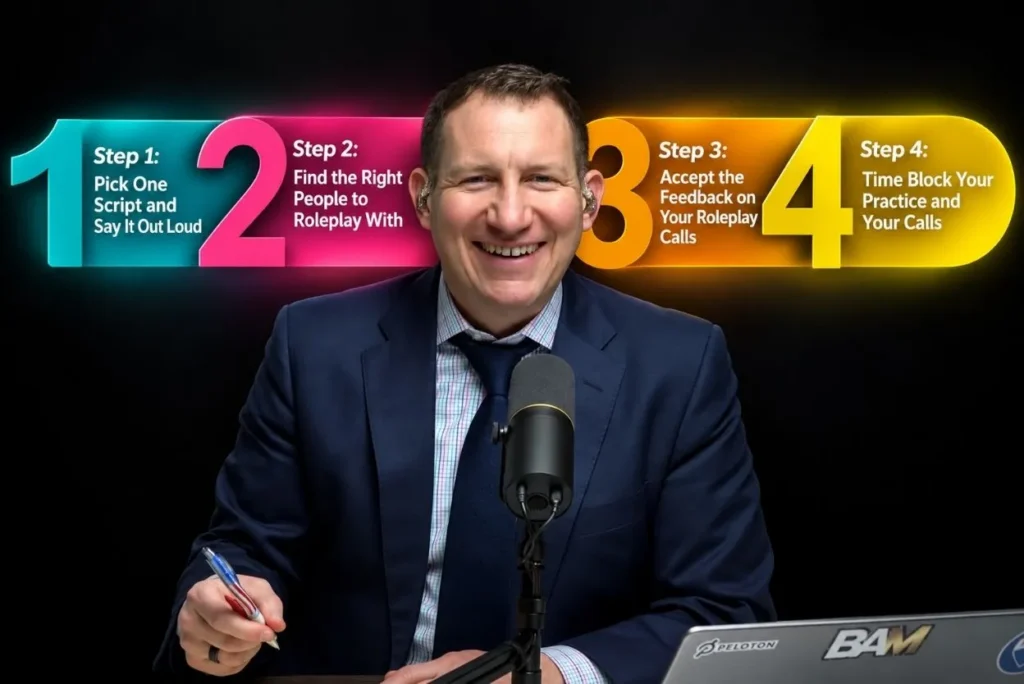
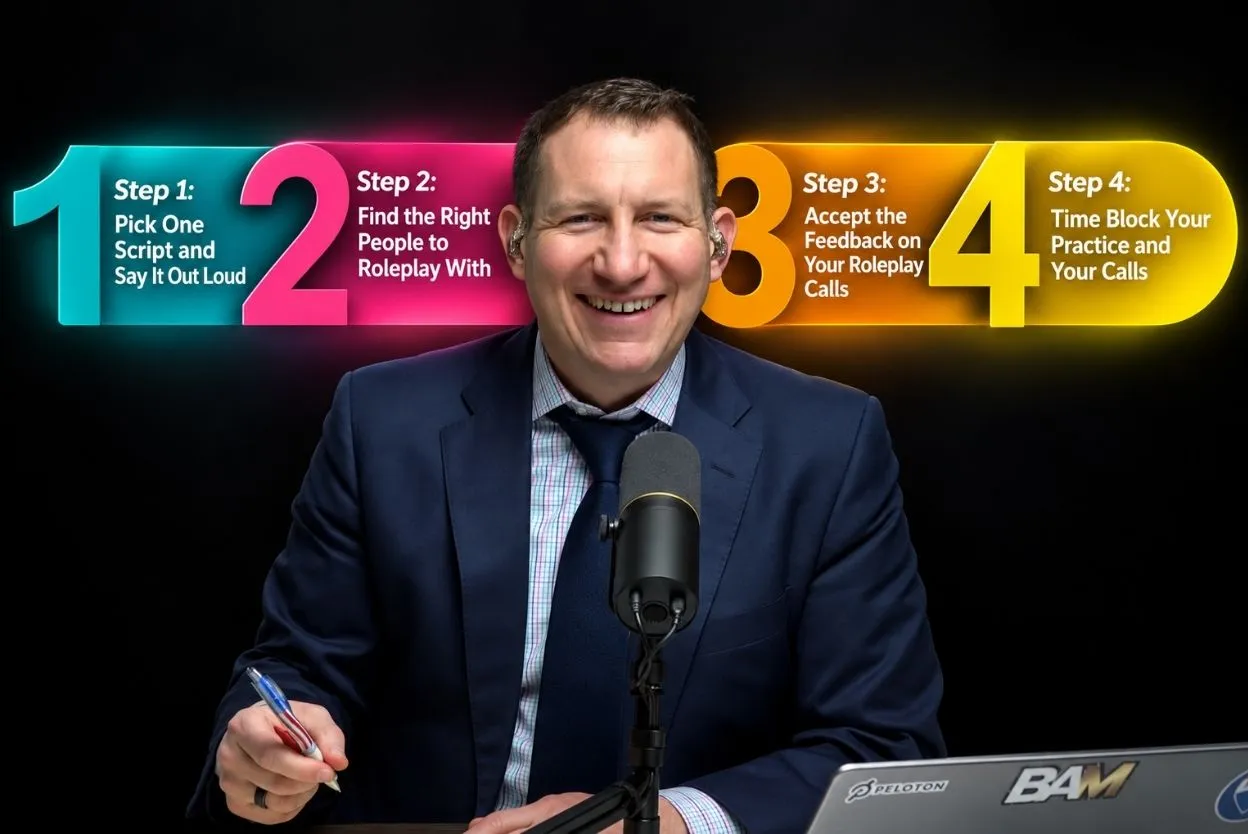
Step 1: Pick One Script and Say It Out Loud
Start by choosing a single script and giving it your full attention. Don’t try to master five scripts in one week. Whether it’s an opening fact and question (OFQ) pulled from the Phil Jones method for a specific month or season, decide what you’re practicing and lock it in.
Inside BAMx, we deliver a new script every week during live Roleplay Masterminds with myself, Byron Lazine and Lisa Chinatti. These scripts are based on what’s happening in the market right now, and over 100 agents show up every week to get better together.
Once you’ve picked the script, say it out loud. Chant it if you have to. A line can sound perfect in your head and fall apart the moment it leaves your mouth, and the only way to catch that is to hear yourself say it.
Speaking the script out loud does three things for you:
- It lets you hear where you’re upswinging at the end of a sentence instead of finishing with authority
- It shows you where the wording feels unnatural before a client ever hears it
- It builds the muscle memory that turns a memorized line into a confident delivery
Reading a script silently or reviewing it in your head doesn’t count. Say it out loud in your car between appointments, alone in your house, or with your kids, your spouse, or your partner.
Repetition builds the confidence this whole process depends on.
Step 2: Find the Right People to Roleplay With
Once you have a script down, find people who want to roleplay it with you. A friend who never makes calls himself is the last person to practice with.
Getting better in real estate depends on the environment around you, and a growth mindset spreads when the people near you want to improve.
Look for agents who want to get better every single day, then commit to a daily practice schedule with them. Ask yourself whether you’re doing this every day, because a weekly session won’t build the reflex you need.
Making this a habit gives both of you a chance to trade feedback and improve together. Skip the exercise and you skip the practice. The first rep you run through will be your worst one, and every rep after it gets better because volume drives the improvement.
Step 3: Accept the Feedback on Your Roleplay Calls
Feedback from your roleplay partner will point out a weak intro, a missed question, or a moment where you drifted off script.
Take it as it comes. Feedback doesn’t change based on how you feel about receiving it.
When you’re trying to improve, listen to what people tell you and put it into practice. Don’t argue with it or explain it away. Accept it, then apply it.
Step 4: Time Block Your Practice and Your Calls
Once you’ve built the habit of practicing, block off time for it, and block off separate time for making your calls. If it isn’t on your calendar, it doesn’t happen.
Agents schedule practice at 8:15 and then talk themselves out of it:
First it’s:
“Hey, let’s practice at 8:15.”
Then 8:15 comes around, and it’s easy to find a reason to put it off:
“Oh, I took my kid to school.”
“I got caught up at the gym.”
“Oh, I’m on a call with a client.”
Every one of those reasons is an excuse dressed up as an obstacle. It ranks somewhere between food poisoning and the dog eating your homework.
Commit to a set time instead. Keep the roleplay session under 15 minutes, then move into your calls. I recommend blocking either 9 to 11 or 4 to 6, and I lean toward the morning window because early tasks get done before the day pulls you in other directions.
Preparation Beats Luck Every Time
Here’s the full system laid out together:
- Pick your script and chant it out loud until it feels natural
- Find people who want to practice daily and build a roleplay habit with them
- Accept the feedback from those roleplay sessions and put it into practice
- Time block your practice and your calls, including lead generation, follow-up, and appointment setting, and treat that block as immovable
Do all four on repeat and you’ll be ready when an opportunity comes, because opportunities don’t wait for you to feel prepared. Being ready is what makes an opportunity usable in the first place.
Agents call it luck when a call converts into a client:
“Oh, it was lucky I got this call.”
Luck is what preparation looks like once opportunity arrives. It feels lucky because you happened to be in the right spot.
The real work got done earlier, alone, when nobody was watching.